William T. G. Morton and the Ether Mask
This exhibit at the Wellesley Historical Society tells a surprisingly important story in the history of medicine and connects that story directly to Wellesley.
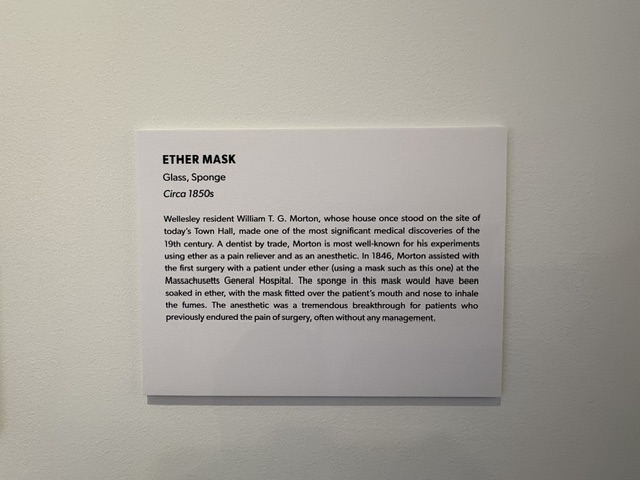
Dr. William T. G. Morton was a dentist who became one of the central figures in the introduction of ether anesthesia. Born in 1819, Morton studied dentistry and eventually established a practice in Boston. He later lived in Wellesley, on an estate known as Etherton Cottage, located on land that would eventually become the site of Wellesley Town Hall.
Before effective anesthesia, surgery was an ordeal almost unimaginable today. Operations had to be performed as quickly as possible while patients remained conscious and experienced the pain of the procedure. Surgeons had few options beyond alcohol, opiates, physical restraint, or simply asking patients to endure what was happening.
Morton experimented with sulfuric ether as a way of eliminating surgical pain. His defining moment came on October 16, 1846, when he administered ether to Edward Gilbert Abbott at Massachusetts General Hospital while surgeon Dr. John Collins Warren removed a tumor from Abbott’s neck. The successful public demonstration took place in the surgical amphitheater that would later become known as the Ether Dome and helped convince physicians that major surgery could be performed without the terrible pain that had previously accompanied it.
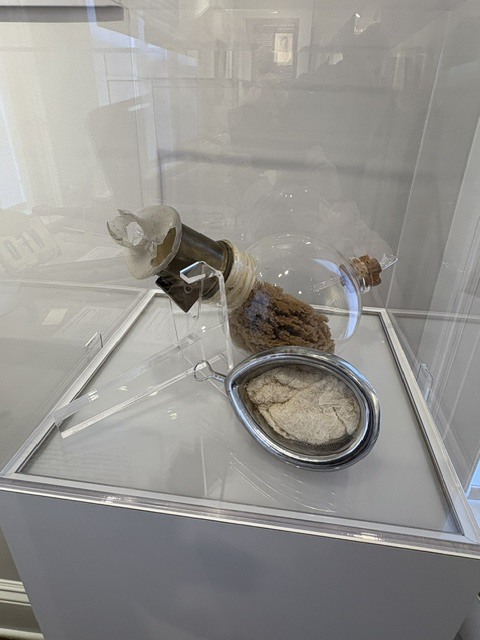
The ether mask displayed here illustrates how simple the early equipment was. A sponge was soaked with ether and placed inside a glass vessel. The mask was positioned over the patient’s mouth and nose so the ether fumes could be inhaled. Compared with today’s sophisticated anesthesia equipment and careful monitoring, the apparatus seems remarkably primitive, but it represents an enormous change in the practice of medicine.
Morton’s role in the discovery of anesthesia was not without controversy. Horace Wells, Charles T. Jackson, and others also played important roles in the development and early use of anesthetic agents. Morton spent much of the rest of his life seeking recognition and financial compensation for his contribution. The history of anesthesia is therefore more complicated than the achievement of one person, but Morton’s successful public demonstration in 1846 remains one of its pivotal moments.
The additional exhibit about Morton helps connect the medical history to the man himself. After the demonstration, Morton continued trying to establish his claim to the discovery while maintaining his connections to Massachusetts. His Wellesley estate became an important part of his later life. He died unexpectedly in 1868 at only 48 years old.
What I particularly like about this exhibit is the combination of the man and the object. Morton’s portrait tells us who he was, while the glass ether mask shows us something tangible from the early days of anesthesia. It is such a simple-looking device, yet it represents a profound change in medicine—the moment when relief from the terrible pain of surgery became a realistic possibility.
Read More From Nancy
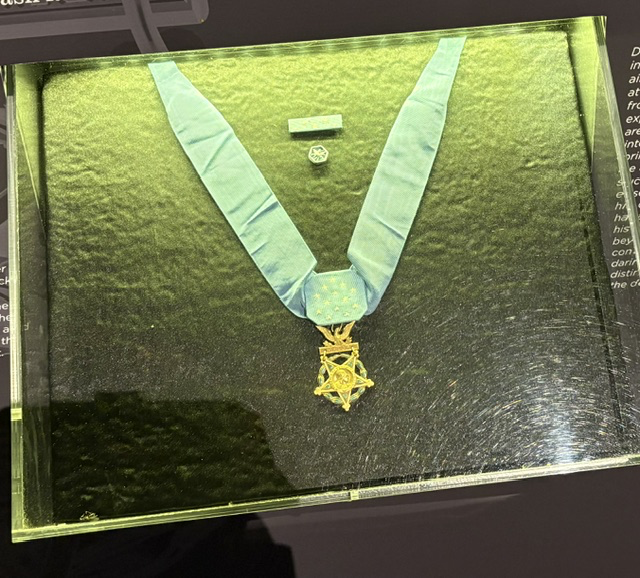
The Medal of Honor
Among all the artifacts displayed at the American Heritage Museum, few carry the emotional weight of the Medal of Honor. Unlike a tank, an aircraft, or a weapon, this small medal represents something that cannot be manufactured or engineered. It symbolizes extraordinary courage in the face of overwhelming danger. Established during the American Civil War […]
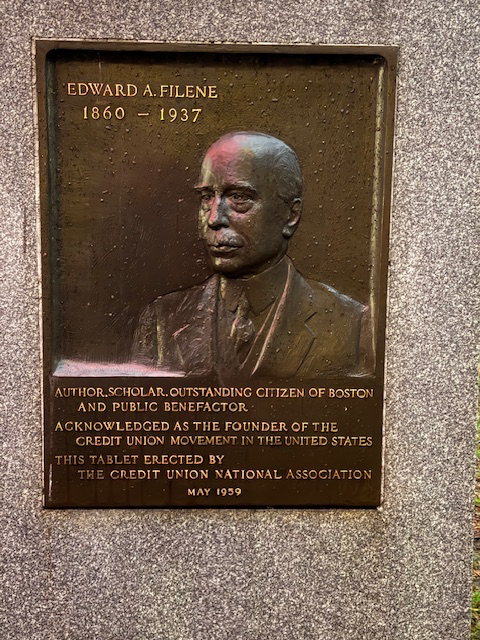
Edward A. Filene Plague
Walking along the fence surrounding the Boston Common, I came across this bronze plaque honoring Edward A. Filene. While many people recognize the Filene name from the famous Boston department store, few realize the tremendous influence he had beyond retail. Filene believed that ordinary working families deserved access to affordable credit and financial opportunity. His […]
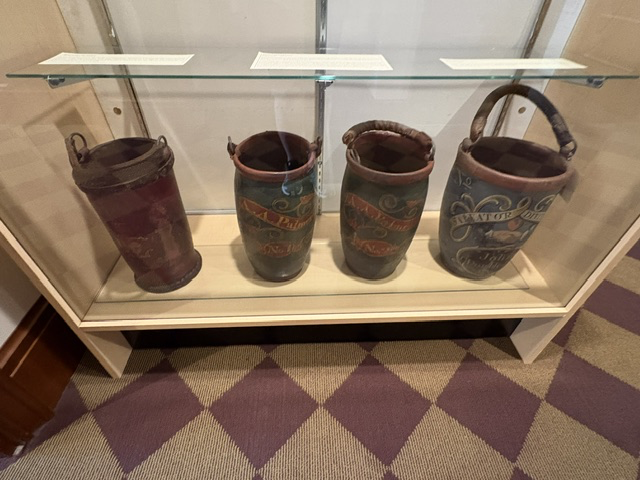
Fire Buckets
Among the interesting artifacts preserved in the Lancaster Library is a collection of leather fire buckets, reminders of a time when communities relied on cooperation rather than machinery to combat one of their greatest threats. Before organized fire departments and modern fire engines towns maintained leather buckets that were kept in homes, businesses, churches, and […]

