World War II Air Raid Siren
While visiting the Needham History Center and Museum, one artifact caught my attention. Standing quietly in the corner was a World War II air raid siren that once occupied the steeple of the First Baptist Church on Great Plain Avenue. It is not a large or ornate object, yet it represents a time when communities across America prepared for a threat they hoped would never arrive.
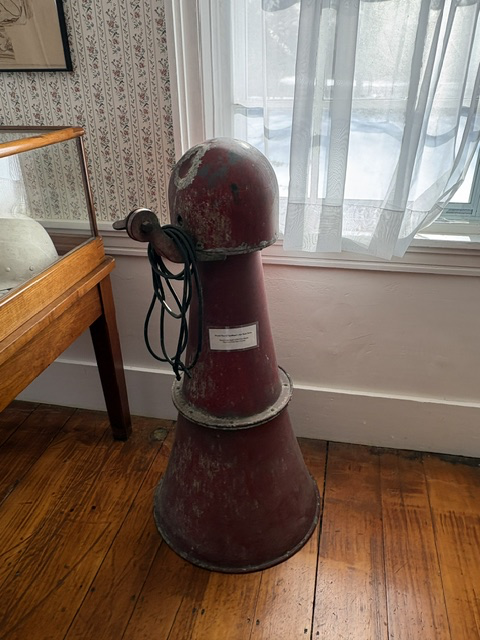
During World War II, civil defense became part of everyday life. Following the attack on Pearl Harbor in December 1941, Americans recognized that the nation was no longer insulated from war. Although enemy aircraft never reached New England, towns like Needham developed emergency plans, organized volunteer civil defense groups, conducted blackout drills, and installed air raid warning systems. This siren was one of those warning devices.
Mounted high in the church steeple, its powerful sound could be heard throughout the community. Had an enemy aircraft been detected or another emergency occurred, the siren would have alerted residents to seek shelter and follow civil defense instructions. Fortunately, the alarm was never needed for an actual air raid. Instead, it became part of the town’s preparedness, reminding residents that the war being fought thousands of miles away still touched their daily lives.
Today, this weathered siren no longer sounds an alarm. Instead, it tells a story. It reminds us that World War II was not experienced only on distant battlefields. It was also lived in towns like Needham, where ordinary citizens volunteered, rationed supplies, planted victory gardens, participated in blackout drills, and prepared for dangers they prayed would never come.
Museums are filled with ordinary objects that become extraordinary once we understand the stories they carry. Sometimes the smallest artifacts preserve some of the most powerful memories of a community’s past.
Read More From Nancy
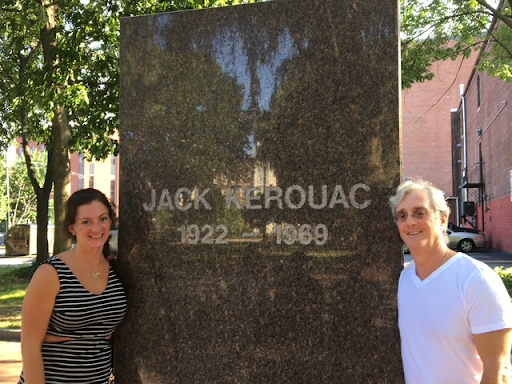
Jack Kerouac Memorial
Born in Lowell in 1922, Jean-Louis Lebris de Kérouac was the son of French-Canadian immigrants and grew up speaking French before learning English. His working-class upbringing and the close-knit ethnic neighborhoods of Lowell would later appear throughout his writings. Although he became famous for his travels across America, he never lost his During a visit to […]
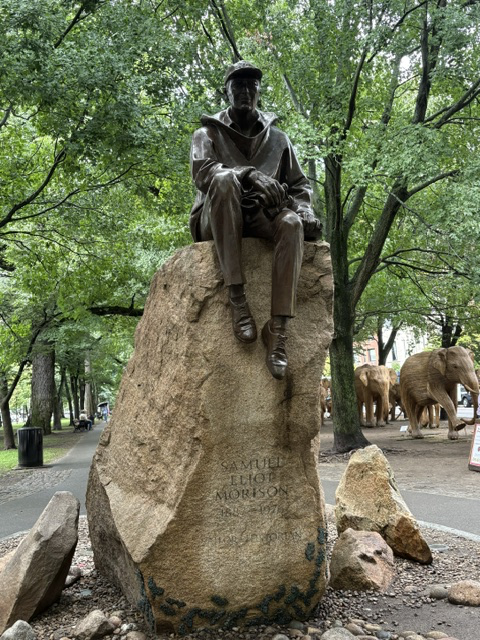
Samuel Eliot Morison Memorial
Walking along the Commonwealth Avenue Mall reveals a series of monuments honoring people connected to Boston and the wider world. Among them is a particularly distinctive sculpture of Samuel Eliot Morison. Rather than placing him formally on his feet or astride a horse, sculptor Penelope Jencks portrayed him as a sailor seated on an enormous […]
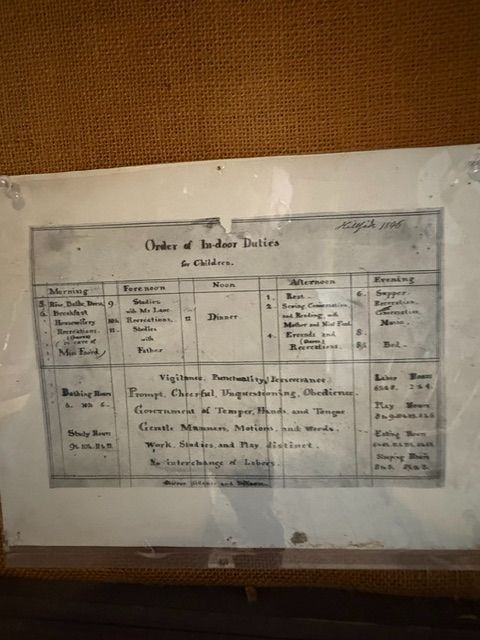
Bronson Alcott’s Daily Duties
A child’s education, in Bronson Alcott’s view, extended throughout the day. Lessons mattered, but so did meals, household responsibilities, recreation, rest, and the ways children treated others. His “Order of In-door Duties for Children,” displayed at Orchard House, offers a glimpse into how he attempted to put those beliefs into practice. The schedule divides the […]

