The Esta Manthos Indian Motorcycle Collection
Marty stood among rows of motorcycles at the Lyman and Merrie Wood Museum of Springfield History. Their frames, engines, and handlebars changed from one machine to the next, while old advertisements and photographs filled the walls around them. This gallery was about more than a famous motorcycle name. Indian began in Springfield, and for decades its machines were designed and built here.
George M. Hendee and Oscar Hedstrom opened the company’s first factory in downtown Springfield in 1901. Hendee had been a champion bicycle racer and manufacturer; Hedstrom brought engineering skill to the partnership. At a time when motorcycles were still new and their reliability could not be taken for granted, the company worked to prove what its machines could do. In 1903, Hedstrom rode an Indian in a speed and endurance trial that helped establish its reputation.
Indian motorcycles went on to serve many different riders. People used them for travel and work, while racers tested their speed on tracks and hillsides. The company also produced motorcycles for military use during the world wars. Looking across the gallery, we could see the distance between the earliest motorized bicycles and the more substantial machines that followed as engines, frames, and expectations changed.
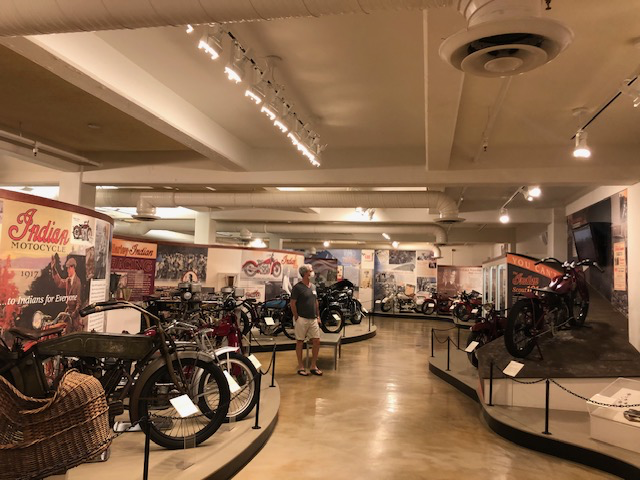
The collection holds more than two dozen motorcycles, including a 1904 machine designed and owned by Hedstrom, a 1912 board-track racer with its original racing tires, a 1927 hill-climber, and a restored 1929 Scout. Each represents a different part of Indian’s history. The racing motorcycles speak to the daring of their riders; the others show how a company founded in Springfield adapted its designs for changing purposes. Photographs and memorabilia add the people who made, sold, rode, and cared for the machines.
Production by the original Springfield company ended in 1953. Its story might have become scattered among private owners had Charles and Esta Manthos not devoted decades to collecting Indian motorcycles and records. They opened their own Indian Motorcycle Museum in Springfield in 1974. Charles hoped to do more than preserve the past: working with former Indian employees, he developed a prototype inspired by the 1953 Indian Chief in the hope of returning a Springfield-built Indian to production. The plan did not succeed, but the prototype became another part of the history they saved.
After Charles died, Esta donated their collection to the Springfield Museums in 2007, keeping it together in Indian’s hometown. That decision is why we could encounter so much of the company’s history in one room. As Marty moved through the gallery, the motorcycles invited us to look beyond their polished metal to the Springfield workers, inventive minds, and determined collectors who gave them both a beginning and a lasting place in the city’s memory.
Read More From Nancy
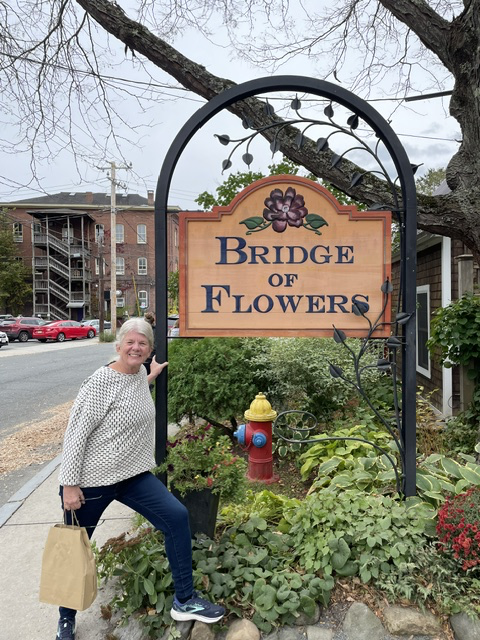
Bridge of Flowers
Some places are created to solve practical problems. Others become places that simply make people smile. The Bridge of Flowers in Shelburne Falls manages to do both. The bridge was originally built in 1908 as the Deerfield River trolley bridge, carrying electric streetcars between Shelburne and Buckland. For years it served as an important transportation link, […]
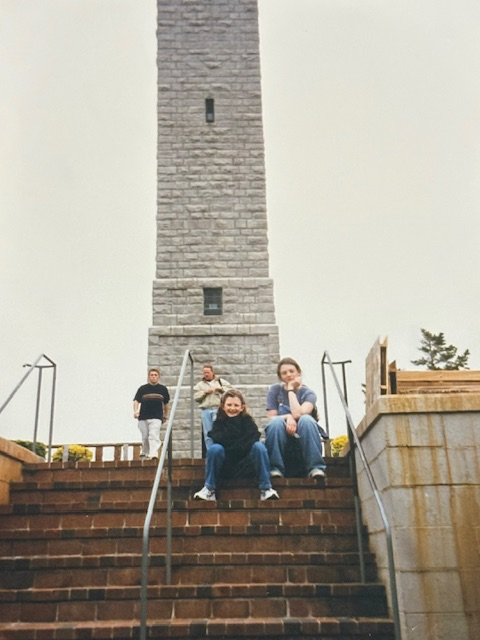
The Pilgrim Monument
Rising high above Provincetown Harbor, the Pilgrim Monument is the most recognizable landmark on Cape Cod. Standing 252 feet tall atop High Pole Hill, it is the tallest all-granite monument in the United States and can be seen for miles in every direction. Its design was inspired by the Torre del Mangia in Siena, Italy, […]
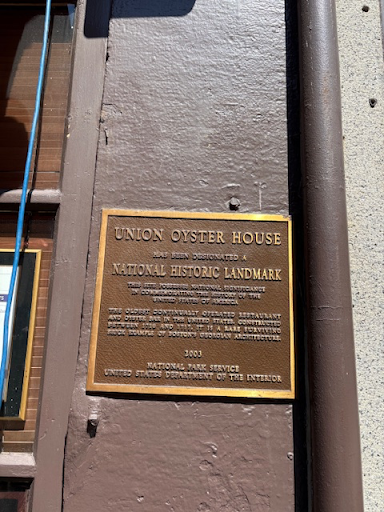
Union Oyster House
Walking along the Freedom Trail in Boston, it is easy to miss the plaque outside the Union Oyster House. But if you pass it by, you are missing not only a good meal, but an extraordinary chapter in American history. The Union Oyster House is the oldest continuously operating restaurant in the United States, serving diners […]

