Bridge of Flowers
Some places are created to solve practical problems. Others become places that simply make people smile. The Bridge of Flowers in Shelburne Falls manages to do both.
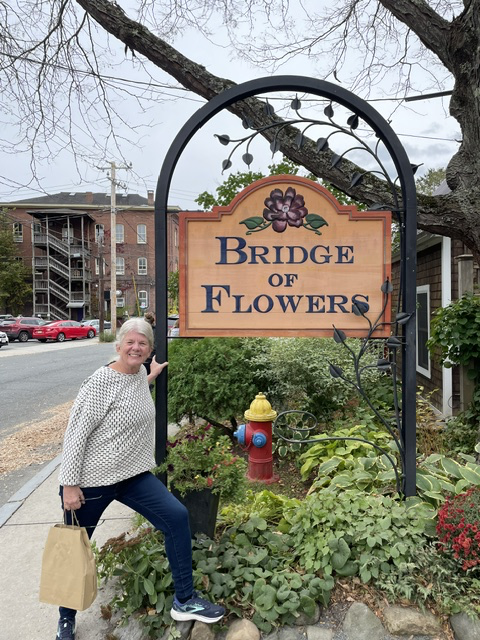
The bridge was originally built in 1908 as the Deerfield River trolley bridge, carrying electric streetcars between Shelburne and Buckland. For years it served as an important transportation link, but when trolley service ended in 1928, the bridge stood abandoned. Rather than tearing it down, local residents imagined something entirely different. In 1929, with the leadership of the Shelburne Falls Area Women’s Club and landscape architect Kate Gunn, the unused bridge was transformed into a public garden. What had once carried passengers now invited people to slow down, wander, and enjoy the beauty of flowers overlooking the Deerfield River.
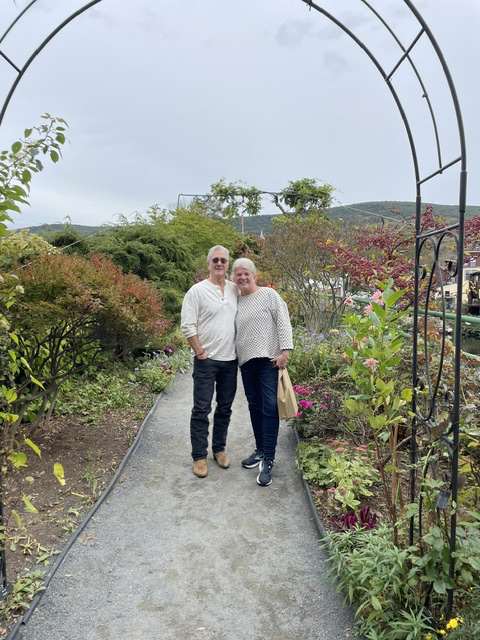
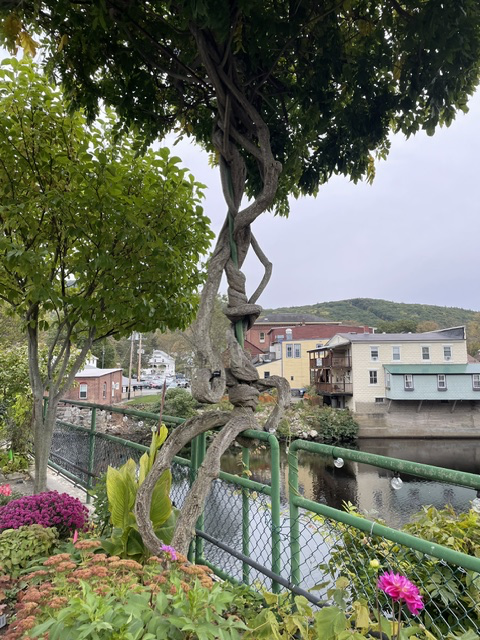
Today, the Bridge of Flowers is one of the most beloved landmarks in western Massachusetts. Stretching 400 feet across the river, it changes with the seasons as thousands of bulbs, annuals, perennials, shrubs, and vines create an ever-changing display of color. Volunteers continue the tradition begun nearly a century ago, carefully tending the gardens so that each visit offers something new.
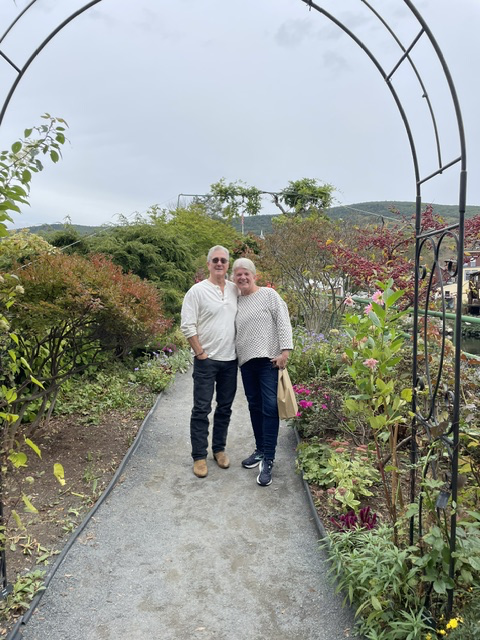
When Marty and I visited, we found ourselves lingering far longer than we had expected. The bridge is much more than a collection of flowers. Looking across the Deerfield River toward the hills beyond, it feels like a peaceful garden suspended between two communities. Twisting vines climb overhead, stone paths wind through carefully designed plantings, and every turn offers another quiet view of the river below.
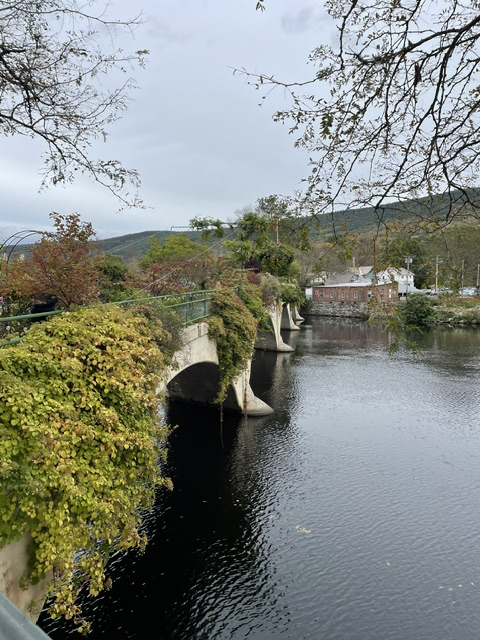
Nearly a century after the last trolley crossed the Deerfield River, this remarkable garden continues to welcome visitors from around the world, proving that sometimes the most enduring landmarks are those given a second life.
Read More From Nancy
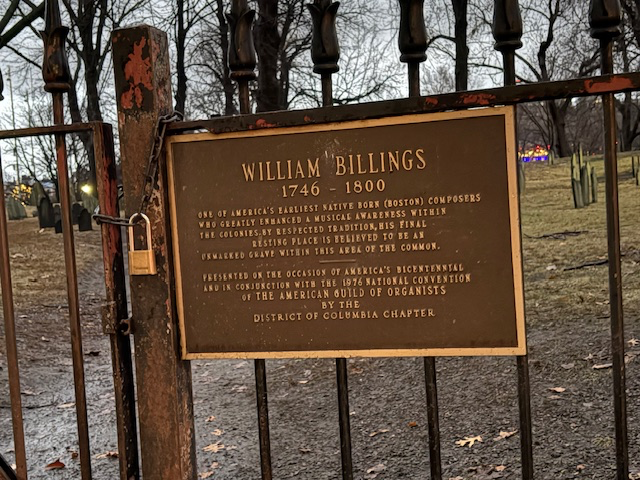
William Billings Plaque
Walking along the Boston Common, there are a number of plaques that quietly mark the lives of people who helped shape the early character of the city. One of them is for Willian Billings, listed as one of America’s earliest native-borncomposers. Billings was born and lived in Boston at a time when the country was just beginning to define its […]
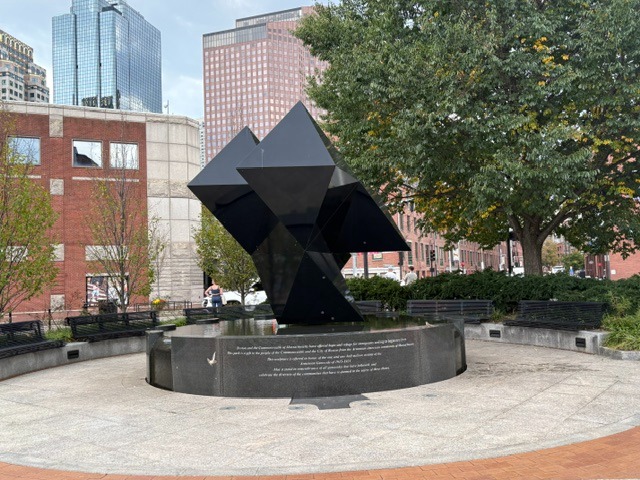
Armenian Heritage Park
During our walk around Boston, we stopped at Armenian Heritage Park on the Rose Kennedy Greenway. Its angular sculpture offers a different kind of memorial: one whose form changes while its purpose remains rooted in remembrance. The sculpture honors the lives lost during the Armenian Genocide of 1915–1923 and the genocides that followed. The park […]
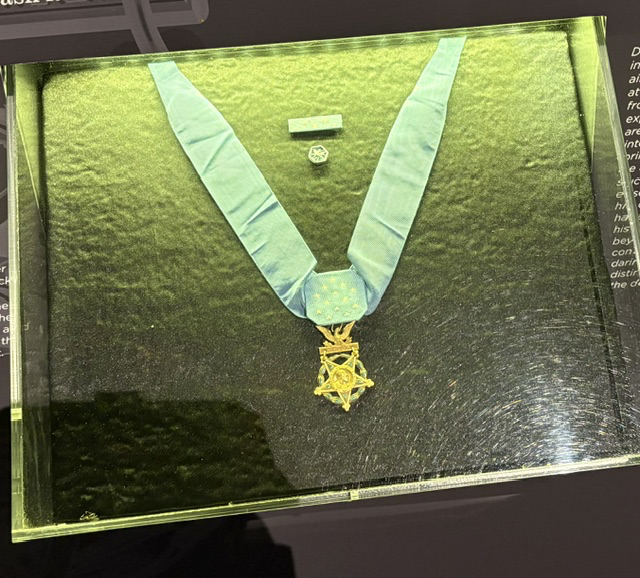
The Medal of Honor
Among all the artifacts displayed at the American Heritage Museum, few carry the emotional weight of the Medal of Honor. Unlike a tank, an aircraft, or a weapon, this small medal represents something that cannot be manufactured or engineered. It symbolizes extraordinary courage in the face of overwhelming danger. Established during the American Civil War […]

