The Abiel Smith School
As Marty and I walked through the streets of Boston with no particular destination, we came across this brick building on the north slope of Beacon Hill. It is the Abiel Smith School, and behind its relatively simple exterior is an important and complicated story about education, segregation, and Boston’s nineteenth-century Black community.
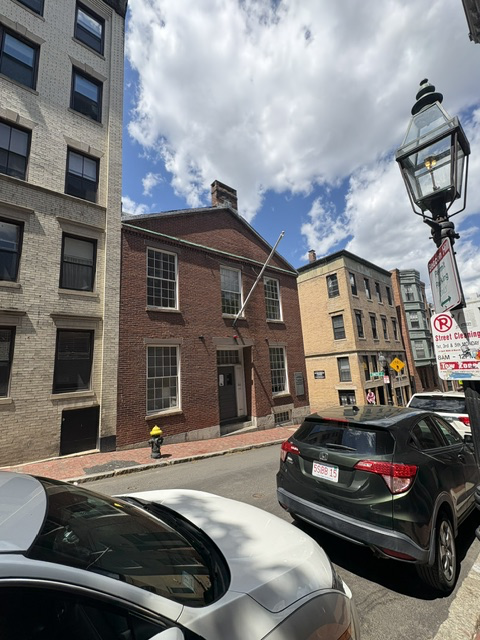
The school opened in 1835 and was the first building in the United States constructed specifically as a public school for Black children. Designed by architect Richard Upjohn, it was named for Abiel Smith, a wealthy white Boston businessman who left money in his will to support the education of Black children in the city.
Before the school was built, Black children had been educated in several locations, including the nearby African Meeting House. Boston’s Black community strongly valued education, but its children did not have equal access to the city’s public schools. The Abiel Smith School was created to provide them with a permanent school building, but it also became a physical symbol of Boston’s segregated educational system.
That contradiction is what makes the building’s history particularly interesting. Although the school represented an investment in the education of Black children, many Black parents objected to their children being required to attend a separate school. They argued that the Smith School received fewer resources and that segregation itself denied their children equal treatment.
The building consequently became connected to one of the earliest organized struggles against segregated public education in the United States. Black abolitionists and parents including William Cooper Nell campaigned for Boston’s schools to be integrated. In 1849, Benjamin Roberts challenged the system in court after his daughter Sarah was denied admission to a white school closer to their home. The Massachusetts Supreme Judicial Court ruled against the Roberts family in Roberts v. City of Boston in 1850.
The campaign continued despite that defeat. In 1855, the Massachusetts legislature prohibited racial segregation in the state’s public schools. Boston’s Black children could finally attend schools throughout the city, and the Abiel Smith School closed as a segregated public school.
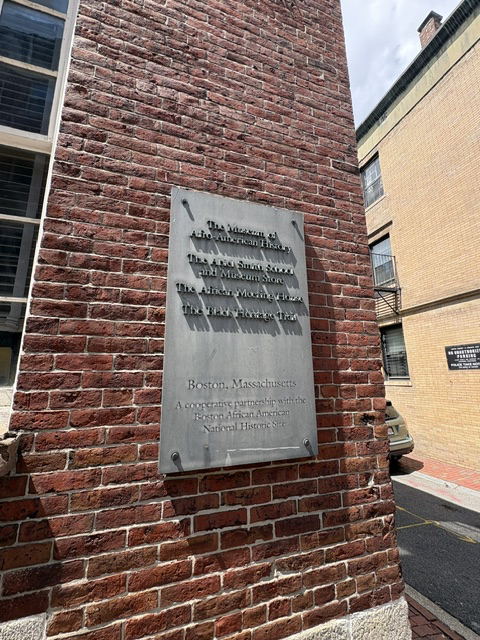
The building survived, however, preserving a physical connection to that struggle. Today it is part of the Museum of African American History and the Boston African American National Historic Site, helping tell the story of the free Black community that lived on Beacon Hill and fought for abolition, education and equal citizenship.
It is easy to think of the struggle over segregated schools as belonging to another time and another part of the country. Yet here on a quiet street on Beacon Hill stands a building connected to a fight over educational equality that began more than a century before the landmark school-desegregation battles of the twentieth century. It was another unexpected reminder that history really is all around us in Boston.
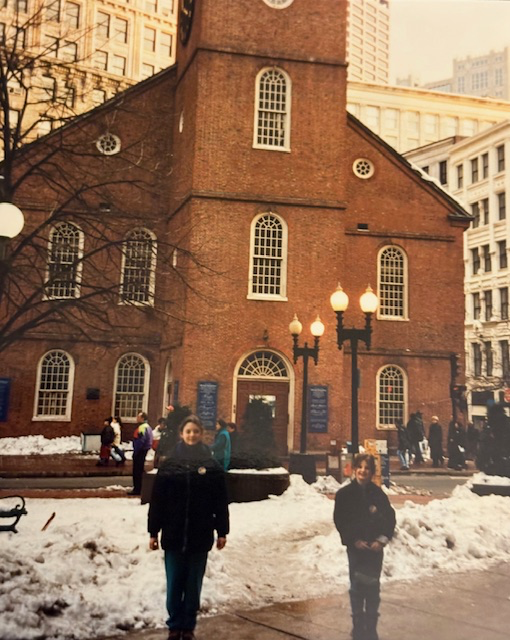
Read More From Nancy
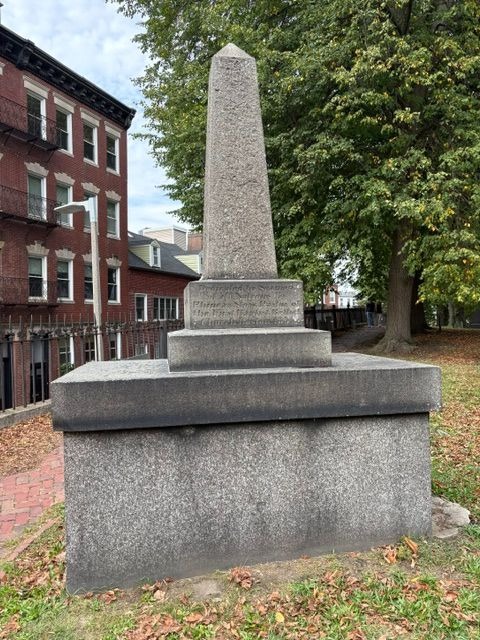
Edmund Hartt at Copp’s Hill Burying Ground
The monument to Edmund Hartt at Copp’s Hill Burying Ground connects this historic cemetery to Boston’s shipbuilding waterfront. Hartt owned the North End shipyard where the USS Constitution was built, helping provide the setting and skilled labor for one of the young United States Navy’s most ambitious projects. His memorial preserves the name of a […]
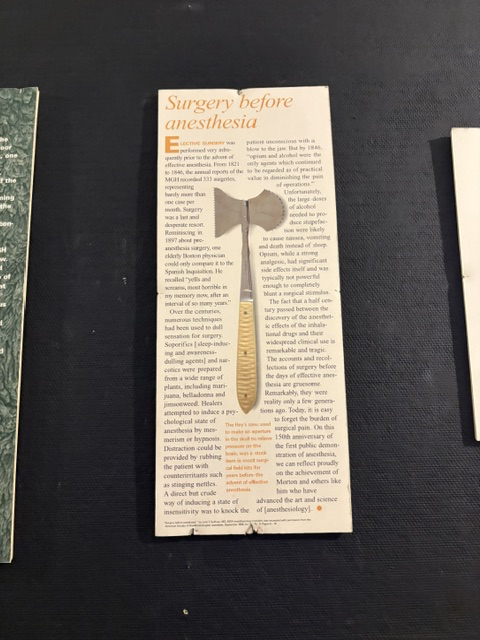
Surgery Before Anesthesia
Among the small historical displays in Massachusetts General Hospital’s Bulfinch Building, this one caught my attention because it asks us to imagine something that is almost incomprehensible today: undergoing surgery while fully conscious and able to feel what was happening. Before reliable surgical anesthesia became available in the nineteenth century, physicians had surprisingly few ways […]
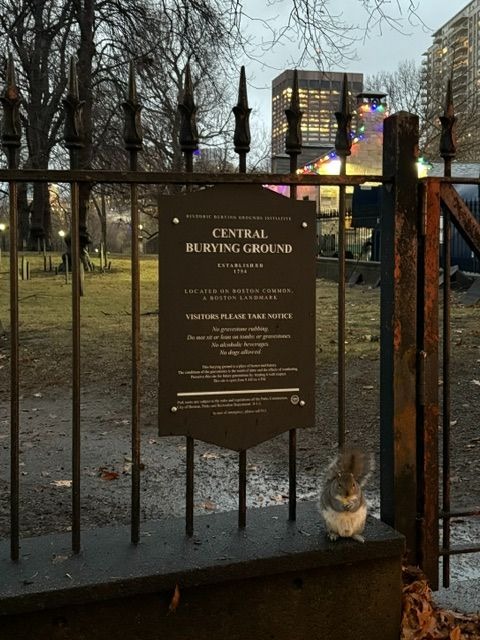
Central Burying Ground
Along the Boylston Street edge of Boston Common, Central Burying Ground preserves a quiet part of the city’s history. Established in 1756, it became a resting place for people whose lives connected Boston to commerce, the arts, and the upheaval of the American Revolution. Those buried here include British soldiers who died during the Revolutionary […]

