Rocky Hill Meeting House
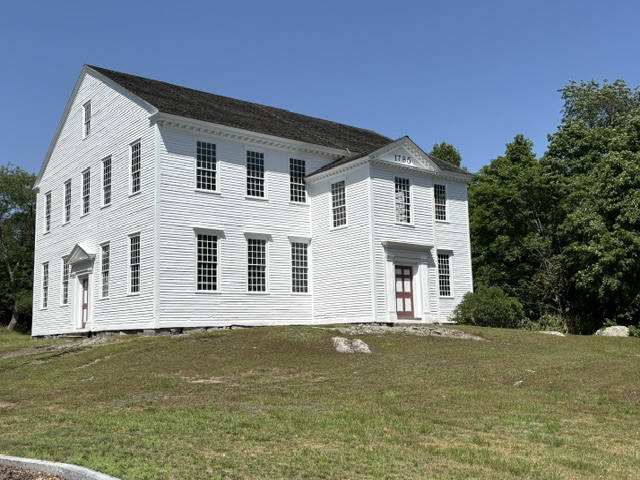
Driving through Amesbury, it would be easy to pass the Rocky Hill Meeting House without realizing how special it is. Standing on a rise above the road, this simple white building has been part of the landscape since the eighteenth century and remains one of the best-preserved early meeting houses in New England.
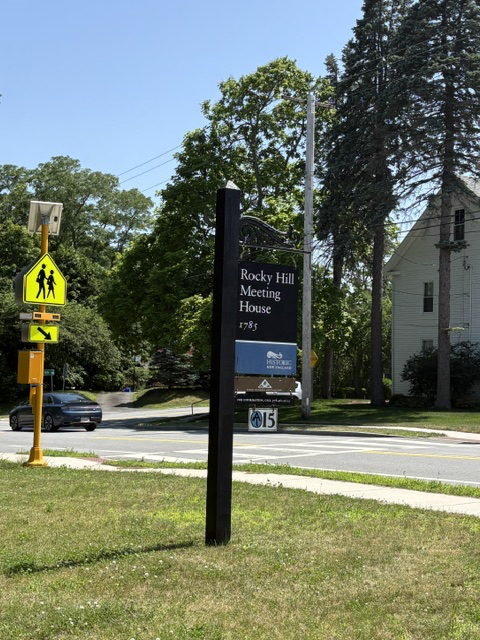
Built in 1785, the Rocky Hill Meeting House was constructed to serve the Second Parish of Salisbury, an area that later became part of Amesbury. In eighteenth-century New England, a meeting house was much more than a church. It was a central gathering place where neighbors worshiped, discussed community matters, and shared the events that shaped everyday life.
One of the most interesting stories associated with Rocky Hill involves the religious revival movement known as the Second Great Awakening. In the early nineteenth century, traveling ministers held revival meetings throughout New England, drawing large crowds and challenging the more established forms of Congregational worship. Rocky Hill became part of this period of religious change, with different ministers and religious ideas passing through the community.
The meeting house also witnessed a significant division within its own congregation. In 1826, disagreements over religious doctrine led part of the congregation to separate and form another religious society. These kinds of divisions were occurring throughout New England as traditional Congregational communities confronted new denominations and changing interpretations of faith. Rocky Hill therefore provides a glimpse into a period when the religious landscape of New England was undergoing considerable change.
But perhaps the most important story of Rocky Hill is not one famous meeting or individual. It is the remarkable survival of the building itself. Many eighteenth-century meeting houses were enlarged, modernized, converted to other uses, or demolished. Rocky Hill escaped most of those changes.
Inside, much of the original arrangement remains. Box pews fill the meeting space, and the high pulpit overlooks the congregation. Families once purchased or rented pews, and seating could reflect social standing within the community. The large multi-paned windows provided natural light in an era before electricity, while the relatively plain interior reflected the simplicity of early New England Congregational worship.
By the nineteenth century, the congregation eventually moved elsewhere, leaving the old meeting house largely unused. Ironically, that helped preserve it. Because generations did not continually modernize the building, much of its eighteenth-century appearance survived.
In 1941, the property came under the care of what is now Historic New England, which continues to preserve the meeting house and its remarkably intact interior.
More than two centuries later, the meeting house still stands above the road much as it did for those earlier residents. It is exactly the kind of place that reminds me why I enjoy looking for history all around us. A seemingly simple building that, when we stop to look more closely, can tell us something about the generations of people who came before us.
Read More From Nancy
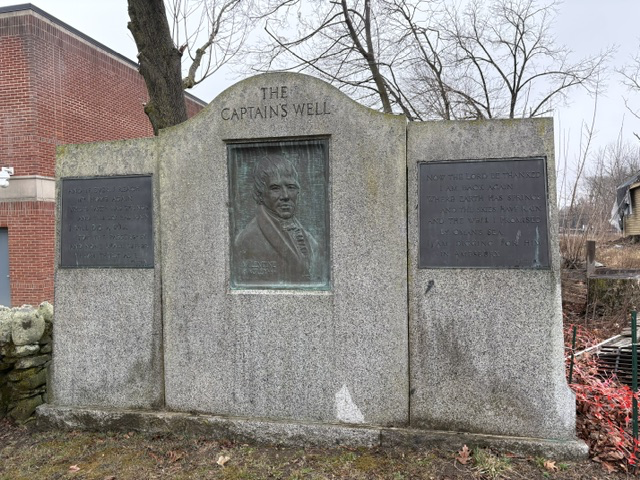
The Captain’s Well
This monument in Amesbury is known as The Captain’s Well, and it quietly preserves pat of the town’s maritime past. The restored stone wall, complete with its long wooden sweep and bucket arm, reflects a time when wells were central gathering places within a community. Before modern plumbing, places like this supplied water not only for homes, but […]
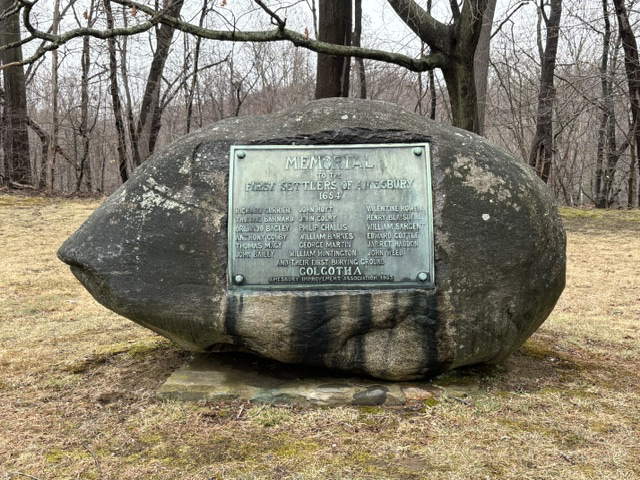
First Settlers Memorial
One of the things I enjoy most while exploring small towns is discovering the smaller memorials that quietly preserve the memory of the people that first settled these communities. This monument in Amesbury honors the first settlers of Amsbury in 1654, listing many of the families who helped establish the town during the early colonial period. What […]
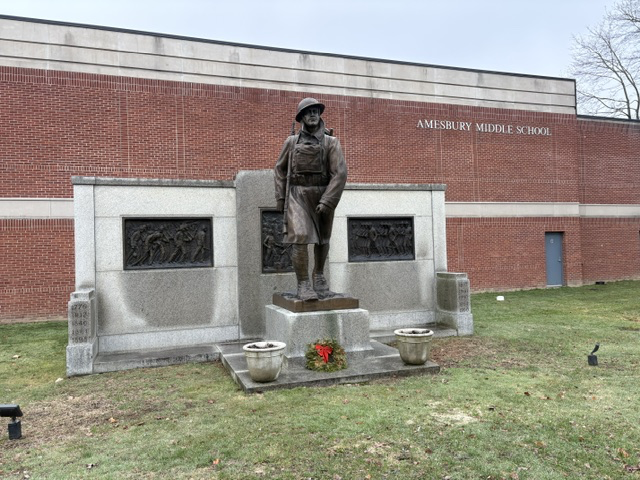
Doughboy Statue
This monument in Amesbury is a classical American “Doughboy” statue, built in honor of the local men who served during World War I. Following the war, communities across the United States erected these monuments as public expressions of remembrance, grief, patriots, and civic pride. The term “Doughboy” was the common nickname given to American infantry soldiers during World War […]

