Revolutionary War Medallion
I enjoy wandering through old cemeteries and to the small symbols that mark the lives of people who came before us. Among the most powerful markers are the medallions places at the graves of Revolutionary War veterans, each one a reminder of the earliest defenders of our young nation resting beneath New England’s grass.
As I explored these burying grounds, I began noticing that not all Revolutionary War markers are alike. There are three distinct designs, from a different era of remembrance.

The oldest design I found is the bronze or cast-iron Minuteman medallion, a round disk with the familiar figure of the Concord Minute Man in the center and the word “Revolutionary” encircling him. These markers date to the late 1800s through the early 1900s when Massachusetts first undertook efforts to formally identify and honor its Revolutionary veterans. These medallions reflect the early movement to preserve the early memory of the nation.
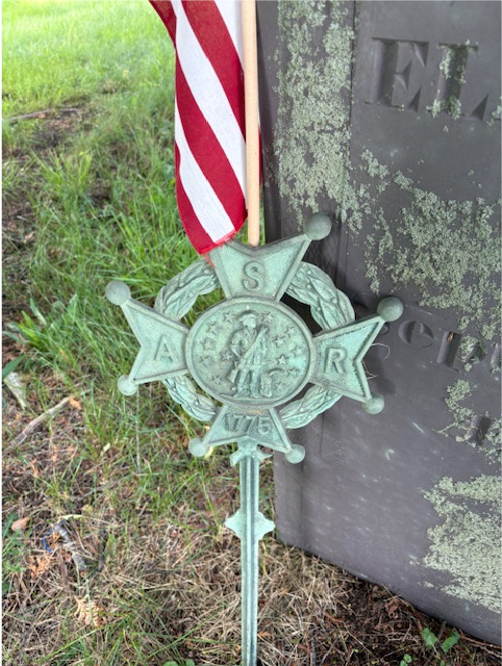
The second type is the ASR medallion, stamped with those letters along the border, the Minuteman in the center, and the date 1775 beneath him. These markers were placed by early chapters of the Sons of the American Revolution and Sons of the Revolution, heritage organizations founded in the 1880s and 1890s. These medallions were used primarily from the 1890s through 1930s, often placed by descendants once a veteran’s service was verified.
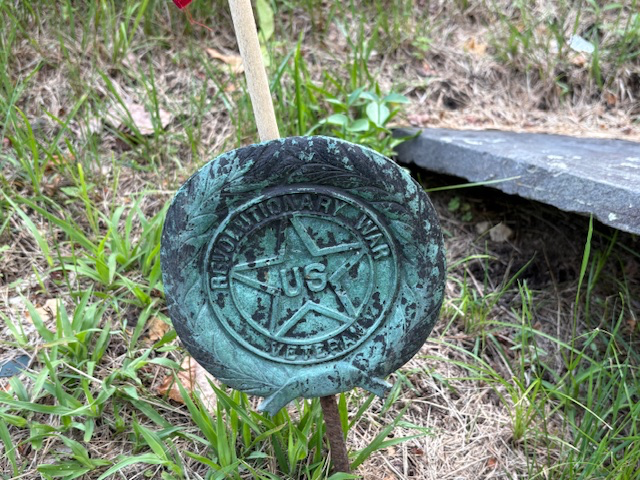
The newest version is the circular medallion with a five-point star, the letters “US” in the center and the words Revolutionary War Veterans around the edge. These began appearing in the mid-20th century (1950s) and continue to be produced today. They were created as a standardized, long-lasting replacement of the older cast-iron markers that had weathered or disappeared.
Together, these medallions create a historic timeline. From the earliest efforts to rediscover the graves, to the lineage-driven memorials to the modern standardized marks used today. Each medallion represents a chapter in the long story of how Massachusetts has honored its Revolutionary war veterans.
Each of these medallions is a reminder of the men who answered the first call for liberty and for the generations who refused to let their names fade from history.
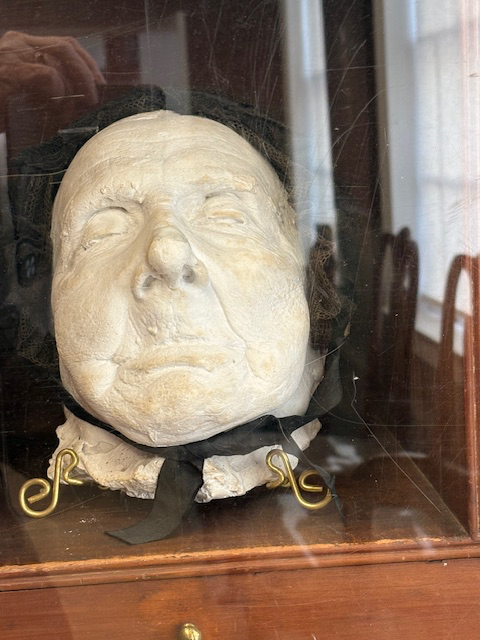
Read More From Nancy
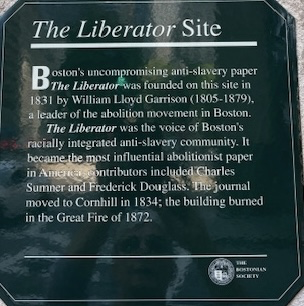
The Liberator Site
I had just stepped away from the busy Freedom Trail, when I came across the bronze plaque on a quiet Boston street. It read: “The Liberator Site – Boston uncompromising anti-slavery paper. The Liberator was founded on this site in 1831 by William Lloyd Garrison…..“ Standing at this spot, I realized that this was the birthplace […]
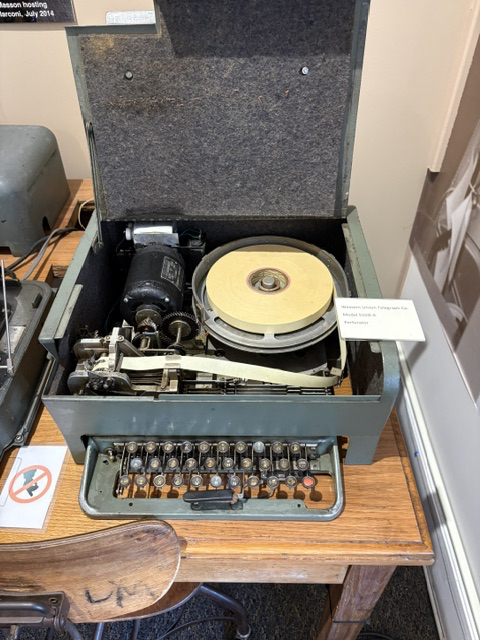
From Telegraph to Teletype
The development of telegraphy transformed long-distance communication. Instead of waiting days or weeks for a written message to travel by ship, train or horseback, information could be transmitted across wires almost instantly. In 1844, Samuel Morse publicly demonstrated an electric telegraph connection between Washington, D.C., and Baltimore. Messages were translated into patterns of dots and […]
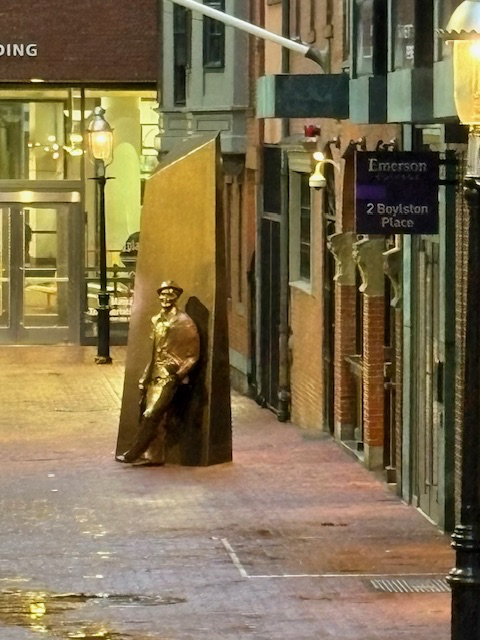
Norman Lear Statue
Heading back to our car, I stopped to grab this photo in the alley near Emerson College. It is one of those narrow Boston passageways that I might have easily walked past without a thought but tucked into this space is something special: a life-size bronze statue of Norman Lear. Lear attended Emerson in the early 1940s, enrolling […]

