Death Mask
In the Dedham History Museum, is this death mask. An intimate impression of a person’s face taken shortly after death.
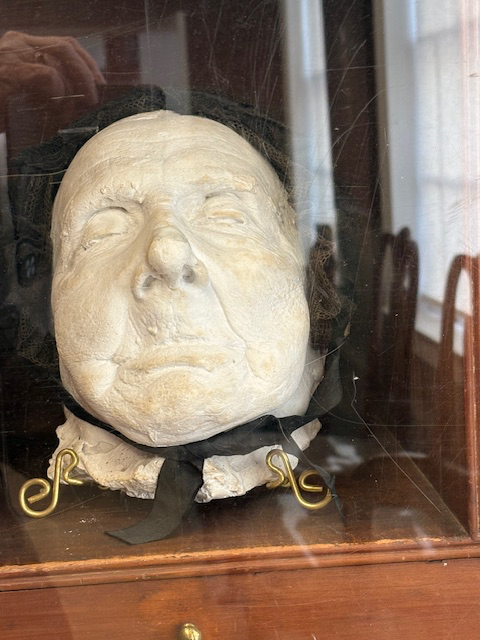
The practice of creating death masks has a long history. In ancient Egypt, masks were place with the dead, though they were often idealized. In ancient Rome, families preserved wax masks of ancestors as a way to honor lineage and memory. By the Renaissance and into the 18th and 19th centuries, the practice evolved into taking plaster casts directly from the face, valued for their remarkable accuracy.
Shortly after death, the face would be prepared and covered with plaster to create a mold. Once removed, the mold would be used to form a cast, capturing every detail, every contour. It was not an interpretation, but an exact record.
These masks served many purposes. They were used by artists to create sculptures and monuments, by families as memorials, and even by early scientists who believed facial features could reveal something about character.
By the late 19th century, the practice began to fade. Photography offered an easier, less invasive way to preserve a likeness. Cultural attitudes shifted and remembrance moved toward portraits, images and written histories rather than physical casts.
This death mask represents a time when preserving a face required immediacy and physical connection, when memory was held not in an image, but in form.
Read More From Nancy
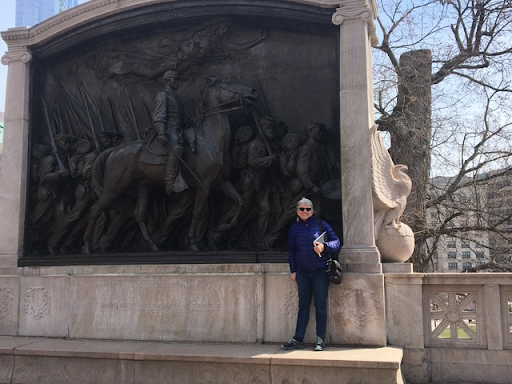
Shaw Memorial
Every time I visit Boston Common, I find myself stopping to admire this remarkable relief by Augustus Saint-Gaudens. Not only is it one of the finest works of public art in America, but it captures its subject with extraordinary power and dignity. Rather than glorifying war, the sculpture honors the courage, sacrifice, and determination of […]
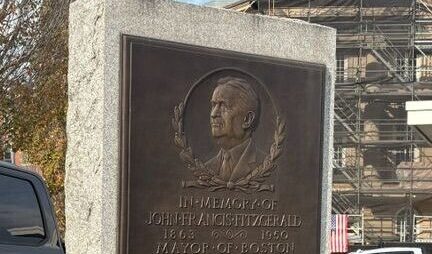
John Francis “Honey Fitz” Fitzgerald
Near St. Stephen’s Church in Boston’s North End, a bronze portrait set into a granite memorial honors John Francis Fitzgerald, remembered as “Honey Fitz”. His name connects the neighborhood with Boston’s political history and the Kennedy family, but his own story began here long before his grandson became president. Born in the North End in […]
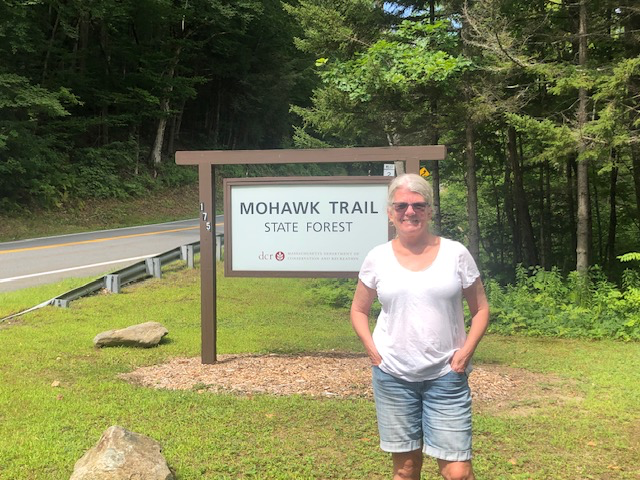
Mohawk Trail State Forest
While driving the Mohawk Trail across Massachusetts, we stopped at Mohawk Trail State Forest. The forest was not our final destination, but it offered us an opportunity to pause within the landscape through which this historic route passes. Long before automobiles crossed the Berkshire Hills, Indigenous peoples traveled through this region along pathways connecting the […]

