From Telegraph to Teletype
The development of telegraphy transformed long-distance communication. Instead of waiting days or weeks for a written message to travel by ship, train or horseback, information could be transmitted across wires almost instantly.
In 1844, Samuel Morse publicly demonstrated an electric telegraph connection between Washington, D.C., and Baltimore. Messages were translated into patterns of dots and dashes known as Morse code. Telegraph lines spread rapidly, and the completion of the first transcontinental telegraph line in 1861 connected the eastern and western United States.
Sending and receiving Morse code required trained operators. Each message had to be carefully interpreted and written or typed before it could be delivered. Telegraph offices became important communication centers where people sent business instructions, family news and announcements of births, deaths and other significant events.
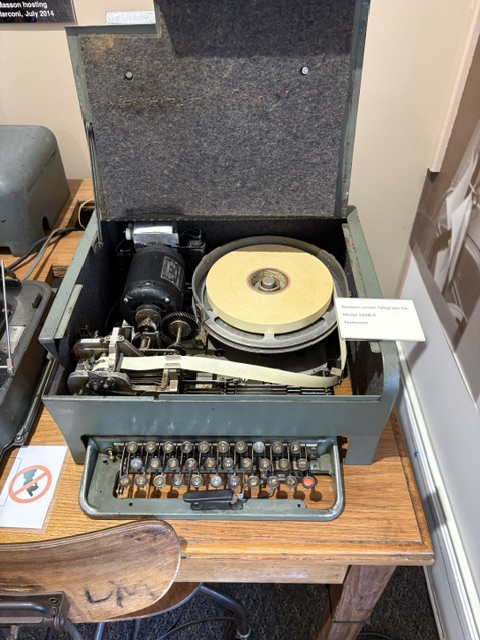
By the 1920s, teletype equipment began changing this process. An operator could type a message on a keyboard, and the machine converted each character into electrical signals. At the receiving location, another machine automatically printed the message. This reduced the need to copy every message by hand and allowed information to move more rapidly through expanding communications networks.
Companies such as RCA connected teletype systems with radio and telegraph services. A message received from a ship by Chatham Radio could therefore be transferred into the land-based network and forwarded to its final destination. The surviving equipment marks an important transition from communication based entirely upon Morse code to systems in which messages could be typed, transmitted and printed automatically.
Read More From Nancy
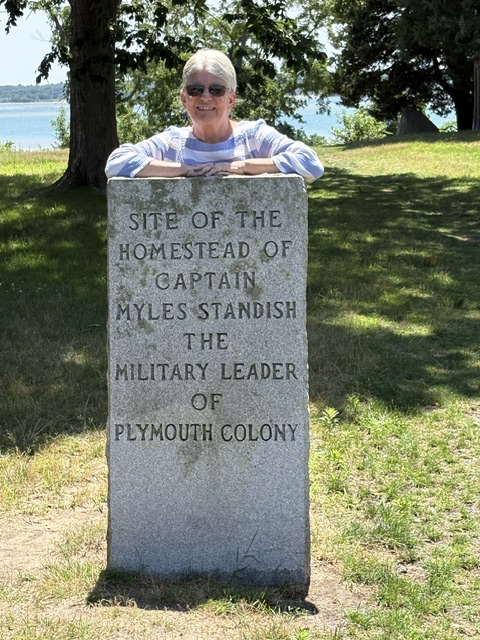
The Myles Standish Homestead
On our camping trip to Plymouth, we wanted to explore more of the Pilgrim story beyond the places we had visited in Plymouth itself. That brought us to nearby Duxbury and the homestead of Captain Myles Standish. Standish is closely associated with the founding of Duxbury, and this was the community where he established his […]
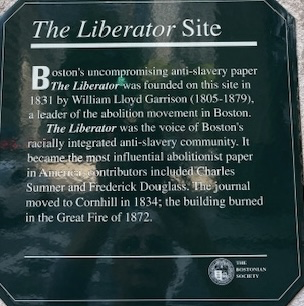
The Liberator Site
I had just stepped away from the busy Freedom Trail, when I came across the bronze plaque on a quiet Boston street. It read: “The Liberator Site – Boston uncompromising anti-slavery paper. The Liberator was founded on this site in 1831 by William Lloyd Garrison…..“ Standing at this spot, I realized that this was the birthplace […]
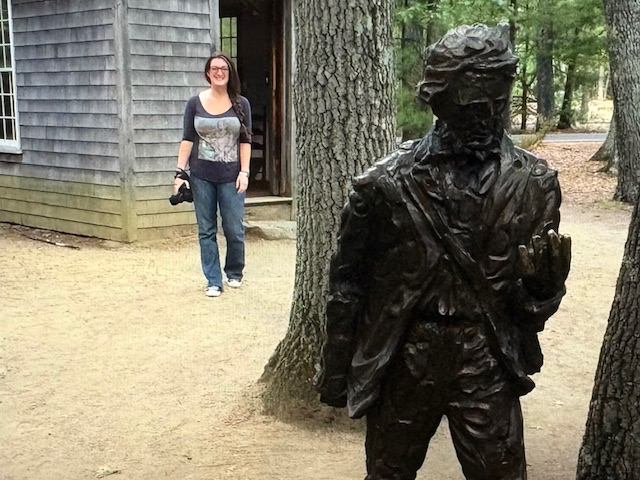
Replica of David Thoreau’s Cabin
Just outside the replica of Henry David Thoreau’s cabin at Walden Pond stands this bronze statue of Thoreau, depicting him much as we might imagine him during his years here. He is simply dressed and seemingly caught in the act of walking through the landscape he observed so carefully. Thoreau came to Walden Pond in […]

