Norman Lear Statue
Heading back to our car, I stopped to grab this photo in the alley near Emerson College.
It is one of those narrow Boston passageways that I might have easily walked past without a thought but tucked into this space is something special: a life-size bronze statue of Norman Lear.
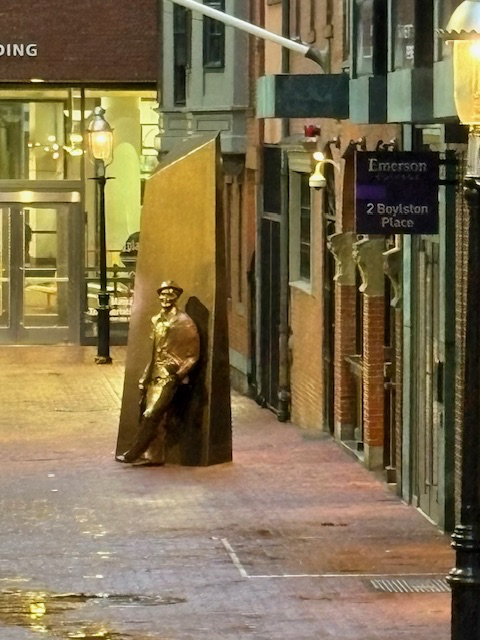
Lear attended Emerson in the early 1940s, enrolling in 1940 before leaving to serve in the U.S. Army Air Force during World War II. Though his time at the college was brief, his connection to Emerson remained strong throughout his life.
Installed in 2018, the sculpture honors Lear as both an alumnus and a storyteller who changed the landscape of American culture. He is depicted standing casually, holding a script for All in the Family, the groundbreaking show that brought conversations about race, politics, and family dynamics into American living rooms in a way that had not been done before.
Behind him is a tall bronze backdrop engraved with references to his work: The Jeffersons, Maude, and other shows that pushed boundaries and reflected the changing social fabric of the country. It is a quiet reminder of just how far his influence reached.
The statue is also notable as the first public statue installed on Emerson College’s campus, marking a shift in how the college recognized its alumni, and not just academically but culturally.
The setting is what makes its memorable.
Boylston Place sits within Boston’s Theater District, an area long associated with performance, storytelling and the arts.
It was a cold rainy night, but I wanted to capture this sculpture to learn more about it later. Moments of history or significance are often placed just slightly out of view. We don’t plan on seeing them, we discover them.
And once you see them, the space changes. What was just an alley, becomes a place that holds a story, waiting to be noticed.
Read More From Nancy
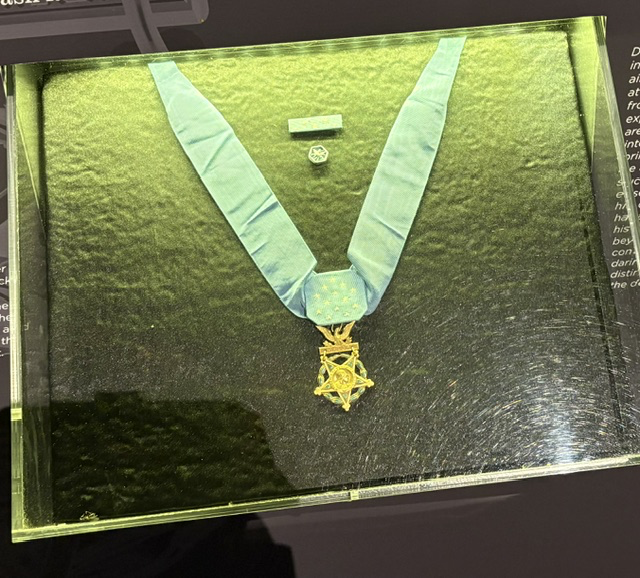
The Medal of Honor
Among all the artifacts displayed at the American Heritage Museum, few carry the emotional weight of the Medal of Honor. Unlike a tank, an aircraft, or a weapon, this small medal represents something that cannot be manufactured or engineered. It symbolizes extraordinary courage in the face of overwhelming danger. Established during the American Civil War […]
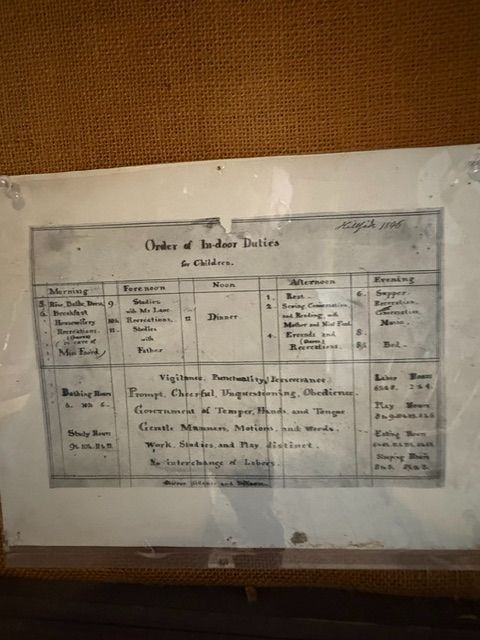
Bronson Alcott’s Daily Duties
A child’s education, in Bronson Alcott’s view, extended throughout the day. Lessons mattered, but so did meals, household responsibilities, recreation, rest, and the ways children treated others. His “Order of In-door Duties for Children,” displayed at Orchard House, offers a glimpse into how he attempted to put those beliefs into practice. The schedule divides the […]
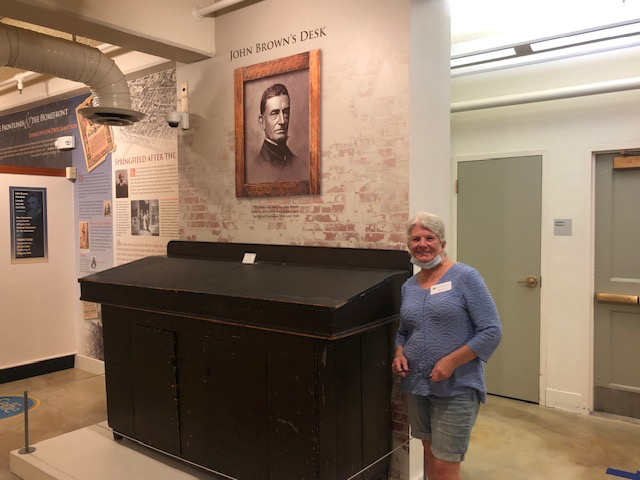
John Brown’s Desk
I stood beside John Brown’s desk at the Lyman and Merrie Wood Museum of Springfield History. It is a large, dark piece of furniture, made for the practical work of keeping accounts and handling correspondence. Brown used it during the years he worked as a wool merchant in Springfield. The museum also identifies it as […]

