Johnny Cake Hill
On Johnny Cake Hill in New Bedford, the Seamen’s Bethel and the neighboring Mariners’ Home preserve the history of a port whose prosperity depended on men undertaking long and dangerous voyages. Together, the buildings offered spiritual support and practical shelter to the whalers, fishermen, and other sailors who passed through the city.
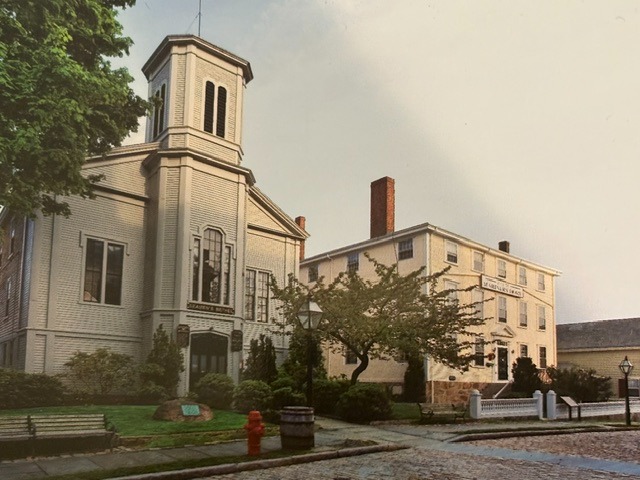
The Seamen’s Bethel opened in 1832 through the efforts of the New Bedford Port Society for the Moral Improvement of Seamen, organized two years earlier. Local merchants and other citizens were concerned about sailors returning from years at sea, sometimes spending their earnings quickly and finding themselves without support. After initially holding religious services at the waterfront and in Town Hall, the society established a permanent, nondenominational chapel.
The name Bethel means “House of God.” For sailors preparing to leave New Bedford, the chapel provided a place to gather before facing the uncertainties of another voyage. Herman Melville attended services here before sailing aboard a whaling vessel on January 3, 1841. A decade later, he transformed the setting into the Whalemen’s Chapel in Moby-Dick.
In the novel, Father Mapple delivers his sermon from a pulpit shaped like a ship’s bow. That memorable feature belonged to Melville’s imagination rather than the chapel he visited. Following the popular 1956 film adaptation, visitors expected to find such a pulpit, and one was subsequently installed. The building thus acquired a feature inspired by its fictional counterpart—an unusual instance of literature helping reshape the place that first inspired it.
The chapel also became a place of remembrance. Memorial tablets inside commemorate mariners who died at sea, preserving names and losses that might otherwise have remained far beyond the horizon. The building’s familiar association with Melville rests alongside this more intimate purpose: giving a community somewhere to remember people whose bodies could not always be brought home.
The Ladies Branch of the Port Society operated the home, providing clean, safe accommodations for men working in or passing through the port. Its proximity to the Bethel brought lodging and religious services together. A house created for a wealthy merchant became a refuge for the working sailors on whom the maritime economy depended.
As New Bedford’s maritime industries changed, the Mariners’ Home adapted to new uses, including offices, exhibits, and community activities. The Bethel retained its religious role. Their preservation keeps attention on the people behind the city’s whaling history: those who financed the voyages, those who sailed, those who offered assistance ashore, and the families who waited for news.
Read More From Nancy
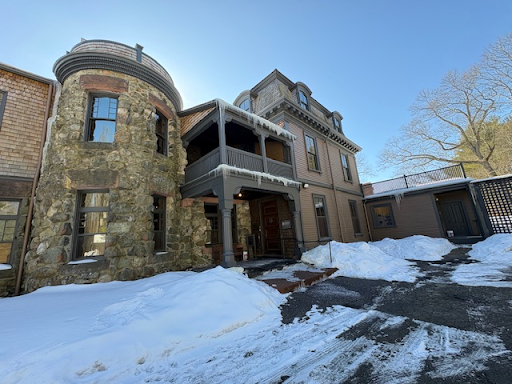
Stonehurst: The Robert Treat Paine Estate
Tucked away in Waltham, Massachusetts, Stonehurst is one of the region’s architectural treasures. The estate was created between 1883 and 1888 for Robert Treat Paine Jr., a prominent Boston lawyer and philanthropist whose father had helped found the Museum of Fine Arts, Boston. Paine envisioned the property not simply as a house, but as a […]
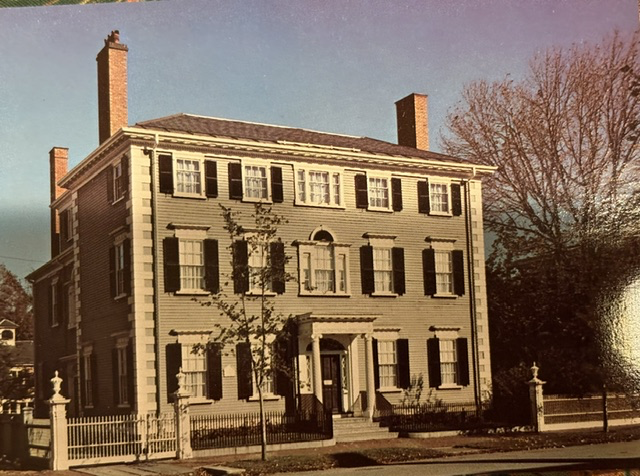
Stephen Phillips House
I drove to Salem to visit the Stephen Phillips Memorial Trust House, one of the city’s finest historic homes. Walking through its rooms felt like stepping back into the period when Salem was one of America’s most important seaports and a center of international trade. More than a museum, the house offers a glimpse into the […]
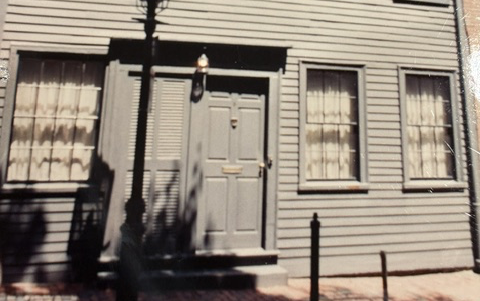
George Middleton House
Standing at 5 Pinckney Street on Boston’s Beacon Hill, the George Middleton House preserves an important chapter in the city’s early African American history. Constructed between 1786 and 1787, it is considered the oldest surviving residence on Beacon Hill and a rare example of a late-eighteenth-century Boston home built and owned by African Americans. The […]

