George Middleton House
Standing at 5 Pinckney Street on Boston’s Beacon Hill, the George Middleton House preserves an important chapter in the city’s early African American history. Constructed between 1786 and 1787, it is considered the oldest surviving residence on Beacon Hill and a rare example of a late-eighteenth-century Boston home built and owned by African Americans.
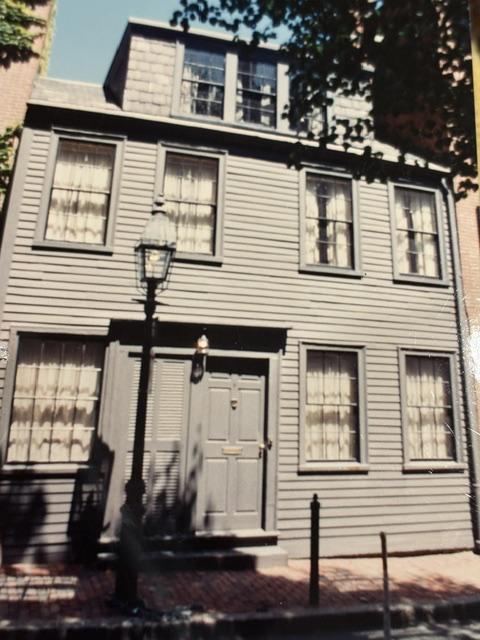
The two-family wooden house was constructed by George Middleton and Louis Glapion. Glapion, a hairdresser who may have come from the French West Indies, operated his business from the property and lived there until his death in 1813. His wife, Lucy, remained in the house until 1832.
George Middleton was a horse trainer and liveryman, but his influence extended well beyond his occupation. During the American Revolution, he led the Bucks of America, a Black militia company formed in Boston. Although few records of the unit have survived, its members are believed to have guarded the property of Boston merchants and may also have been known as the Protectors.
Near the end of the war, Massachusetts governor John Hancock presented the Bucks of America with a ceremonial flag recognizing their service. The flag, bearing the initials of both Hancock and Middleton, survives in the collection of the Massachusetts Historical Society and remains one of the few known objects directly connected to the unit.
After the Revolution, Middleton became an important leader within Boston’s Black community. He served as the third Grand Master of the African Lodge, which later became associated with Prince Hall Freemasonry. In 1796, he joined other community leaders in establishing the African Society, also known as the Boston African Benevolent Society. The organization provided assistance, promoted education and supported the advancement of Boston’s African American residents.
Middleton also advocated for education and the abolition of slavery. His work contributed to the creation of organizations that allowed Boston’s Black community to provide mutual support and challenge the racial discrimination that continued even after slavery ended in Massachusetts.
The George Middleton House is now a privately owned residence and is not open to the public. It is included on Boston’s Black Heritage Trail and forms part of the Boston African American National Historic Site. Its survival preserves the story of a Revolutionary War veteran, community leader and activist whose contributions helped establish a tradition of Black civic leadership on Beacon Hill.

Read More From Nancy
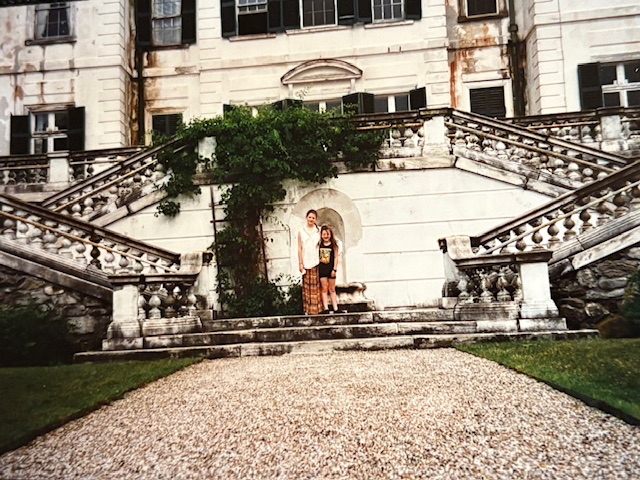
Edith Wharton’s Mount
Exploration through road trips was a big part of homeschooling in our household. Each spring, when historic homes reopened for the season, off we would go, ready to step into another life and another era. One such stop was Edith Wharton’s home in Lenox, Massachusetts, a place we returned to more than once, always drawn back […]
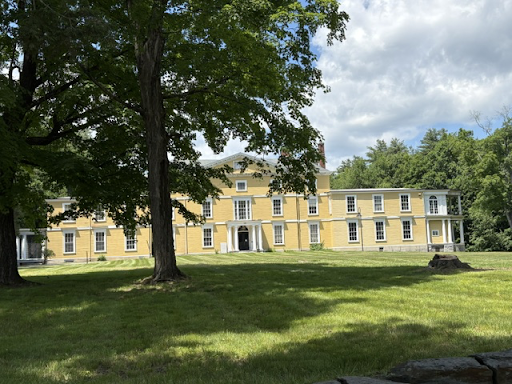
Nathaniel Thayer Estate
Driving through South Lancaster, I was surprised to come upon one of the grandest estates in central Massachusetts: the Nathaniel Thayer Estate, later known as Thayer Hall. Set amid expansive lawns and towering trees, the stately yellow mansion immediately conveyed the elegance and prosperity of nineteenth-century New England. Although many visitors associate South Lancaster with […]
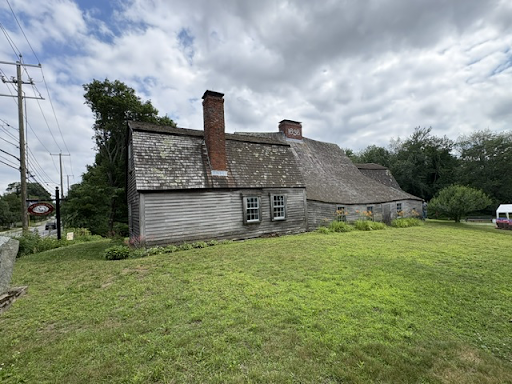
The Fairbanks House
While exploring Dedham, I stopped at the Fairbanks House, a remarkable reminder of New England’s earliest colonial history. At first glance, it appears to be a simple wooden farmhouse, but it is recognized as the oldest surviving timber-frame house in North America. Construction of the original section of the house began around 1637 for Jonathan […]

