Oliver Wendell Holmes
Oliver Wendell Holmes, Jr., remains one of the towering figures in American legal history, whose ideas continue to shape constitutional law and the way we think about freedom and the role of courts. His life spanned history from the Civil War through the Great Depression with nearly 30 years on the U.S. Supreme Court.
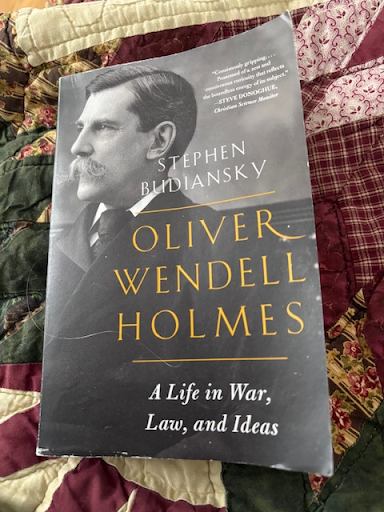
Holmes is remembered for reshaping the meaning of free speech in America. In his 1919 opinion in Schenck v. United States, he introduced the idea that speech could be limited when it created a “clear and present danger,” writing the famous warning about falsely shouting fire in a crowded theater. Early in his career he was willing to accept restrictions on speech, but his thinking evolved quickly. His later dissent in Abrams v. United States would become one of the most powerful defenses of free expression where he argued passionately that truth emerges from a “free trade in ideas.” Generations of justices and scholars would look back on that dissent as a turning point in First Amendment law.
Holmes insisted that law was not an abstract logic, but a living expression of a society’s experiences. His statement: “the life of the law has not been logic, it has been experience” became the foundation of legal realism. He was known as the “The Great Dissenter” as he often wrote minority opinions that seemed radical at the time but would later become the guiding principles of modern constitutional law.
Holm’s complex life from a Civil War veteran who carried battlefield scars his entire life, to a disciplined Bostonian shaped by duty and intellect and a judge who balanced fierce independence with restraint come alive in the book: “Oliver Wendell Holmes: A Life in War, Law and Ideas” by Stephen Budiansky. This biography shows how Holme’s military service in the Union Army left indelible marks on his worldview, hardening his belief in the necessity of civic duty and the limits of judicial power.
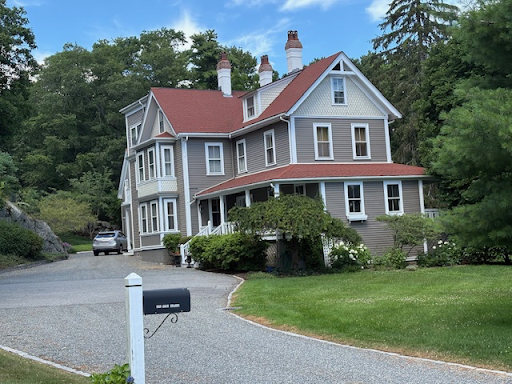
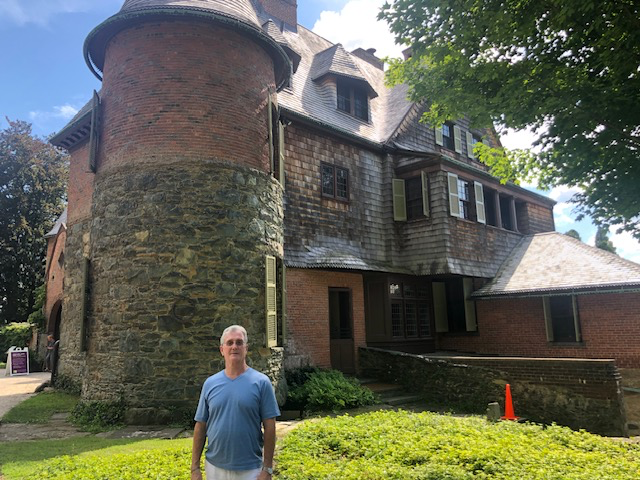
Holmes’s summer home in Beverly Farms, MA, is where he retreated from the demands of the Court. It is here that he read, reflected and corresponded with some of the leading thinkers of his era, continuing the intellectual engagement that defined him.
Holmes believed in the power of ideas, the necessity of democratic debate and the tension between liberty and order.
Read More
Read More From Nancy
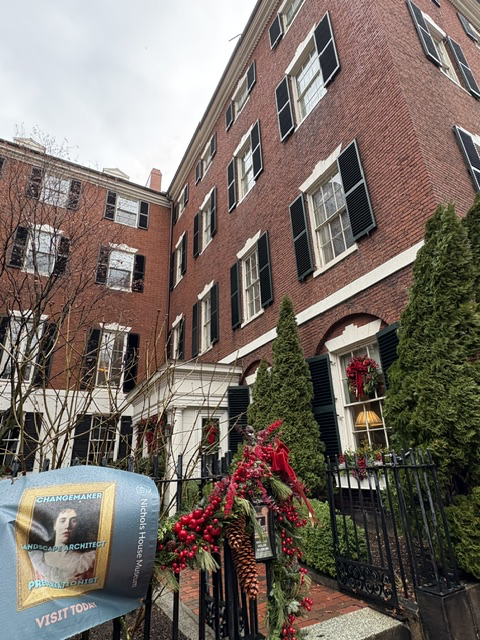
Nichols House Museum
Many historic houses close for the winter season, making December a challenging time for a house museum enthusiast. When Marty was looking for something to do for my December birthday, he managed to reserve a tour of the Nichols House Museum on Boston’s Beacon Hill. What seemed like a simple outing quickly became an adventure of […]
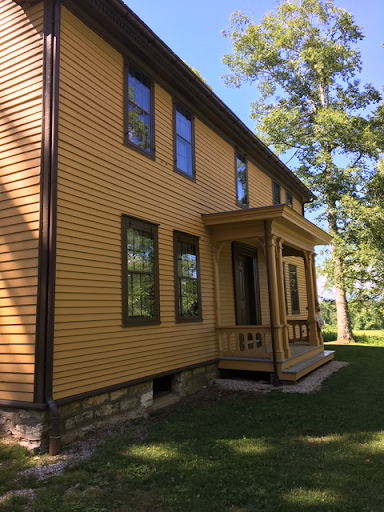
Arrowhead
I’ve visited Arrowhead a couple of times over the years, and each visit leaves me with a deep appreciation of the home and the life that lived within its rooms. Nestled among the hills of Pittsfield, MA, this farmhouse holds an important chapter in American literary history. It was here, from 1850 to 1863, that Herman […]
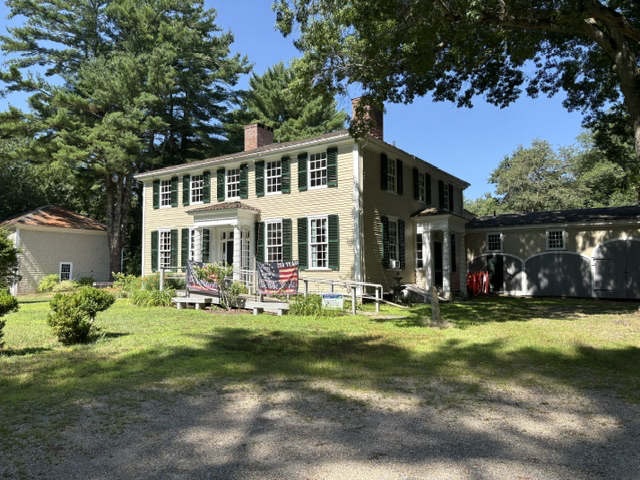
The Oliver Estate
On my way home from our camping trip to Plymouth, I made a side trip to Middleborough specifically to visit the Oliver Estate. I had learned that this was the home of one of Massachusetts’s prominent Loyalist families, and I wanted to understand more about the people who chose to remain loyal to the Crown […]

