Paul Revere Mall and Statue
Walking through Boston’s North End, I stopped at Paul Revere Mall to spend more time with a familiar landmark. The bronze figure of Revere on horseback stands above the brick walkway, surrounded by trees and the buildings of the neighborhood he once called home. His extended arm and the horse’s raised foreleg give the monument a sense of movement, even within this sheltered space.
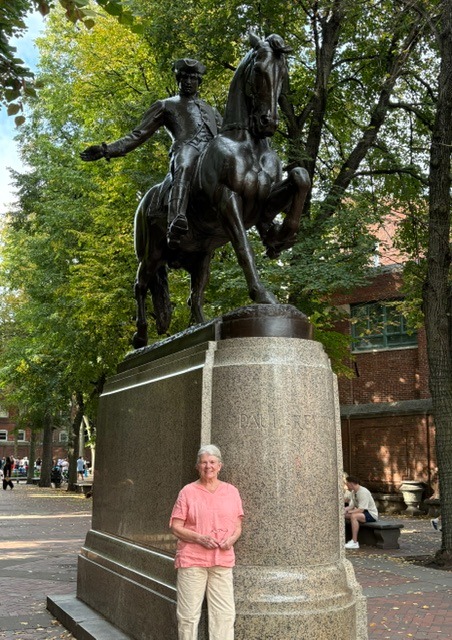
Also known as the Prado, the Mall connects Hanover Street with the area near Old North Church. Landscape architect Arthur Shurcliff, assisted by his son Sidney, designed the walkway in 1933, drawing inspiration from Havana’s Paseo del Prado. The project widened an existing passage called Webster Avenue, removing tenement buildings to create an open view between St. Stephen’s Church and Old North Church. Its creation brought public space to the densely built North End while changing an established residential streetscape.
Brick paving, shade trees, granite benches, and a fountain give the Mall the character of an outdoor gathering place. Bronze plaques set into its enclosing walls commemorate people, places, and events associated with the North End. Together, they invite visitors to consider the neighborhood’s history beyond its most famous landmarks.
The statue has its own remarkable history of persistence. In 1883, twenty-two-year-old sculptor Cyrus Dallin won Boston’s competition for a monument honoring Paul Revere. Originally intended for Copley Square, the project became entangled in decades of revisions and political obstacles. Dallin produced seven versions over fifty-seven years before the monument finally took its place in the North End in 1940.
Funding came through the George Robert White Fund, established by a Boston benefactor to create works of public usefulness and beauty. The completed bronze brought Dallin’s long effort into a setting closely associated with Revere’s life and the city’s Revolutionary history.
The monument presents the mounted messenger who became central to Revere’s public image. Its placement near Old North Church reinforces that association, while the surrounding plaques broaden the story to include other residents, craftspeople, religious leaders, and those who served in wartime.
Stopping here offers an opportunity to appreciate both the history being remembered and the work of remembrance itself: an artist’s decades of determination, a deliberately designed public landscape, and a neighborhood whose stories fill the walls around it.
Read More From Nancy
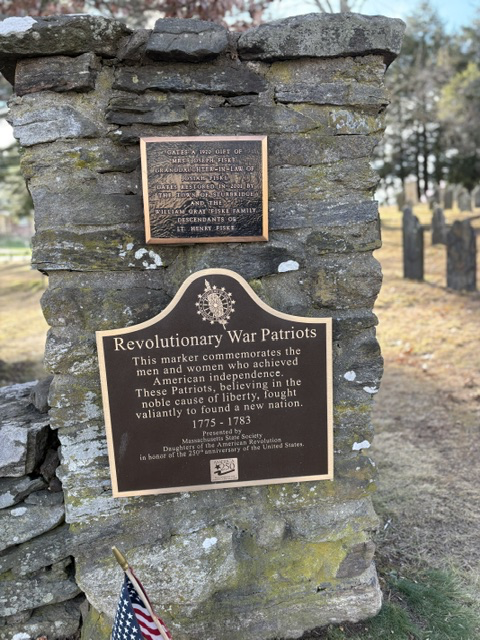
The Old Burial Ground
Long before modern cemeteries were carefully landscaped parks, New England towns established simple burial grounds at the heart of their communities. The Old Burial Ground in Sturbridge is one of those places. Established in 1740, only two years after the town itself was incorporated, it became the final resting place for generations of the men, […]
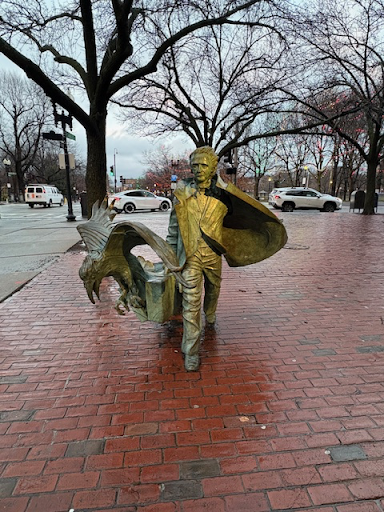
Edgar Allen Poe Statue
This is a statue of Edgar Allan Poe on the sidewalk along Boylston Street in Boston. He is caught in mid-stride, coat swirling with a raven perched atop a stack of books at his feet. The placement of this statue is intentional and rooted in Poe’s relationship with the city where his life began. Poe […]
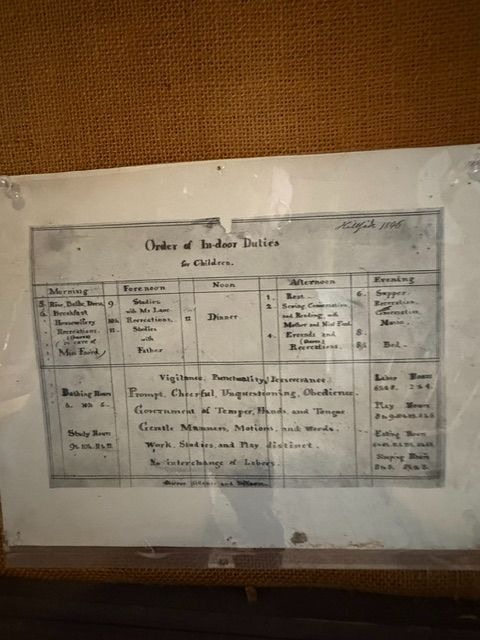
Bronson Alcott’s Daily Duties
A child’s education, in Bronson Alcott’s view, extended throughout the day. Lessons mattered, but so did meals, household responsibilities, recreation, rest, and the ways children treated others. His “Order of In-door Duties for Children,” displayed at Orchard House, offers a glimpse into how he attempted to put those beliefs into practice. The schedule divides the […]

