William Hickling Prescott
Walking through Boston’s Beacon Hill, it is easy to admire the elegant brick homes and historic streets without realizing how many remarkable people once lived behind these doors. One of those homes belonged to William Hickling Prescott, one of the nineteenth century’s most celebrated American historians.
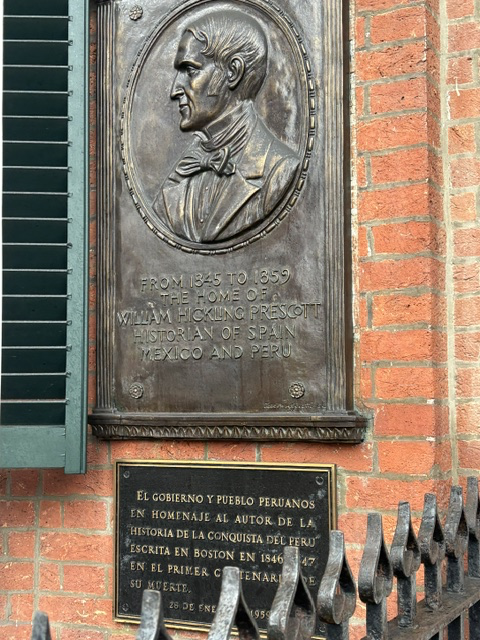
From 1845 until his death in 1859, Prescott lived in this Beacon Hill residence, where he completed some of the works that established his international reputation. Although he suffered from severely impaired vision for most of his adult life after an accident while a student at Harvard, he refused to abandon scholarship. Instead, he developed extraordinary methods of working with assistants who read books aloud, copied documents, and helped him organize thousands of pages of research. His perseverance allowed him to produce works that remain classics of historical literature.
Prescott became famous for his richly detailed histories of Spain and its empire in the Americas. His best-known books include History of the Reign of Ferdinand and Isabella, History of the Conquest of Mexico, and History of the Conquest of Peru. At a time when few Americans had access to Spanish archives or knew much about the civilizations of the Aztecs and Incas, Prescott introduced readers to these remarkable stories through meticulous research and engaging prose. His books were widely translated and earned him an international audience.
The plaque beneath his portrait reflects the lasting impact of his work. Installed by the government and people of Peru in 1959, it honors Prescott on the centennial of his death and recognizes that his History of the Conquest of Peru was written in this very house between 1846 and 1847. It is a remarkable tribute, demonstrating that a historian from Boston earned the respect of a nation thousands of miles away by dedicating himself to understanding and documenting its past.
This is exactly why I love exploring historic places. I had never heard of William Hickling Prescott, yet one small plaque transformed an ordinary walk through Beacon Hill into an unexpected history lesson. Every city has stories like this waiting to be discovered. They are not hidden behind admission gates or inside museums. They are attached to buildings, carved into monuments, and quietly waiting for someone to stop, read, and become curious. That is how I continue to discover the history all around us.
Read More From Nancy
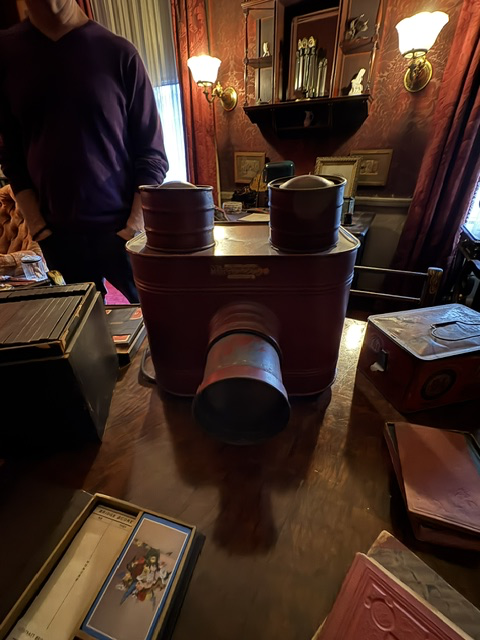
The Mirroscope
Among the objects that caught my attention while visiting the Gibson House Museum in Boston was this unusual piece of photographic equipment. At first glance, with its large projecting lens and boxlike body, I assumed it was an early camera. Looking more closely, however, I discovered that it worked in exactly the opposite direction. It […]
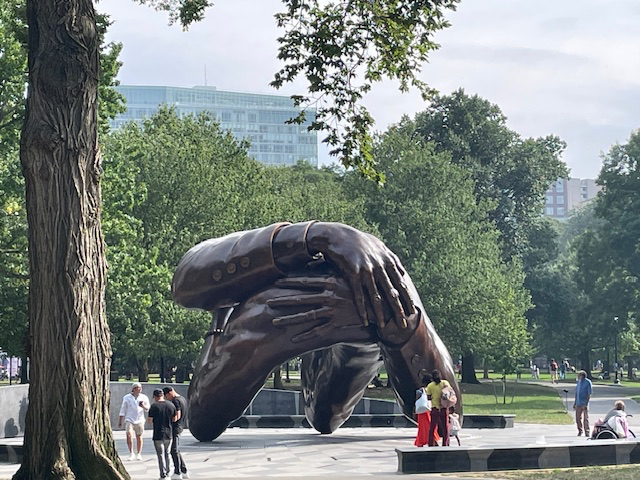
The Embrace
On Boston Common stands a powerful and modern tribute to Dr Martin Luther King, Jr and Coretta Scott King. The memorial is called: The Embrace. Unveiled in 2023, the sculpture does not depict faces in full figures. Instead, it focuses on a moment, an embrace. Two sets of arms, joined together, rising in bronze. The design […]
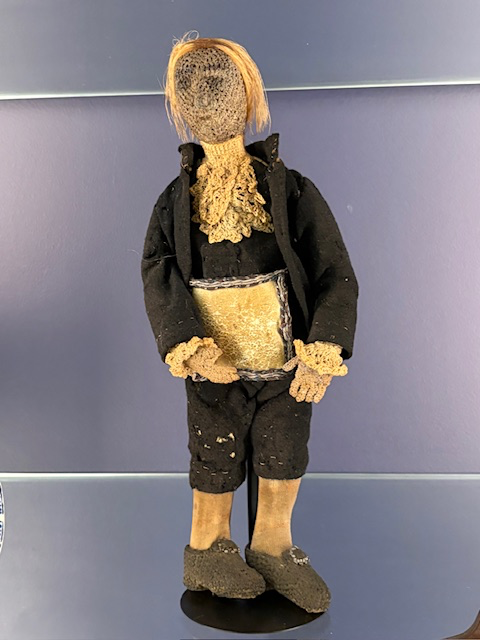
Washington Doll
In the years immediately following the American Revolution, George Washington became a living symbol of a new nation. Across the young republic, admiration for him inspired countless small acts of devotion. This rare type of commemorative doll is an example of this admiration. It was crafted from wool in 1790. These were not toys but expressions of patriotism, Washington’s image […]

