Flower Carpets of Corpus Christi
In Sitges, some works of art are made to last only a few hours. Each year for Corpus Christi, residents cover sections of the streets with elaborate carpets of flowers. Petals, whole blossoms and greenery form patterns across the pavement, transforming familiar routes into colorful displays before the evening religious procession passes over them.
The celebration has deep roots. The earliest surviving reference to Corpus Christi in Sitges dates to 1358. Decorating its streets with vegetation developed over the centuries, and an account from 1890 describes neighbors buying flowers to create carpets outside their doorways. These individual contributions became one of the town’s most distinctive traditions.
Creating a carpet requires planning as well as patience. Each group designs its allotted section and calculates the flowers needed to fill it. Carnations are particularly important, their natural white, red, pink and yellow colors combined with other flowers and plant materials. On the eve of the celebration, participants prepare blossoms and mark designs on the street. Some work through the night; others begin early the following morning. Whole flowers give the designs depth, while loose petals fill their finer shapes.
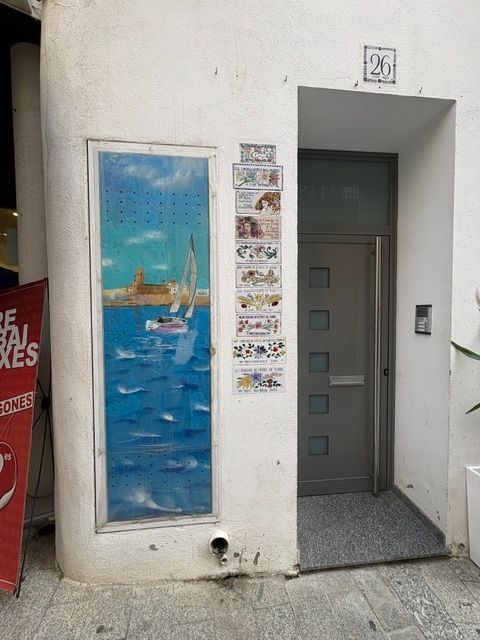
Beside a doorway, a collection of ceramic award tiles preserves another part of this story. Their inscriptions record first prizes in the flower carpet competitions over several decades. Each tile provides a lasting reminder of a creation that disappeared, recognizing the skill and repeated dedication involved in keeping the tradition alive.
By midday on Corpus Christi, the finished carpets are ready for visitors. That evening, the procession walks across them, disturbing the carefully arranged flowers. Their brief life is part of their purpose: they are created for a shared celebration, then made anew the following year. The ceramic tiles remain long afterward, carrying the memory of those fleeting displays into the everyday life of the street.
Read More From Nancy
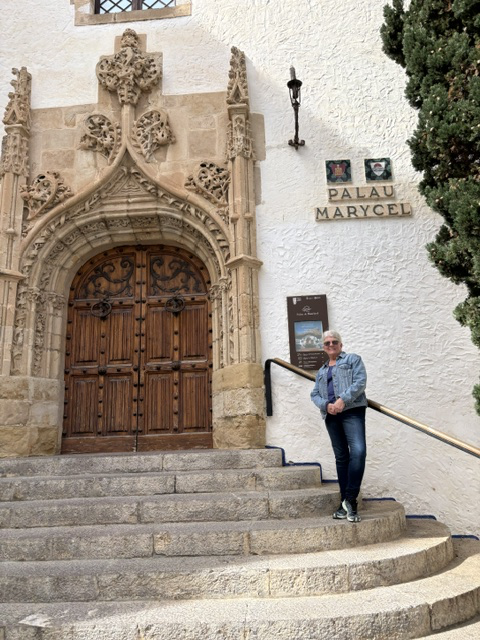
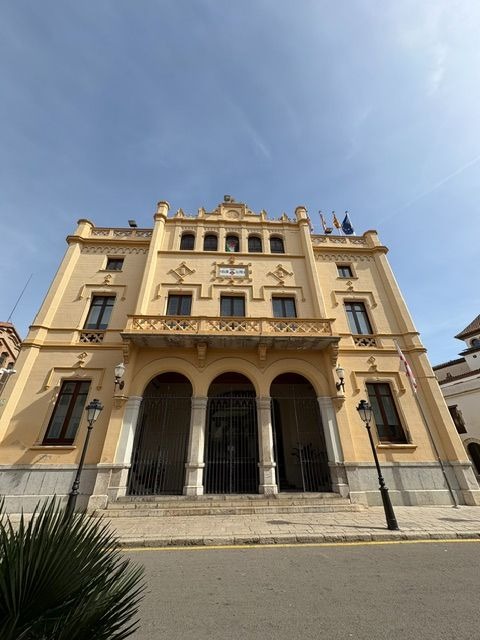
Palau Maricel
Walking through the historic streets of Sitges, Spain, we came upon one of the town’s architectural treasures: Palau Maricel. Standing before its beautifully carved Gothic doorway, it is easy to imagine that this is a medieval palace. It is the product of an extraordinary vision that brought together centuries of Spanish architectural traditions to create […]
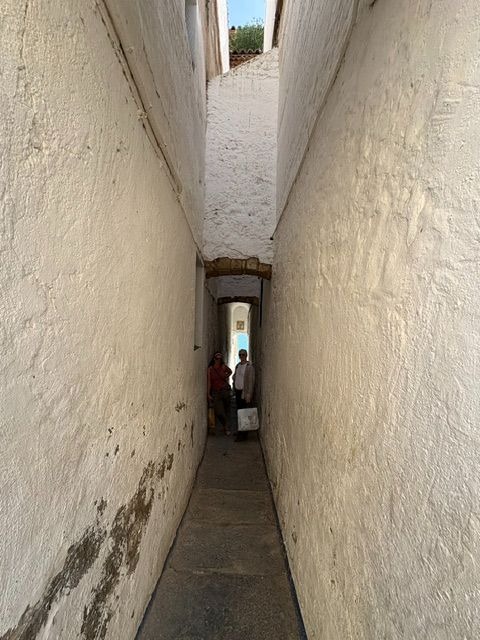
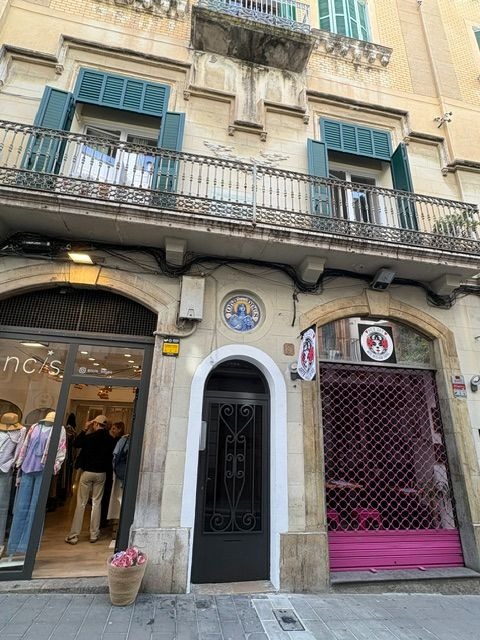
The Hidden Streets
Walking through Sitges, it is easy to focus on the Mediterranean views, the beaches and the famous church overlooking the water. But just behind the shoreline is another Sitges: a quieter world of narrow streets, whitewashed walls and small passages that preserve the character of the original town. The old town developed around the hill […]
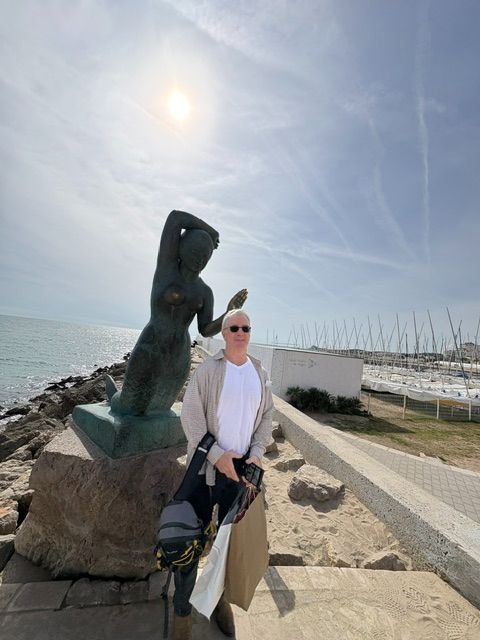
La Sirena: A Mermaid for Sitges
Beside the Mediterranean, a bronze mermaid raises one arm above her head and extends her other hand toward those passing along the shore. La Sirena brings a mythical presence to the waterfront, but its story is also about a sculptor and a community that wanted his work to endure. Pere Jou created the original plaster […]

