La Sirena: A Mermaid for Sitges
Beside the Mediterranean, a bronze mermaid raises one arm above her head and extends her other hand toward those passing along the shore. La Sirena brings a mythical presence to the waterfront, but its story is also about a sculptor and a community that wanted his work to endure.
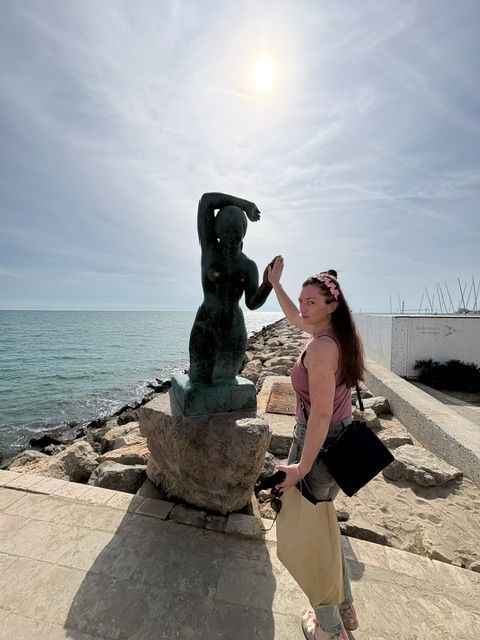
Pere Jou created the original plaster sculpture in 1955. Born in Barcelona in 1891, he developed a lasting connection with Sitges after artist and cultural organizer Miquel Utrillo commissioned him to help decorate the Maricel complex in 1915. His carved capitals became part of its architecture, establishing a relationship with the town that continued throughout his career.
Jou died in 1964 before La Sirena was cast in bronze. That year, supporters organized a public fundraising campaign to bring the sculpture into a more permanent form. Completed in 1965, the bronze mermaid became a public expression of appreciation for an artist whose work had helped shape Sitges.
Her setting gives the sculpture much of its character. Positioned beside the rocks and water near the steps of La Punta, she seems to belong to the boundary between land and sea. Her open hand offers an approachable gesture, while her curved figure contrasts with the rough stone beneath her. The sea provides a changing background to a figure held still in bronze.
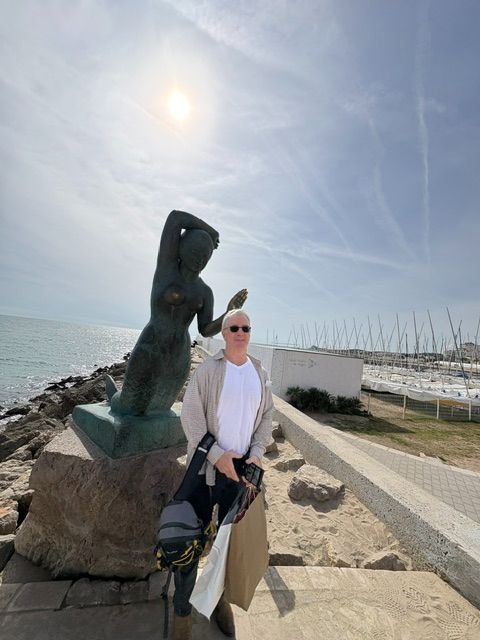
The waterfront also exposes the sculpture to weather and salt. In 2018, the town council and Museus de Sitges undertook a restoration, with conservator Mamen Fradera treating the work to recover its appearance and protect its surfaces. Preserving the mermaid required another act of care from the community that had originally helped bring her into being.
La Sirena’s place in Sitges grew from both artistic imagination and public participation. A plaster figure became a bronze landmark because people chose to support it. Along the shore, she preserves that connection between Pere Jou, the town, and the Mediterranean setting that gives his mermaid a home.
Read More From Nancy
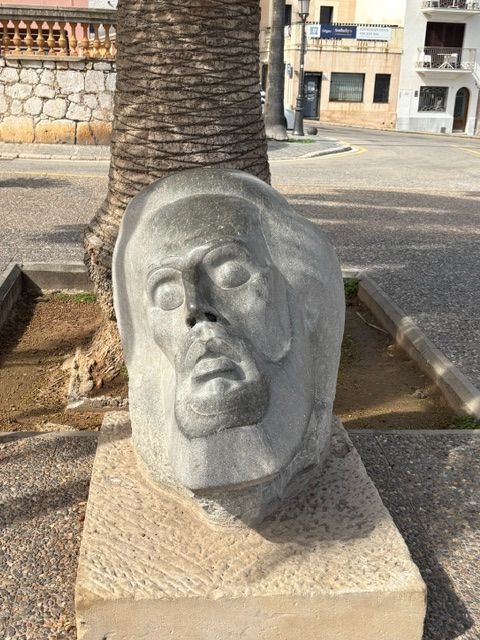
Cap de Crist: A Face Carved in Stone
A head tilted backward, closed eyes, and strongly defined features give Cap de Crist a presence that invites a pause. The stone sculpture represents Christ, but it concentrates the subject into a single face. There is no cross or surrounding scene to explain the moment. Expression and the shape of the stone carry its meaning. […]
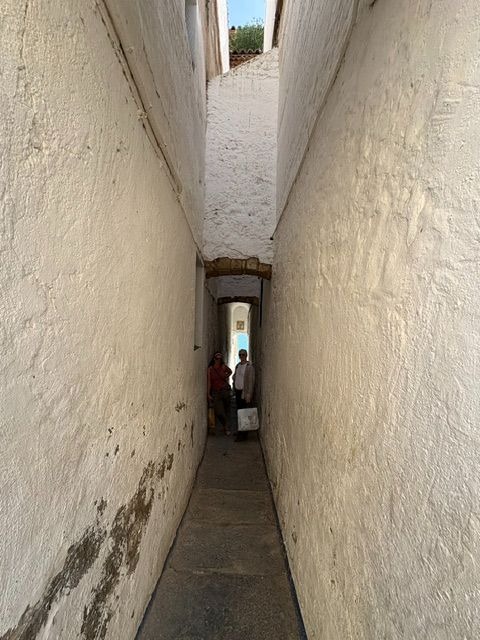
The Hidden Streets
Walking through Sitges, it is easy to focus on the Mediterranean views, the beaches and the famous church overlooking the water. But just behind the shoreline is another Sitges: a quieter world of narrow streets, whitewashed walls and small passages that preserve the character of the original town. The old town developed around the hill […]
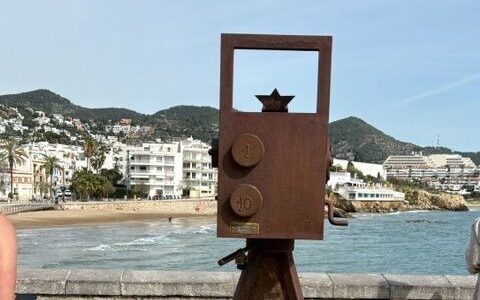
Postal de Sitges: A Camera by the Sea
An oversized metal camera stands above the Mediterranean, its tripod planted firmly on the promenade. With circular details on its body and a star framed within its upper opening, it invites a closer look. This is Postal de Sitges, a sculpture by photographer and artist Joan Iriarte i Ibarz. Its camera form introduces a different […]

