A House and the Virgin of Vinyet
Above a doorway in Sitges, a small ceramic image brings a religious tradition into the life of the street. The depiction appears to be the Mare de Déu del Vinyet, the Virgin of Vinyet, whose connection with the town reaches back centuries. Set between shops and beneath a balcony, it gives a familiar domestic entrance a devotional presence.
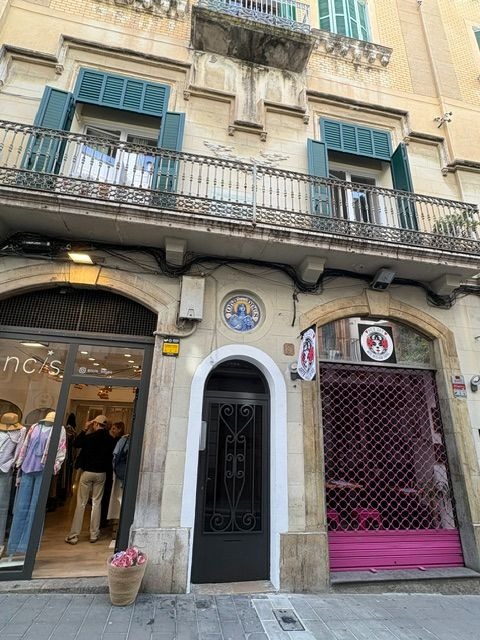
According to local legend, an enslaved man working in a vineyard discovered an image of the Virgin beneath a vine. The story associates her with the agricultural landscape that once surrounded Sitges, and the name Vinyet preserves that connection. The account belongs to religious tradition rather than verified history, but it became central to the identity of her sanctuary.
The sanctuary’s documented history includes a medieval chapel that was enlarged during the sixteenth century. As devotion grew, its administrators decided to replace that church with a larger building. The new sanctuary opened for the Virgin’s feast on August 5, 1733. Successive generations maintained the site as a place of worship and gathering.
August 5 remains the day of her annual celebration. The attachment also extends beyond the sanctuary: Vinyet is a name given to local women and girls, carrying the tradition into family life.
A ceramic image on a house offers a quieter expression of that same attachment. It places a sacred figure at the threshold between home and street, where residents and passersby encounter it during ordinary routines. This small detail opens a meaningful story about Sitges: a town where local devotion has found a place both in a sanctuary and above an everyday doorway.
Read More From Nancy
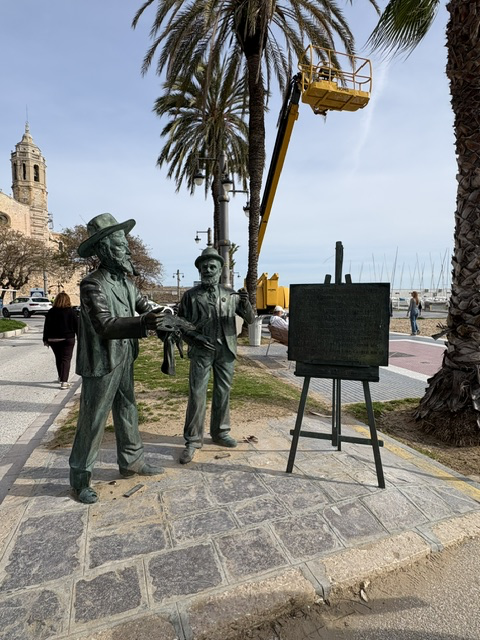
Santiago Rusiñol and Ramon Casas
One of the pleasures of traveling is unexpectedly discovering the people who helped shape a place. Walking along the waterfront in Sitges, I came across this bronze monument honoring two of Catalonia’s most celebrated artists, Santiago Rusiñol and Ramon Casas. Their presence here is no accident. More than a century ago, these two friends helped […]
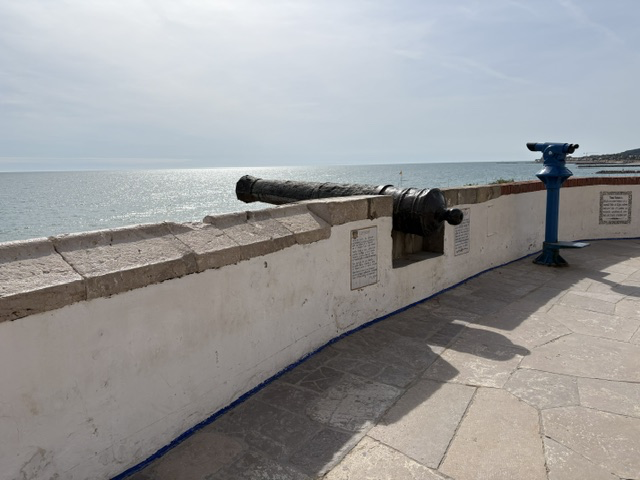
The Cannons of Sitges
Standing beside these weathered cannons on the Baluard overlooking the Mediterranean, it is easy to think of them simply as historic decorations. Visitors stop to admire the sea, photograph the coastline, and enjoy the peaceful atmosphere of Sitges. Yet these cannons were once an essential part of the town’s defense, guarding a community whose prosperity […]
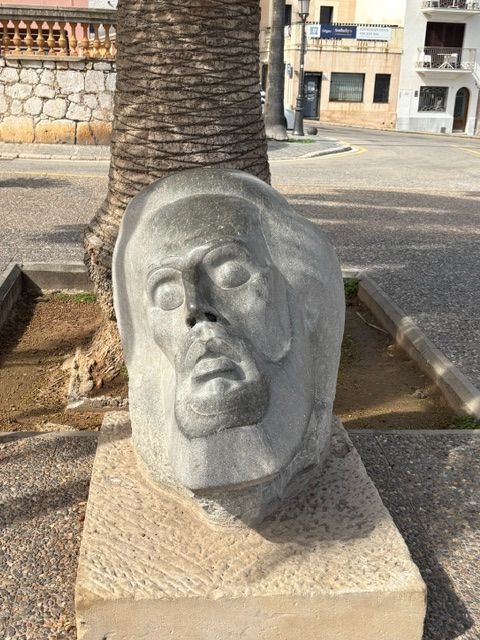
Cap de Crist: A Face Carved in Stone
A head tilted backward, closed eyes, and strongly defined features give Cap de Crist a presence that invites a pause. The stone sculpture represents Christ, but it concentrates the subject into a single face. There is no cross or surrounding scene to explain the moment. Expression and the shape of the stone carry its meaning. […]

