Santiago Rusiñol and Ramon Casas
One of the pleasures of traveling is unexpectedly discovering the people who helped shape a place. Walking along the waterfront in Sitges, I came across this bronze monument honoring two of Catalonia’s most celebrated artists, Santiago Rusiñol and Ramon Casas. Their presence here is no accident. More than a century ago, these two friends helped transform Sitges from a quiet fishing village into one of Spain’s leading artistic communities.
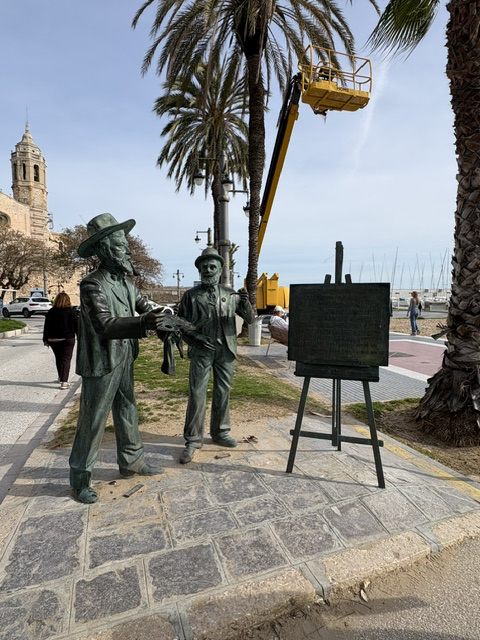
Santiago Rusiñol (1861–1931) was a painter, writer, playwright, and one of the founders of the Catalan Modernisme movement. In the 1890s he made Sitges his artistic home, purchasing a group of old fishermen’s houses that he transformed into Cau Ferrat, his studio and residence. Filled with paintings, wrought iron, ceramics, and glass, the house became a gathering place for artists, musicians, writers, and intellectuals from across Spain and Europe. Today, Cau Ferrat is one of Sitges’ most important museums.
Standing beside him in the sculpture is Ramon Casas (1866–1932), one of Spain’s finest portrait painters and illustrators. Casas captured the changing society of Barcelona during the late nineteenth and early twentieth centuries through elegant portraits, café scenes, and posters that helped define the visual style of Catalan Modernisme. Although he lived primarily in Barcelona, he frequently visited Sitges and participated in the artistic festivals organized by his close friend Rusiñol.
Together, the two men helped establish the famous Modernist Festivals of Sitges beginning in 1892. These gatherings celebrated painting, literature, music, architecture, and the decorative arts, bringing international attention to what had previously been a small Mediterranean town. Their vision attracted generations of artists and laid the foundation for Sitges’ enduring reputation as a center of creativity.
Standing there, I found myself reflecting on how profoundly two individuals can influence the identity of a community. Sitges is known today for its beautiful beaches, historic streets, museums, and vibrant cultural life. Much of that artistic reputation can be traced back to the vision of Rusiñol and Casas, who saw something special in this seaside village and invited others to see it as well.
Read More From Nancy
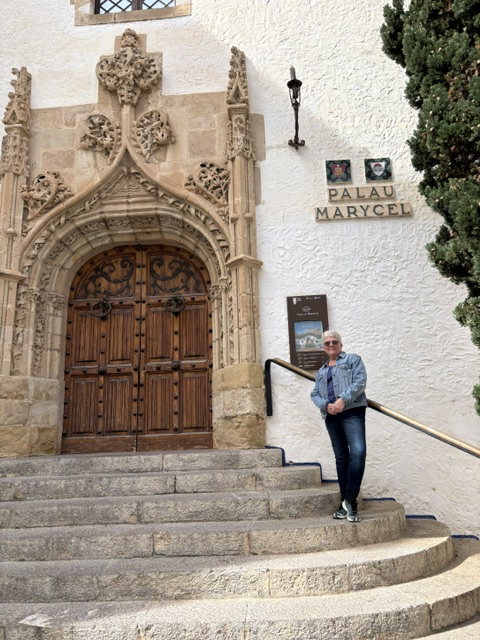
Palau Maricel
Walking through the historic streets of Sitges, Spain, we came upon one of the town’s architectural treasures: Palau Maricel. Standing before its beautifully carved Gothic doorway, it is easy to imagine that this is a medieval palace. It is the product of an extraordinary vision that brought together centuries of Spanish architectural traditions to create […]
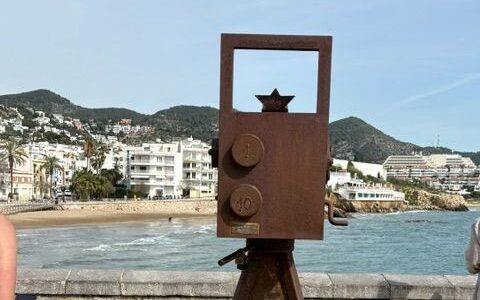
Postal de Sitges: A Camera by the Sea
An oversized metal camera stands above the Mediterranean, its tripod planted firmly on the promenade. With circular details on its body and a star framed within its upper opening, it invites a closer look. This is Postal de Sitges, a sculpture by photographer and artist Joan Iriarte i Ibarz. Its camera form introduces a different […]
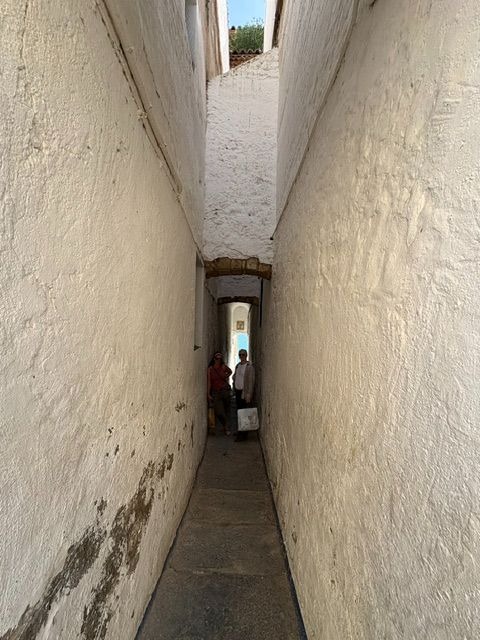
The Hidden Streets
Walking through Sitges, it is easy to focus on the Mediterranean views, the beaches and the famous church overlooking the water. But just behind the shoreline is another Sitges: a quieter world of narrow streets, whitewashed walls and small passages that preserve the character of the original town. The old town developed around the hill […]

