Palau Maricel
Walking through the historic streets of Sitges, Spain, we came upon one of the town’s architectural treasures: Palau Maricel. Standing before its beautifully carved Gothic doorway, it is easy to imagine that this is a medieval palace. It is the product of an extraordinary vision that brought together centuries of Spanish architectural traditions to create one of the most beautiful cultural landmarks on the Mediterranean coast.
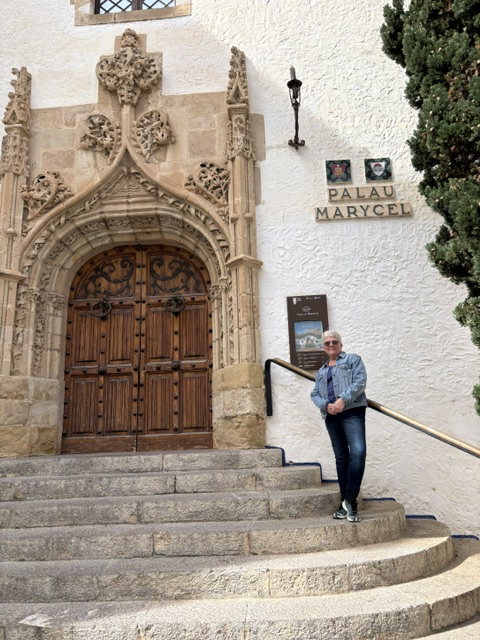
Palau Maricel was built between 1910 and 1918 by American collector Charles Deering, who had fallen in love with Sitges while visiting Spain. Working with artist and engineer Miquel Utrillo, Deering transformed a collection of old fishermen’s houses and adjoining buildings into an elegant palace designed to showcase his growing collection of art and antiques. Rather than constructing something entirely new, they incorporated historic architectural elements rescued from monasteries, churches, and estates throughout Spain, giving the palace the appearance of a building that had evolved over many centuries.
Its name reflects its remarkable setting. “Maricel” combines the Spanish words for “sea” and “sky,” an appropriate description for a palace perched above the Mediterranean. Throughout the building, Gothic, Renaissance, Mudéjar, and Baroque influences blend in graceful harmony. Intricately carved stone doorways, elegant courtyards, arches, balconies, and colorful ceramic details celebrate Spain’s rich artistic heritage while taking full advantage of the stunning coastal views.
Although Deering eventually returned to the United States and took much of his art collection with him, the palace remained. Today it serves as one of Sitges’ most important cultural landmarks, housing exhibitions, concerts, and civic events while welcoming visitors from around the world. Its architecture has become every bit as significant as the artwork it was originally built to display.
Standing at the entrance, I was struck by how perfectly the palace fits its surroundings. It feels less like a museum and more like a natural part of Sitges, blending seamlessly into the narrow streets and overlooking the Mediterranean as though it has always belonged there. It is one of those places where history, architecture, art, and landscape come together so naturally that it becomes difficult to separate one from the other.
Read More From Nancy
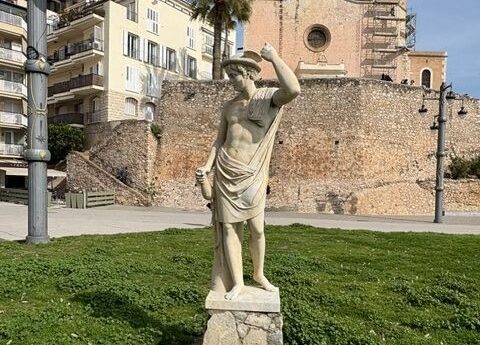
Apollo at La Fragata
Below the Church of Sant Bartomeu i Santa Tecla, a small classical figure stands in the gardens of La Fragata. With one arm raised above his head and drapery falling across his body, Apollo occupies a quiet patch of green between the historic town and its waterfront. His presence adds another layer to Sitges, where […]
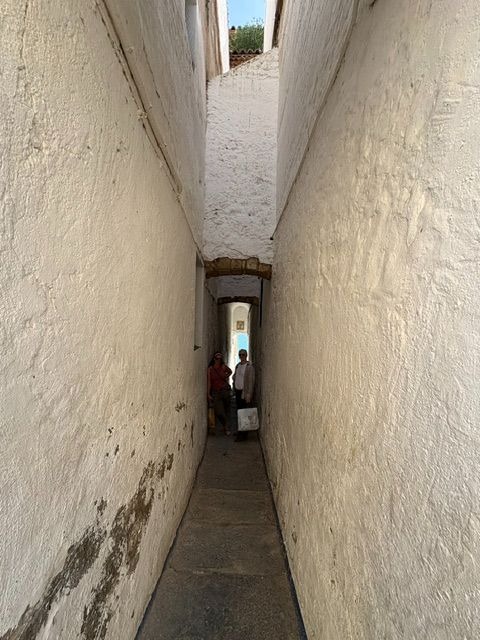
The Hidden Streets
Walking through Sitges, it is easy to focus on the Mediterranean views, the beaches and the famous church overlooking the water. But just behind the shoreline is another Sitges: a quieter world of narrow streets, whitewashed walls and small passages that preserve the character of the original town. The old town developed around the hill […]
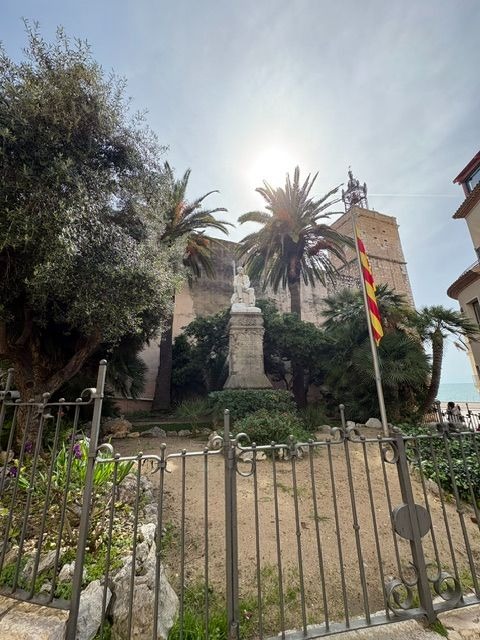
Monument to Dr. Bartomeu Robert
In a small garden near Sitges’s town hall, a seated stone figure honours a man remembered for both medicine and public service. The monument depicts Dr. Bartomeu Robert i Yarzábal, whose career took him to Barcelona but whose family connections and early education tied him to Sitges. Sculptor Josep Reynés created the work, which was […]

