The Hidden Streets
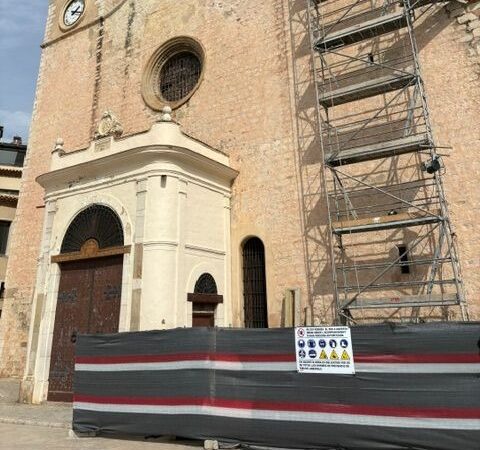
Walking through Sitges, it is easy to focus on the Mediterranean views, the beaches and the famous church overlooking the water. But just behind the shoreline is another Sitges: a quieter world of narrow streets, whitewashed walls and small passages that preserve the character of the original town.
The old town developed around the hill of La Punta, near the location of the church of Sant Bartomeu i Santa Tecla. Long before Sitges became known as an artistic destination and seaside retreat, it was a small coastal settlement shaped by fishing, farming and maritime trade. The compact arrangement of streets reflected the needs of a medieval town, where homes were built close together and movement followed the natural shape of the landscape.
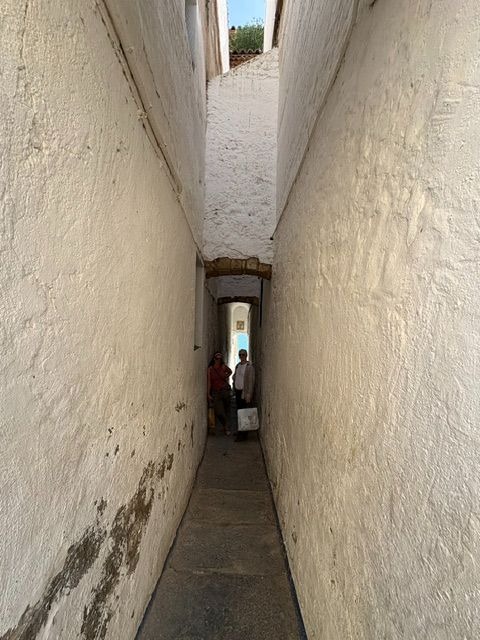
The narrow passageways were not designed for cars or modern traffic. They were created for people: neighbors walking between homes, merchants carrying goods and families moving through the heart of the community. The close walls provided shade from the Mediterranean sun and helped create the intimate feeling that remains today.
As Sitges grew, many older buildings were adapted and transformed. Wealth returning from overseas, particularly from those who had made fortunes in the Americas, brought new homes and architectural influences. Yet the historic street pattern remained, allowing visitors today to experience the layers of the town’s past.
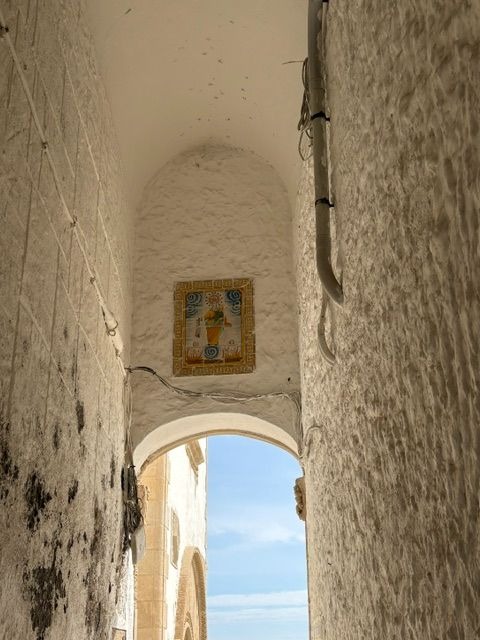
What makes these streets special is not one famous landmark, but the feeling they preserve. Turning a corner can reveal a centuries-old doorway, a quiet courtyard or a glimpse toward the sea. These small details connect the modern visitor with the generations who lived here before Sitges became an international destination.
During our visit, these streets reminded me that history is often found away from the major monuments. The church may define Sitges from a distance, but these narrow passages reveal how people actually lived—one home, one doorway and one generation at a time.
Read More From Nancy
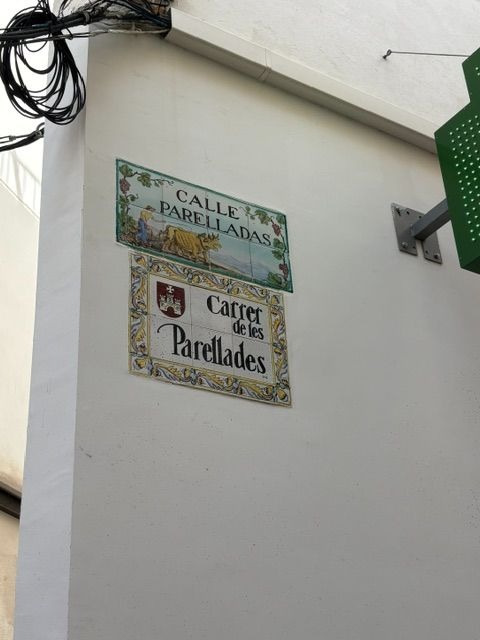
A Street Name Rooted in the Soil
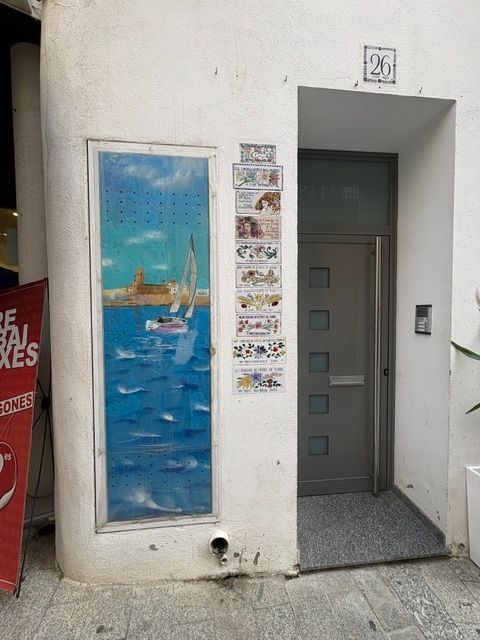
Along Carrer de les Parellades in Sitges, a ceramic street sign offers a clue to the meaning of an old name. Its scene of a farmer guiding two oxen through a field recalls a time when land was measured by the labor required to cultivate it. A parellada was an agricultural measure associated with the […]
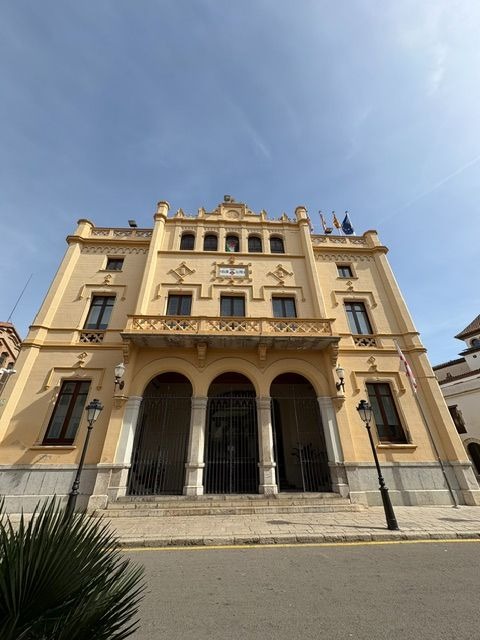
Casa de la Vila
In the historic heart of Sitges, Casa de la Vila stands on ground that once belonged to the town’s medieval castle. Its three arched entrances, stone balcony, decorative shields, and raised central façade give it a commanding presence in the square. Although its architecture recalls an earlier age, the building was created in the late […]
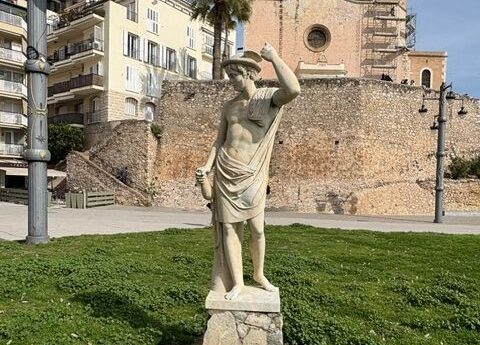
Apollo at La Fragata
Below the Church of Sant Bartomeu i Santa Tecla, a small classical figure stands in the gardens of La Fragata. With one arm raised above his head and drapery falling across his body, Apollo occupies a quiet patch of green between the historic town and its waterfront. His presence adds another layer to Sitges, where […]

