Fire Buckets
Among the interesting artifacts preserved in the Lancaster Library is a collection of leather fire buckets, reminders of a time when communities relied on cooperation rather than machinery to combat one of their greatest threats. Before organized fire departments and modern fire engines towns maintained leather buckets that were kept in homes, businesses, churches, and public buildings for use in emergencies.
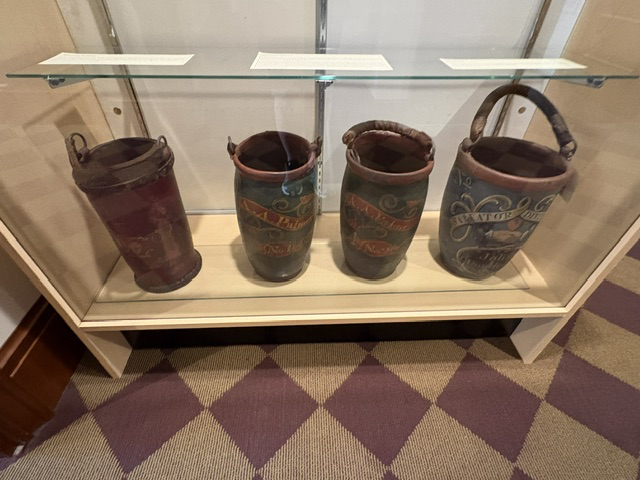
When a fire broke out, citizens formed a “bucket brigade,” passing buckets of water hand-to-hand from a nearby well, pond, or cistern to the flames. Empty buckets were then passed back in the opposite direction to be refilled. In an era when many buildings were constructed of wood and open flames were used for heat and light, fire posed a constant danger, and the success of these bucket brigades often meant the difference between saving a building and losing an entire neighborhood.
These buckets are beautifully painted and personalized, reflecting both civic pride and practical necessity. Some bear the names of their owners and decorative motifs, illustrating that even everyday objects could be crafted with care and artistry. More than simple tools, they represent a time when neighbors depended on one another and when the protection of the community was truly a shared responsibility.
Read More From Nancy
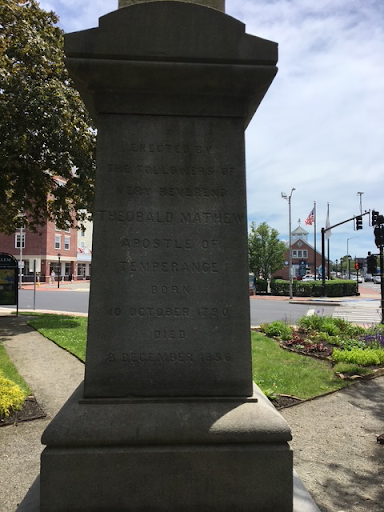
Theobald Mathew Monument
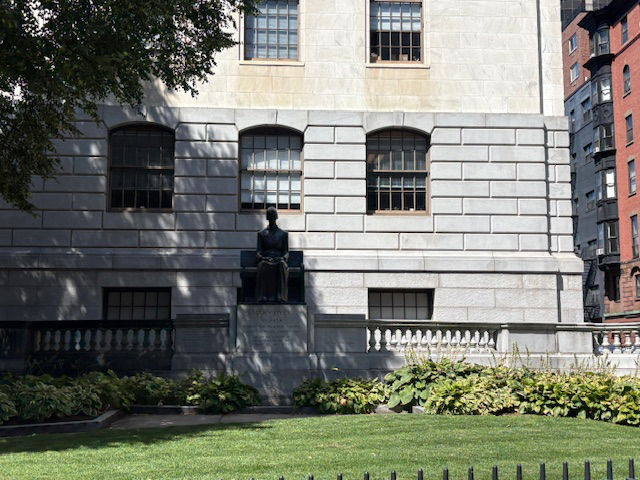
History often reveals itself in unexpected ways. Walking through Salem, I noticed only the base of this monument. The inscription immediately caught my attention: “Erected by the followers of the Very Reverend Theobald Mathew, Apostle of Temperance.“ Until that moment, I knew very little about Father Theobald Mathew or why the people of Salem believed […]
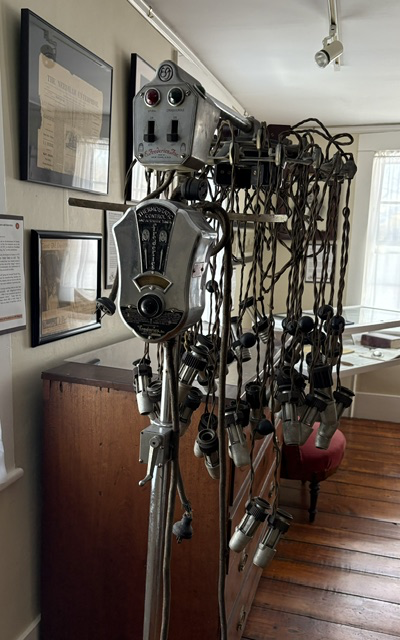
Electric Permanent Wave Machine
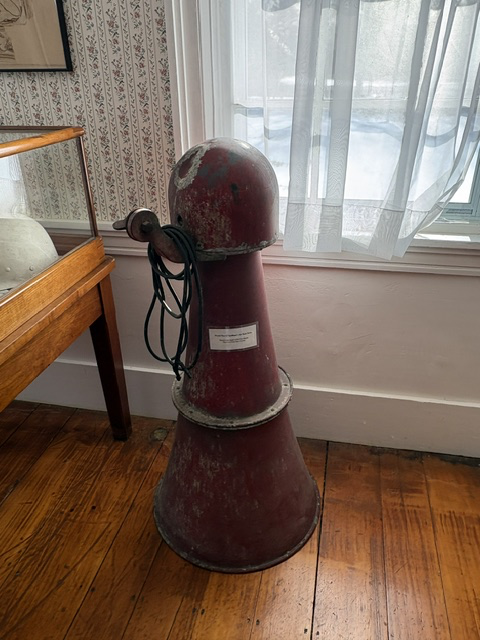
One of the things I enjoy most about local history museums is discovering objects that tell the story of everyday life. This unusual machine immediately caught my attention. At first glance, it looked more like an industrial invention than something you would expect to find in a beauty salon. This is an Electric Permanent Wave […]
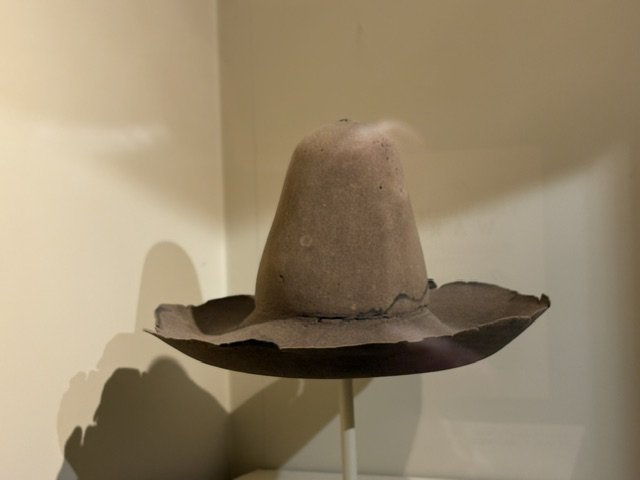
Constance Hopkins’s Beaver Hat
Among the objects we discovered in Plymouth was something remarkably personal: a beaver-felt hat associated with Constance Hopkins, a passenger on the Mayflower. Constance was only about fourteen years old when she crossed the Atlantic in 1620 with her father, Stephen Hopkins, her stepmother Elizabeth, and other members of their family. Unlike many objects displayed […]

