E&P Hotel
I grew up in Concord, and like so many who called the city home, I spent countless hours walking up and down Main Street. Downtown was where we shopped, met friends, and enjoyed special outings. The storefronts changed over the years, but the buildings themselves seemed permanent. As a child, I rarely looked above the first floor. The upper stories were simply part of the backdrop of everyday life.
It wasn’t until years later that I noticed the architecture and wonder about the stories these buildings held.
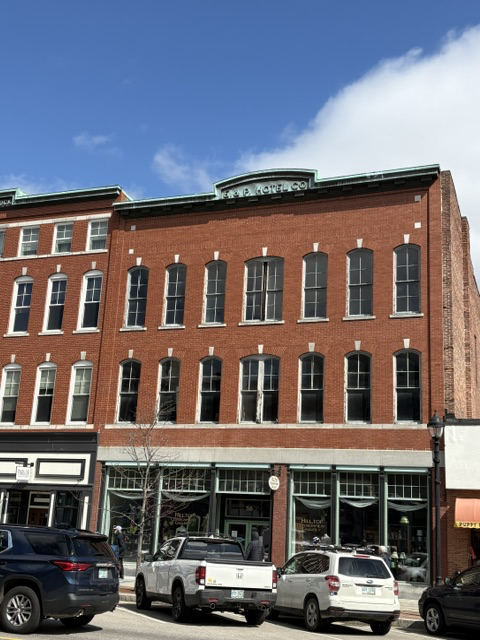
This building, with its handsome red brick façade and the words “E. & P. Hotel Co.” still visible along the roofline, is one of those buildings that invites a second look. The initials stand for the Eagle & Phenix Hotel Company, a name that once represented two of Concord’s finest hotels. Around the turn of the twentieth century, as Concord flourished as New Hampshire’s political and commercial center, the company expanded its accommodations into this building. The upper floors became hotel rooms while businesses continued to operate at street level, creating a building that served both travelers and residents.
Its location made perfect sense. Just steps from the State House and close to the railroad depot, this part of Main Street was the center of activity. Legislators arriving for the session, attorneys arguing cases, businessmen traveling throughout New England, and visitors coming to the capital all found themselves here. Hotels were much more than places to spend the night. They were where deals were discussed, political alliances were formed, newspapers were read over breakfast, and conversations continued long after the official business of the day had ended.
Looking at it now, it is easy to forget how impressive it must have appeared when it was new. Imagine standing on Main Street in the early 1900s as horse-drawn carriages rolled past and electric streetlights were beginning to replace gas lamps. The clean brickwork, expansive windows, and elegant roofline would have reflected a city that believed its future was bright.
As I walk through downtown Concord today, I find myself doing something I never did as a child—I look up. Above the storefronts are the stories of another era, preserved in brick, stone, and iron. These buildings are more than old commercial blocks; they are reminders of a time when Concord was growing into the political and economic heart of New Hampshire. They have stood through changing fashions, changing businesses, and changing generations, continuing to shape the character of the city.
Read More From Nancy
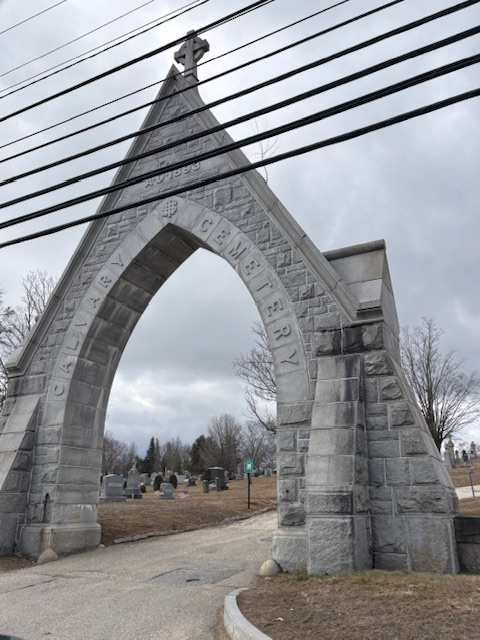
Calgary Cemetery Arch
At the entrance of the older section of Calvary Cemetery in Concord stands a striking granite arch. Carved from the same kind of stone that defines so much of New England, the arch rises with quiet dignity. Its pointed form and cross at the top marks it as a place of faith and remembrance. The arch creates a […]
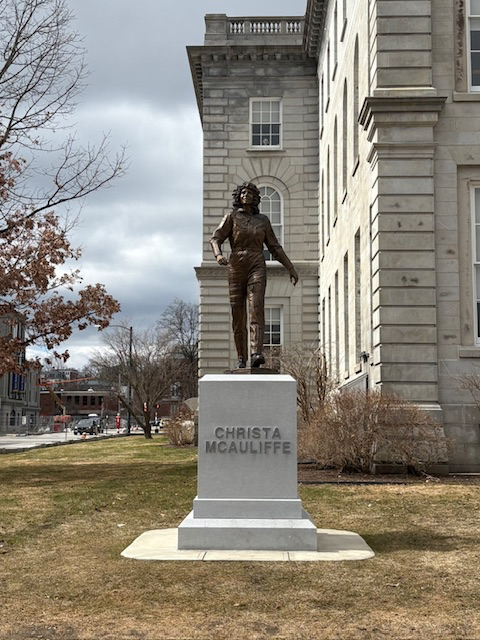
Christa McAuliffe’s Statue
On the lawn of New Hampshire State House stands a statue honoring Christa McAuliffe, a figure whose story is deeply connected to both New Hampshire and the nation. Christa McAuliffe was a social studies teacher from Concord, chosen in 1985 as part of NASA’s Teacher in Space Program. She represented something hopeful and accessible, that an […]
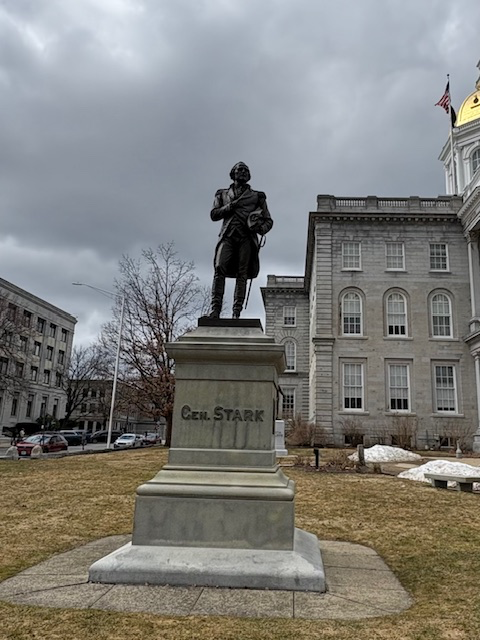
General John Stark
In wanting to share more of my hometown, I will continue exploring more of the statues on the State House lawn. It is clear from the attire of this statue that this man lived at a different time than the rest. The figure is John Stark, dressed in the uniform of the Revolutionary War, setting him […]

