Calgary Cemetery Arch
At the entrance of the older section of Calvary Cemetery in Concord stands a striking granite arch. Carved from the same kind of stone that defines so much of New England, the arch rises with quiet dignity. Its pointed form and cross at the top marks it as a place of faith and remembrance.
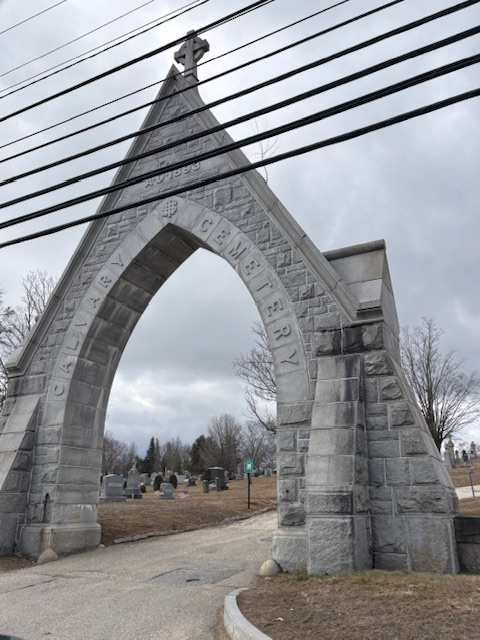
The arch creates a threshold. As you pass beneath it, you move into the space set apart, shaped by memory, by family and by generations who came before. The granite, solid and enduring, reflects the intention to create something that would last and would stand watch over those who rest beyond it.
This arch leads to the older part of the cemetery, where my grandparents are buried. Walking through it is entering a personal space for me. This is not just the past of the community it is my own family’s history.
Calvary Cemetery dates back to the mid-19th century (1850s), when Concord’s growing Catholic population needed a consecrated place for burial that reflected their faith and traditions. It was established in connection with St. John the Evangelist Parish, and it became the resting place for generations of families who were building their lives in the city.
For those families, this was more than a cemetery, it was a continuation of their church community. The same people who worshipped together, raised their families together and supported one another, would eventually be laid to rest here.
The name “Calvary:” was chosen intentionally. Calgary refers to the hill where Jesus was crucified. Naming a cemetery Calvary was a way of expressing the belief that death is not the end, but part of a larger story of sacrifice, faith and resurrection. It reflects the hope that those buried there are part of the same promise.
Crossing under this arch is an act of remembering.
Read More From Nancy
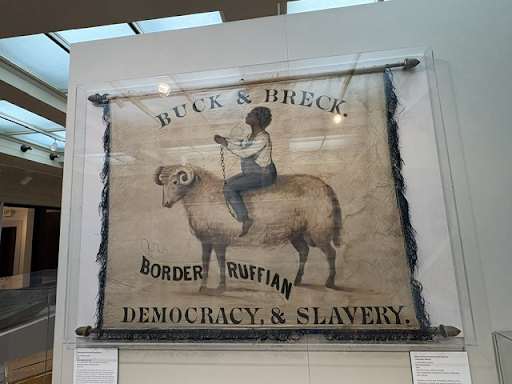
Campaign Banner from the Election of 1860
One of the exhibits that caught my attention was this colorful campaign banner from the presidential election of 1860. While political campaigns often seem like a modern phenomenon, Americans have been using banners, posters, and political imagery to influence voters for generations. This banner was created by members of the Republican Party in New Hampshire […]
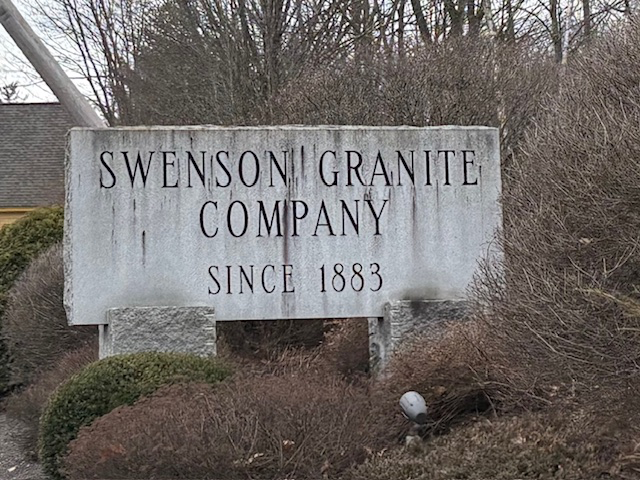
Swenson Granite Company
Founded in 1883, the Swenson Granite Company is one of the enduring industrial stories of Concord. This company helped shape not only the local landscape, but the very monuments and memorials that defined so many towns across New England. The company’s roots are tied to the rich granite deposits of Rattlesnake Hill, just outside Concord. From these […]
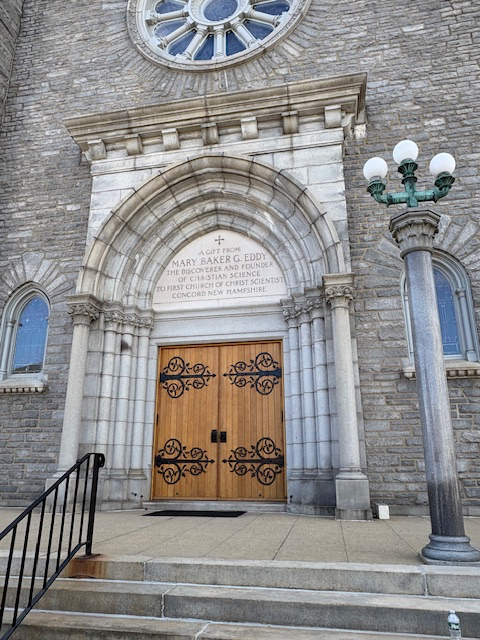
Christian Scientist Church
Some buildings tell you exactly what they are the moment you stand in front of them, as does this church in Concord. Carved above the entrance are the words that define its origin: “A gift from Mary Baker G. Eddy…..to the First Church of Christ, Scientist, Concord, New Hampshire.” It is a simple statement, but […]

