Émile Zola and the Dreyfus Affair
Émile Zola is remembered as one of France’s greatest novelists, but his place in the Panthéon reflects more than his literary achievements. He is also honored for taking a public stand against injustice during the Dreyfus Affair, one of the most divisive political and judicial scandals in modern French history.
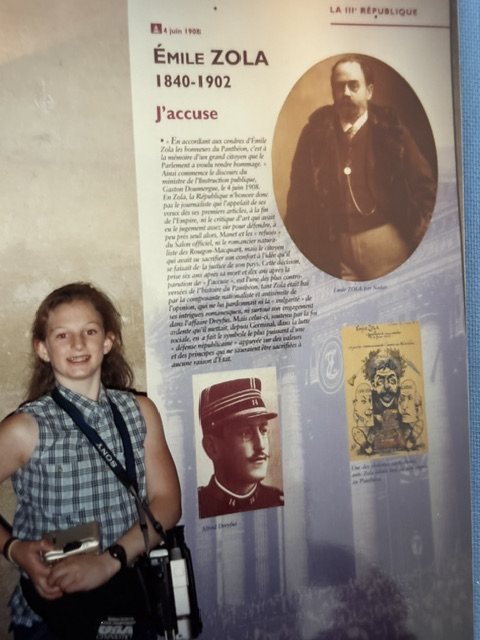
Alfred Dreyfus was a Jewish French army officer born in Alsace in 1859. In 1894, he was accused of providing French military secrets to Germany. The evidence against him was weak, and some of it was kept secret from both Dreyfus and his defense attorneys. Nevertheless, an atmosphere of intense nationalism and antisemitism made him a convenient target.
Dreyfus was convicted of treason by a military court. In a humiliating public ceremony, his military insignia were torn from his uniform and his sword was broken. Crowds shouted antisemitic insults as he continued to declare his innocence. He was sentenced to life imprisonment and transported to Devil’s Island, a remote penal colony off the coast of French Guiana. There he was held in near-total isolation under brutal conditions.
Dreyfus’s family refused to accept the conviction. His brother Mathieu worked tirelessly to prove his innocence, while journalist Bernard Lazare began exposing weaknesses in the case. Lieutenant Colonel Georges Picquart, the army’s chief of military intelligence, discovered evidence indicating that the real spy was another officer, Major Ferdinand Walsin Esterhazy. Rather than admit that an innocent man had been convicted, senior military officials attempted to suppress the new evidence and protect the original verdict.
Émile Zola gradually became convinced that Dreyfus had been the victim of a terrible miscarriage of justice. By that time, Zola was a celebrated author whose novels had made him one of the most prominent literary figures in France. He could have protected his reputation and remained silent. Instead, he chose to use his public standing to challenge the government, the army and the courts.
On January 13, 1898, the newspaper L’Aurore published Zola’s open letter to French president Félix Faure. Georges Clemenceau, the newspaper’s editor, gave it the headline that would become famous throughout the world: “J’Accuse…!”—“I Accuse…!”
Zola directly accused military officers, handwriting experts and government officials of contributing to the wrongful conviction of Dreyfus and then concealing the truth. His language was deliberate and confrontational. He named individuals and described what he believed they had done, knowing that the government would probably prosecute him for libel. In fact, provoking a trial was part of his purpose. A public proceeding would bring the suppressed evidence into the open and force France to reconsider the case.
The publication of J’Accuse…! transformed the Dreyfus case into a national crisis. France divided into two bitterly opposed camps. The Dreyfusards believed that justice, individual rights and the truth were more important than protecting the reputation of the army. The anti-Dreyfusards insisted upon the army’s honor and often openly expressed antisemitic and nationalist views. The controversy divided families, newspapers, political parties and communities.
Zola was prosecuted and convicted of libel. Facing imprisonment, he fled to England, where he remained for nearly a year. He paid a significant personal price for defending a man he did not initially know, but his intervention prevented the case from disappearing. J’Accuse…! compelled the nation to confront not only the evidence against Dreyfus but also the antisemitism, secrecy and abuse of authority that had allowed his conviction to stand.
Dreyfus was brought back from Devil’s Island for a second military trial in 1899. Despite the growing evidence of his innocence, he was convicted again, this time with the contradictory finding of “extenuating circumstances.” He accepted a presidential pardon shortly afterward, but a pardon did not declare him innocent. Dreyfus continued working to clear his name.
In 1906, France’s highest court annulled his conviction completely. Alfred Dreyfus was formally exonerated, restored to the army and awarded the Legion of Honor. The final judgment concluded that nothing remained of the original accusations against him.
Zola did not live to witness Dreyfus’s complete vindication. He died in 1902 from carbon monoxide poisoning caused by a blocked chimney. Six years later, his remains were transferred to the Panthéon, France’s national mausoleum. He now rests in Crypt XXIV beside Victor Hugo and Alexandre Dumas, linking three of France’s most celebrated writers.
Even Zola’s transfer to the Panthéon revealed how deeply the Dreyfus Affair continued to divide France. Alfred Dreyfus attended the 1908 ceremony honoring the man who had defended him. During the event, a nationalist journalist shot Dreyfus in the arm. Dreyfus survived, but the attack demonstrated that the hatred surrounding the case had not disappeared.
The story of Alfred Dreyfus and Émile Zola is ultimately about two different forms of courage. Dreyfus endured humiliation, imprisonment and years of separation from his family while refusing to abandon his claim of innocence. Zola risked his reputation, freedom and safety to expose an injustice that did not directly affect him.
Zola’s importance lies not only in the words “I accuse,” but in his willingness to place his own name beneath them. He understood that recognizing an injustice was not enough; someone with a public voice had to be willing to speak. His actions helped transform the role of the writer and gave new meaning to the idea of the public intellectual—someone prepared to challenge powerful institutions in defense of truth.
Zola is remembered there not simply because he wrote important books, but because, at a defining moment, he used his words as an act of conscience. The eventual exoneration of Alfred Dreyfus did not erase the years of injustice, but it confirmed the principle for which both men had struggled: truth can be delayed, concealed and attacked, but it must never be abandoned.
Read More From Nancy
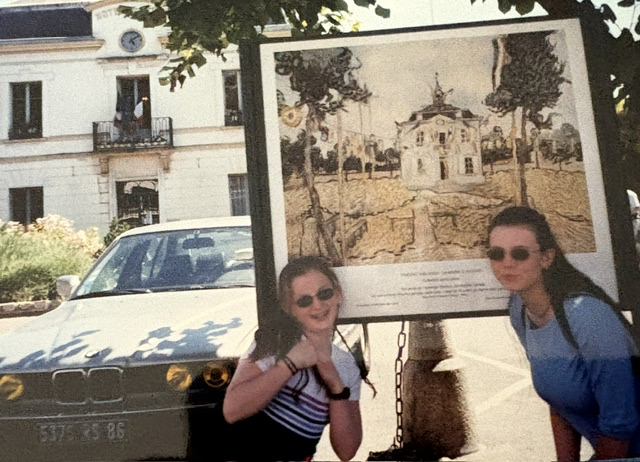
Van Gogh’s Landscape
Visiting museums was an important part of our daughters’ homeschooling. Museums hold many of our cultural treasures, preserving the paintings, objects, and stories through which we encounter the past. But there is another kind of learning that takes place when we leave the museum and enter the landscape that inspired the art displayed within it. […]
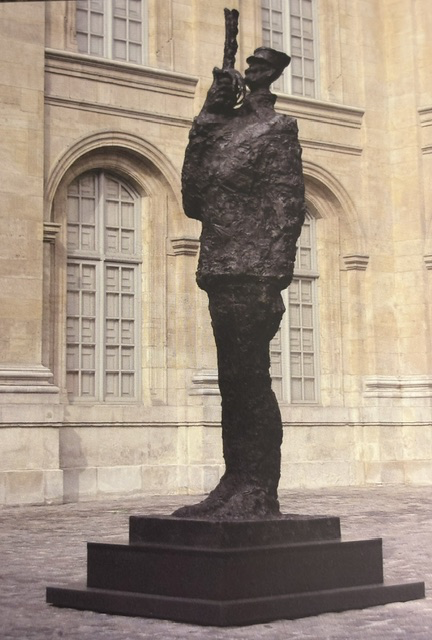
Hommage au Capitaine Dreyfus
This bronze monument honors Alred Dreyfus, whose wrongful conviction became one of the significant political controversies in modern French history. Captain Alfred Dreyfus, a Jewish officer in the French Army, was falsely accused in 1894 of passing military secrets to Germany. Based on forged documents and influenced by widespread antisemitism, he was convicted of treason, publicly stripped of […]
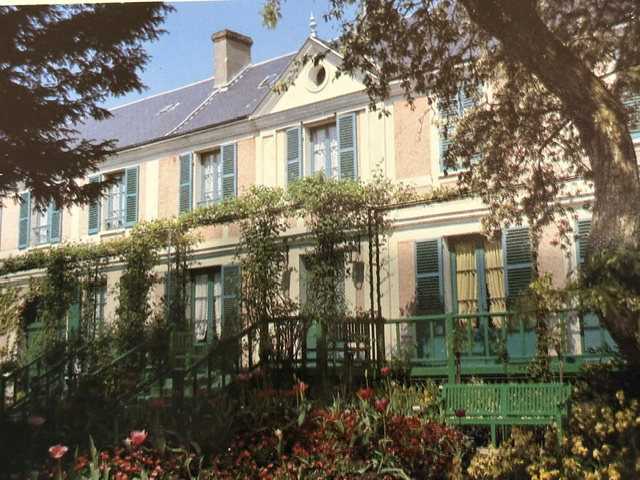
Claude Monet’s House
Visiting the home of Claude Monet in Giverny was an important experience of our trip to France with our daughters. For anyone who has seen Monet’s painting over the years, traveling to Giverny feels like stepping directly into his artwork. It was a journey we especially wanted to share as a family because his paintings had already […]

