Château de Chenonceau
Our family vacation in France included time in the Loire Valley, a region known for its historic towns, vineyards, and magnificent châteaux. Among the most memorable was Château de Chenonceau, an elegant Renaissance residence built across the River Cher. Its history is so closely connected with the women who created, protected, and transformed it that it became known as the “Ladies’ Château”.
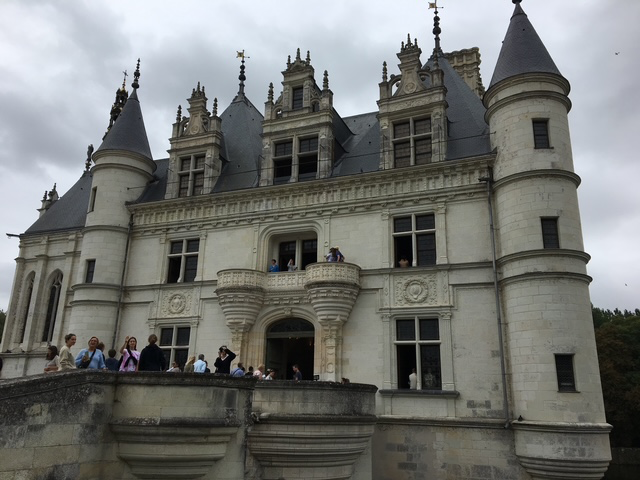
The present château was constructed during the early sixteenth century by Thomas Bohier and his wife, Katherine Briçonnet, on the site of an earlier fortified mill. Because her husband was frequently absent on royal business, Katherine supervised much of the construction and made important decisions about the new residence. Her influence began a tradition in which women repeatedly shaped the future of Chenonceau.
King Henry II later gave the château to Diane de Poitiers, his longtime companion. She created formal gardens and commissioned a bridge across the River Cher. After Henry died in 1559, his widow, Catherine de’ Medici, forced Diane to exchange Chenonceau for another château. Catherine then made Chenonceau one of her favorite residences and built a two-story gallery over Diane’s bridge, creating the extraordinary structure that stretches across the river.
Chenonceau continued to be protected by influential women after the royal period had ended. During the French Revolution, Louise Dupin helped save the château from destruction by emphasizing its importance as a bridge across the Cher. She was also known for the literary and intellectual gatherings she hosted there. Through changing governments, wars, and generations of ownership, Chenonceau survived while many other aristocratic residences were damaged or destroyed.
The château also served important purposes during both world wars. During the First World War, its long gallery was converted into a military hospital where more than 2,000 wounded soldiers received care. During the Second World War, the River Cher formed part of the boundary between German-occupied France and the Free Zone. One end of the gallery stood in occupied territory while the other opened onto the opposite bank, allowing members of the French Resistance to help people cross the dividing line.
Our visit to Chenonceau brought together architecture, political history, and the lives of the women who preserved it. It was more than an impressive château from France’s royal past. It was a place repeatedly adapted to meet the needs of its time: as a private residence, a royal retreat, a wartime hospital, and even a passage to freedom.
Read More From Nancy
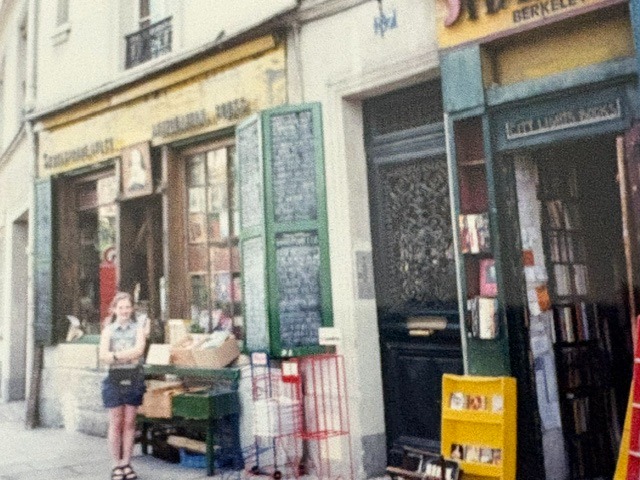
A Family Tradition of Bookstores
Visiting bookstores has long been part of how our family travels. Wherever we go, we enjoy making time to browse the shelves and discover a place through its books. In Paris, that tradition brought us to Shakespeare and Company. Both of our daughters are pictured at Shakespeare and Company: one outside among the books displayed […]
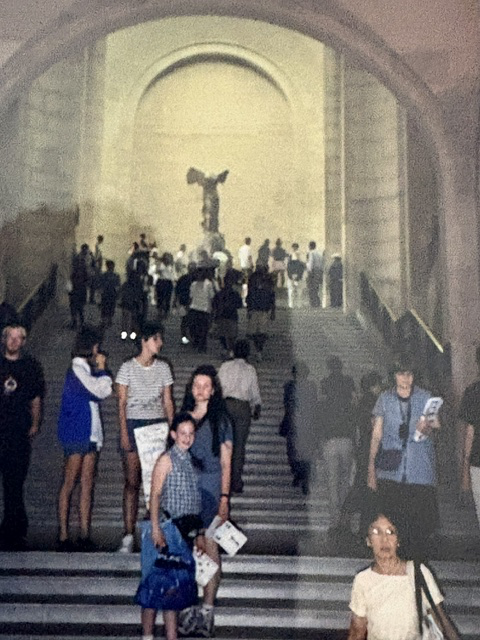
The Winged Victory of Samothrace
Of course, our family vacation in France had to include a visit to the Louvre. We explored its galleries and encountered many of its celebrated works, but this photograph captures our approach to one of the museum’s most dramatic masterpieces: the Winged Victory of Samothrace. Created around 200–175 BC, the marble sculpture represents Nike, the […]
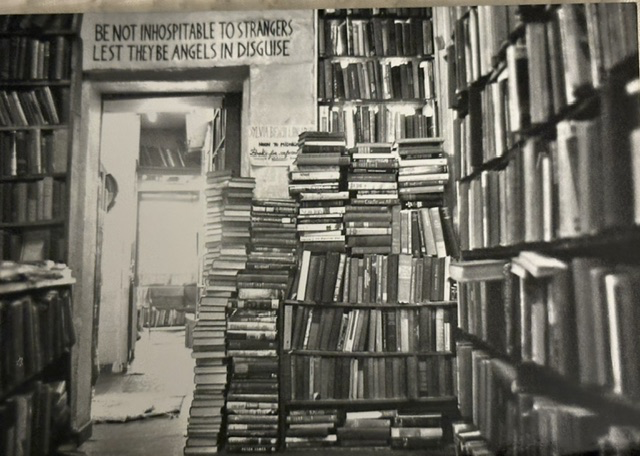
Shakespeare and Company
There are bookstores that sell books, and there are bookstores that become destinations. Shakespeare and Company in Paris is one of those rare places where literature, history, and hospitality have come together for generations. Marty and I have visited Shakespeare and Company each time we have traveled to Paris. As someone who has always loved […]

