Exeter, NH
Founded in 1638 by Reverend John Wheelwright and his followers, Exeter is one of New Hampshire’s oldest towns. Its location along the Exeter and Squamscott rivers supported early mills, shipbuilding, and maritime trade. During the American Revolution, Exeter served as New Hampshire’s capital, placing the town at the center of the state’s emerging government. Phillips Exeter Academy, founded in 1781, added an enduring educational presence to the community.
Exeter’s historic homes, public buildings, riverfront, and town center preserve stories connected to colonial settlement, independence, commerce, education, and everyday life. The meeting of freshwater and tidal rivers shaped the town’s early development, bringing mills and maritime businesses into close proximity. Around this waterfront grew a downtown whose streets and buildings continue to reflect Exeter’s evolution from a colonial settlement into a center of government, trade, and community life.

Recent Posts
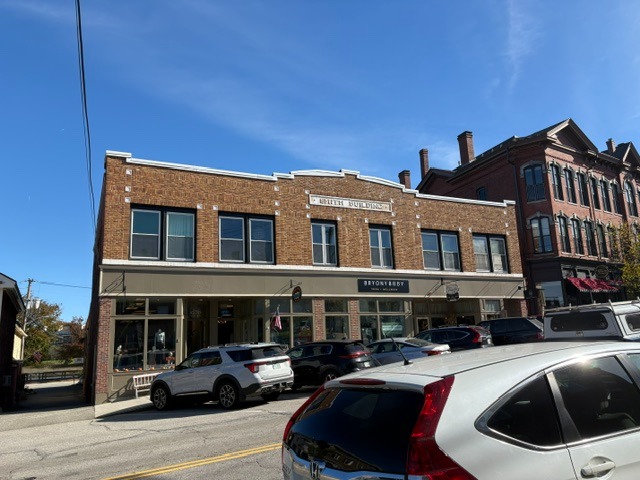
The Smith Building: Five-and-Ten on Water Street
On Water Street, the two-story brick Smith Building preserves a chapter in the changing commercial life of downtown Exeter. Its name remains above the storefronts, identifying a building whose opening introduced a new shopping experience to the town. In October 1915, the Smith Block welcomed a Woolworth’s five-and-ten-cent store. The arrival of Woolworth’s connected Exeter […]
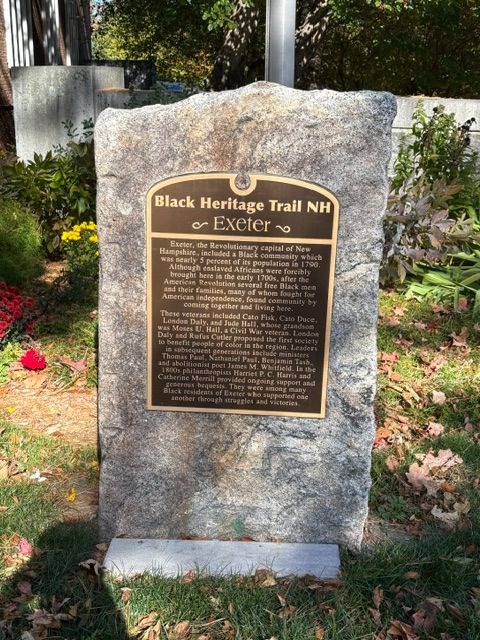
Exeter’s Black Heritage
Near the entrance to Swasey Parkway, a bronze marker honors Exeter’s early Black community and the Revolutionary War veterans who helped shape it. In the first federal census of 1790, Black residents constituted nearly five percent of Exeter’s population—the highest proportion recorded in any New Hampshire town. Their history connects military service, family life, commerce, […]
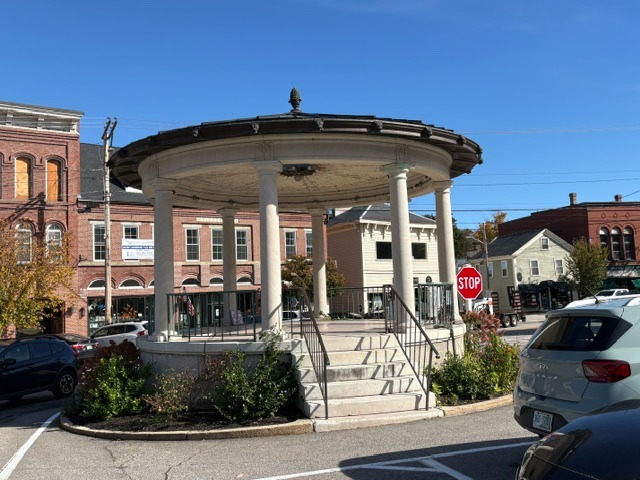
Swasey Pavilion: Exeter’s Bandstand
At the meeting of Front and Water Streets, Swasey Pavilion gives Exeter’s downtown a distinctive gathering place. Commonly called the bandstand, the circular structure was built in the summer of 1916 as a gift from industrialist Ambrose Swasey. Its architect was Henry Bacon, best known for designing the Lincoln Memorial in Washington, D.C. Bacon brought […]
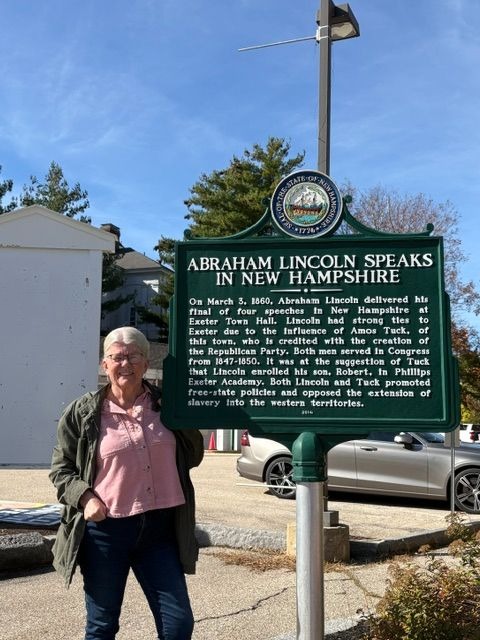
Abraham Lincoln Speaks in New Hampshire
On March 3, 1860, Abraham Lincoln addressed a packed audience at Exeter Town Hall. He was not yet president or his party’s presidential nominee. His appearance came during an eastern speaking tour that brought his arguments about slavery and the nation’s future before new audiences. Exeter was the final stop in a series of four […]
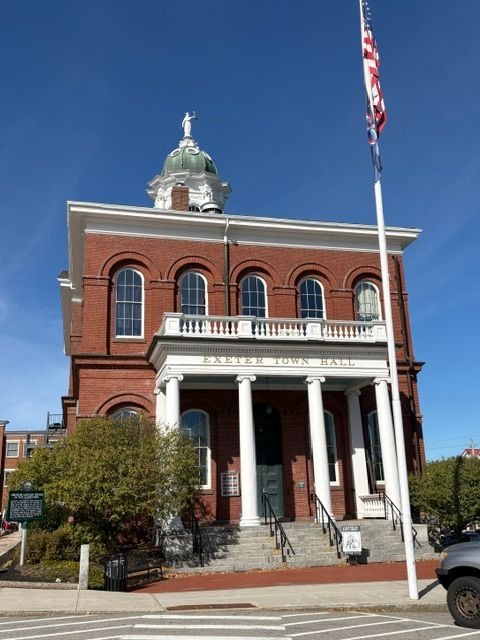
Exeter Town Hall
At the corner of Front and Water Streets, Exeter Town Hall has been a center of public life since 1855. Architect Arthur Gilman designed the red-brick building to accommodate town meetings, court proceedings, and community gatherings. Its prominent location and substantial architecture reflected the importance of these responsibilities within a growing New England town. The […]
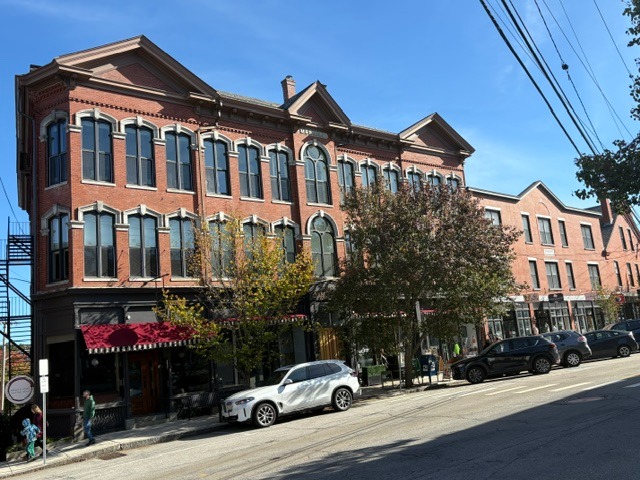
The Merrill Block: An Exeter Apothecary
The Merrill Block on Water Street preserves a chapter of Exeter’s history shaped by local enterprise, medicine and everyday commerce. Dating to the early 1870s, the substantial brick building is recognized in the town’s Waterfront Commercial Historic District nomination as one of its outstanding commercial buildings. Its name remains prominently displayed above the street. The […]
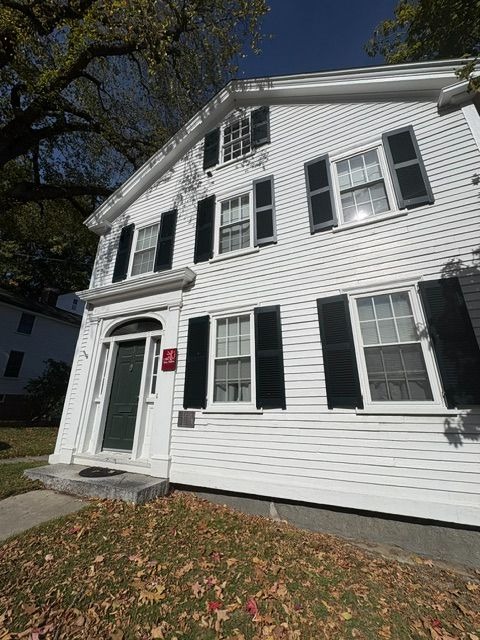
Lewis Cass House
A plaque commemorating Lewis Cass connects this Exeter house with a statesman whose career reached across the expanding United States. Born in Exeter on October 9, 1782, Cass attended Phillips Exeter Academy before leaving New England. He became a territorial governor, cabinet secretary, diplomat, senator, and presidential candidate. Cass established a legal career in Ohio […]
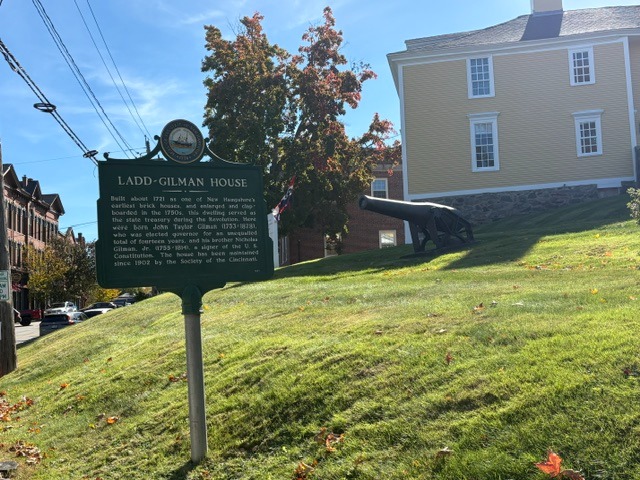
Ladd-Gilman House
Standing on a rise above the Squamscott River, the Ladd-Gilman House brings together the history of an Exeter family and the formation of a new state government. Behind its yellow clapboards is an early brick dwelling built around 1721 by Nathaniel Ladd. Daniel Gilman, a prominent Exeter merchant, purchased the property in 1747, beginning the […]
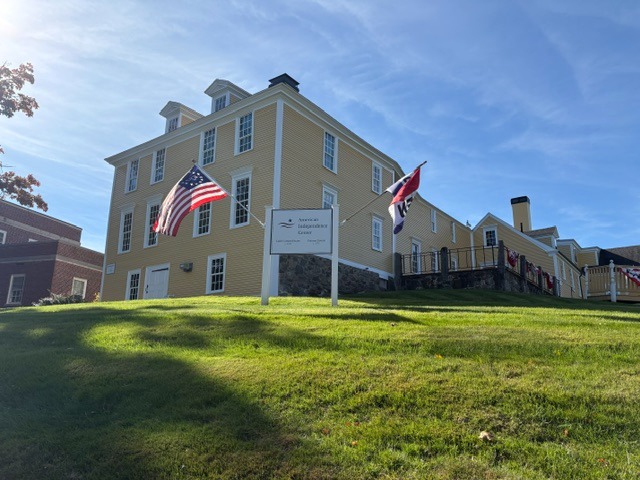
American Independence Museum
In 1985, a rare document rediscovered in the attic of Exeter’s Ladd-Gilman House brought renewed attention to the town’s connection with American independence. It was a Dunlap broadside, one of the first printed copies of the Declaration of Independence. The discovery helped inspire the creation of the American Independence Museum, which opened to the public […]

