Abraham Lincoln Speaks in New Hampshire
On March 3, 1860, Abraham Lincoln addressed a packed audience at Exeter Town Hall. He was not yet president or his party’s presidential nominee. His appearance came during an eastern speaking tour that brought his arguments about slavery and the nation’s future before new audiences. Exeter was the final stop in a series of four New Hampshire speeches.
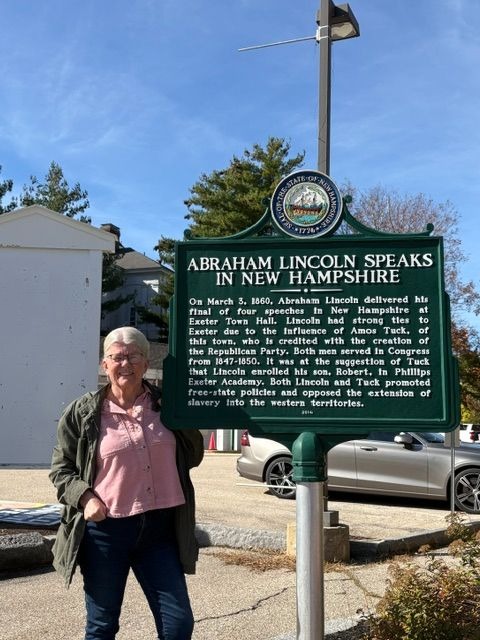
Lincoln’s connection to Exeter was also personal. His son Robert was studying at Phillips Exeter Academy, and the journey offered an opportunity to visit him. After speaking at Cooper Union in New York in late February, Lincoln extended his travels into New England, combining family time with political engagements.
The historical marker also recalls Lincoln’s friendship with Amos Tuck, an Exeter resident and former congressman who helped establish the Republican Party. Tuck encouraged Robert’s enrollment at the academy. Both men opposed the extension of slavery into the western territories, an issue central to the political divisions of 1860.
At the town hall, Lincoln defended Republican principles and urged his listeners to fulfill their political responsibilities despite criticism from opponents. The speech belonged to the period when he was gaining recognition beyond Illinois, several months before the Republican convention selected him as its presidential candidate.
Robert became involved in the campaign as well. He joined Exeter’s Wide Awakes, a political organization that supported his father’s election and held meetings at the town hall. Father and son thus participated in different ways in the political activity connecting Exeter with the approaching national election.
The marker preserves a moment before the presidency and Civil War transformed Lincoln’s place in history. In Exeter, he was a visiting father, a colleague of local political leaders, and a speaker making his case to the public. The surviving town hall connects that visit with the community that gathered to hear him.
Read More From Nancy
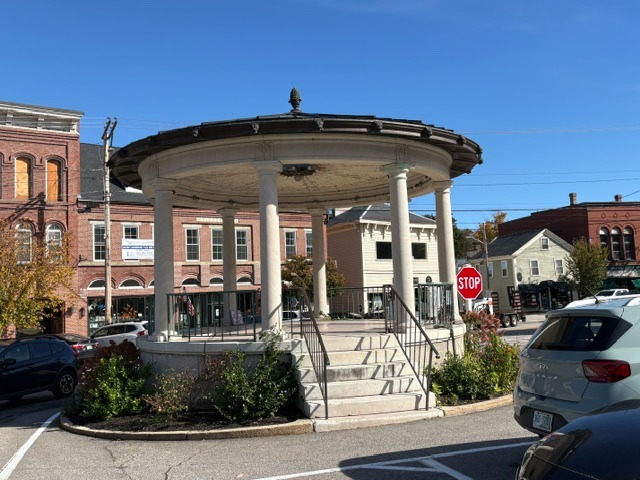
Swasey Pavilion: Exeter’s Bandstand
At the meeting of Front and Water Streets, Swasey Pavilion gives Exeter’s downtown a distinctive gathering place. Commonly called the bandstand, the circular structure was built in the summer of 1916 as a gift from industrialist Ambrose Swasey. Its architect was Henry Bacon, best known for designing the Lincoln Memorial in Washington, D.C. Bacon brought […]
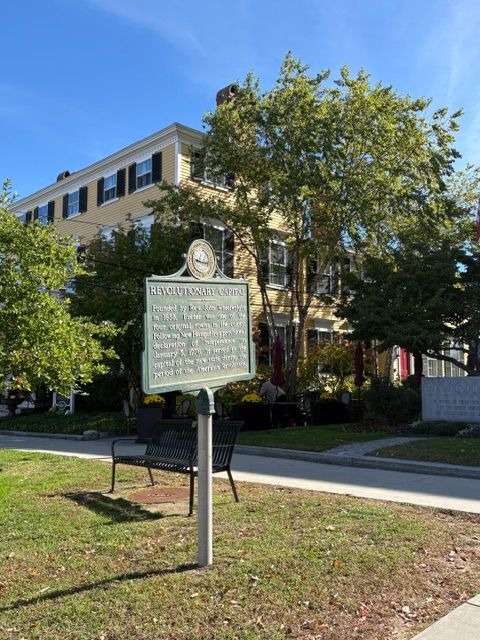
New Hampshire’s Revolutionary Capital
The “Revolutionary Capital” marker in downtown Exeter recalls a time when the town became the center of New Hampshire’s emerging government. As royal authority weakened, representatives gathered here to organize resistance, direct military support and establish a government that could function without a British governor. Exeter’s political importance grew in July 1774, when delegates met […]
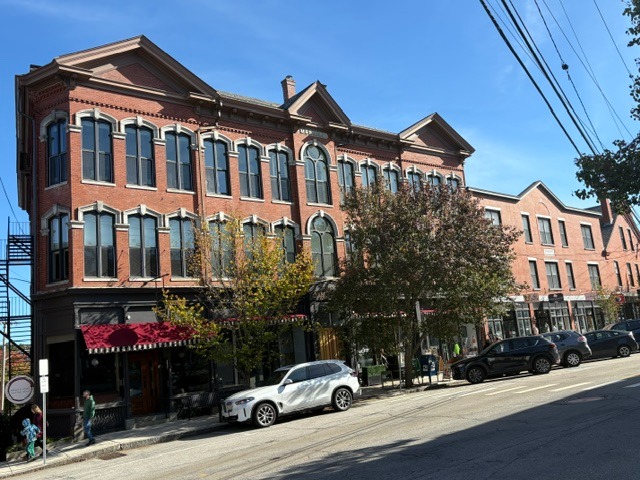
The Merrill Block: An Exeter Apothecary
The Merrill Block on Water Street preserves a chapter of Exeter’s history shaped by local enterprise, medicine and everyday commerce. Dating to the early 1870s, the substantial brick building is recognized in the town’s Waterfront Commercial Historic District nomination as one of its outstanding commercial buildings. Its name remains prominently displayed above the street. The […]

