Ladd-Gilman House
Standing on a rise above the Squamscott River, the Ladd-Gilman House brings together the history of an Exeter family and the formation of a new state government. Behind its yellow clapboards is an early brick dwelling built around 1721 by Nathaniel Ladd. Daniel Gilman, a prominent Exeter merchant, purchased the property in 1747, beginning the family’s long association with the house.
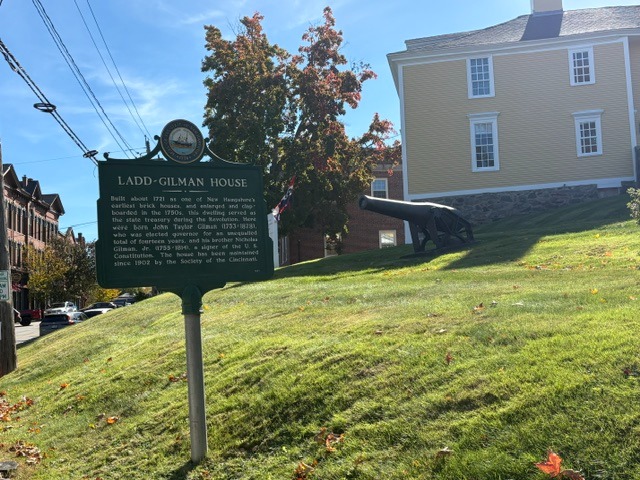
Enlarged and covered with clapboards in the 1750s, the house became the birthplace of brothers John Taylor Gilman and Nicholas Gilman Jr. Both would enter public service during a period when independence required communities to create and sustain new institutions. Their father, Nicholas Gilman, served as New Hampshire’s treasurer, conducting state business from the family home during the Revolution.
With Exeter serving as New Hampshire’s Revolutionary capital, the house occupied an important place in the practical work of government. The state treasury operated here from 1775 to 1789. Raising and managing money was essential to supporting troops and maintaining public administration, placing financial responsibilities within rooms that also belonged to a household.
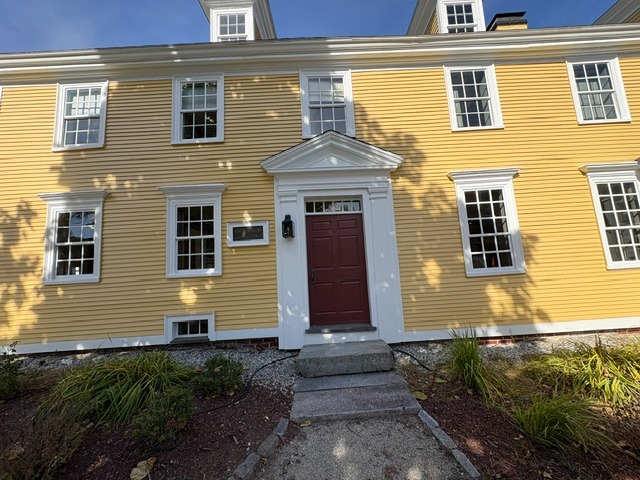
The brothers’ careers carried the family’s influence beyond the Revolution. Nicholas Gilman Jr. became a signer of the United States Constitution. John Taylor Gilman served as governor of New Hampshire for fourteen years across two periods, and the house served as his gubernatorial residence.
Another chapter emerged in 1985, when a rare Dunlap broadside, the first official printing of the Declaration of Independence, was rediscovered in the attic. That discovery helped lead to the establishment of the American Independence Museum in 1991, giving the house a new role in interpreting the history it had witnessed.
The Ladd-Gilman House preserves a setting where family life and public responsibility overlapped. Its history shows that independence depended on work carried out in local communities: keeping accounts, managing resources, serving in government, and building institutions capable of lasting beyond the war.
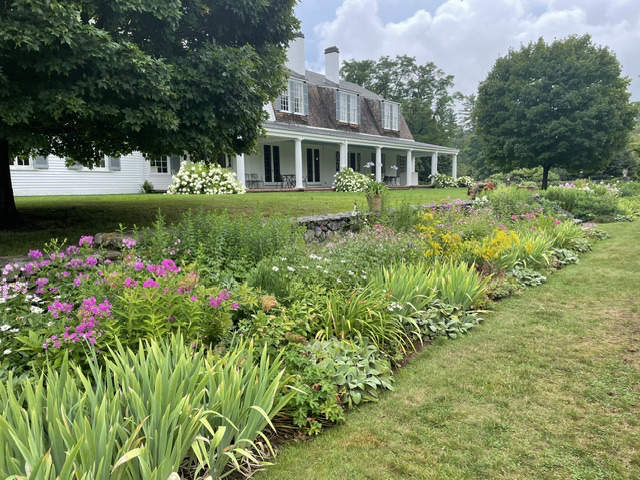
Read More From Nancy
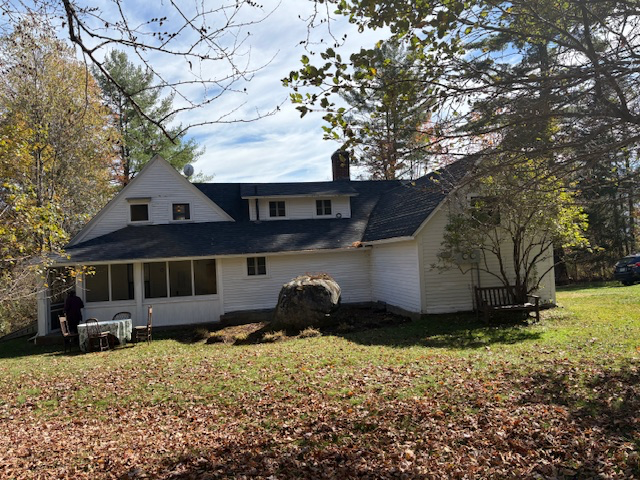
The Frost Place
This summer, we visited The Frost Place in Franconia, New Hampshire, the hillside farmhouse where Robert Frost lived with his family from 1915 to 1920. Standing on the front porch, the view looking towards the White Mountains is spectacular. This is the home when Frost’s career was beginning to rise. When Frost moved to Franconia in 1915, […]
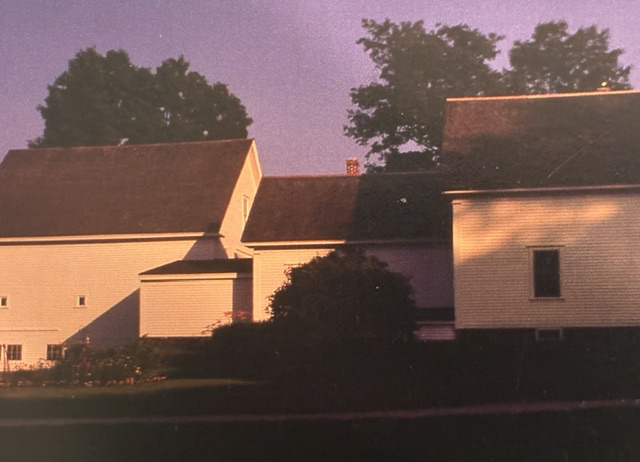
Robert Frost Homestead
By the time Robert Frost arrived in Derry, New Hampshire, in the fall of 1900, he was thirty-six years old, married to his college sweetheart Elinor, and searching for a life that would allow him to write while providing for his growing family. His grandfather purchased this thirty-acre farm, believing that the rhythm of farming […]
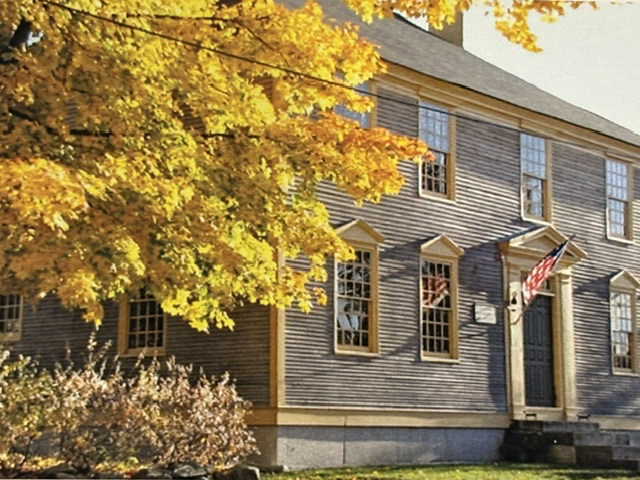
Folsom Tavern
One of the things I enjoy discovering is that many of the most important homes in American history were also places of business. The Folsom Tavern in Exeter is one of those places. Built around 1775 as the home of Colonel Samuel Folsom and his family, it also served as the community’s tavern, where travelers […]

