The Smith Building: Five-and-Ten on Water Street
On Water Street, the two-story brick Smith Building preserves a chapter in the changing commercial life of downtown Exeter. Its name remains above the storefronts, identifying a building whose opening introduced a new shopping experience to the town. In October 1915, the Smith Block welcomed a Woolworth’s five-and-ten-cent store.
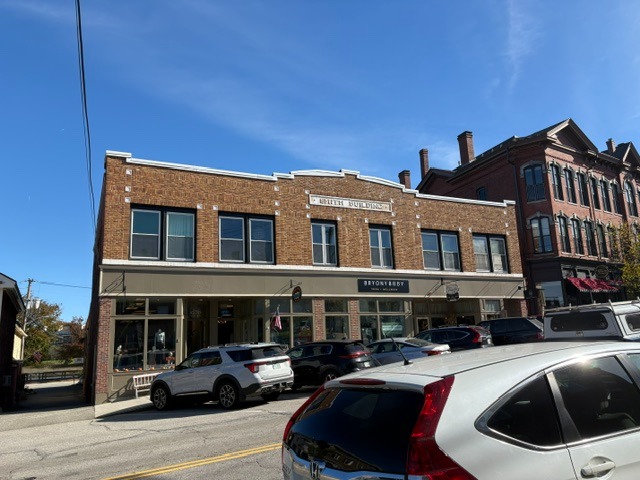
The arrival of Woolworth’s connected Exeter with a growing national retail chain. Five-and-ten-cent stores brought a wide assortment of inexpensive merchandise into one place, encouraging customers to browse goods for household use, personal needs, and small purchases. The Exeter Historical Society describes the store’s opening as bringing mass marketing to town.
That development added another layer to Water Street’s history as a commercial center. Shopping downtown meant moving among neighboring businesses, combining errands with opportunities to encounter friends and acquaintances. A national chain became part of this local setting, serving customers within an established streetscape.
The Smith Building’s architecture reflects its practical commercial purpose. Broad ground-floor windows provide space for displaying merchandise, while the upper story presents a regular arrangement of windows beneath a stepped brick parapet. Lighter masonry accents and the central name tablet give the façade an identity without the elaborate ornament of some neighboring buildings.
Read More From Nancy
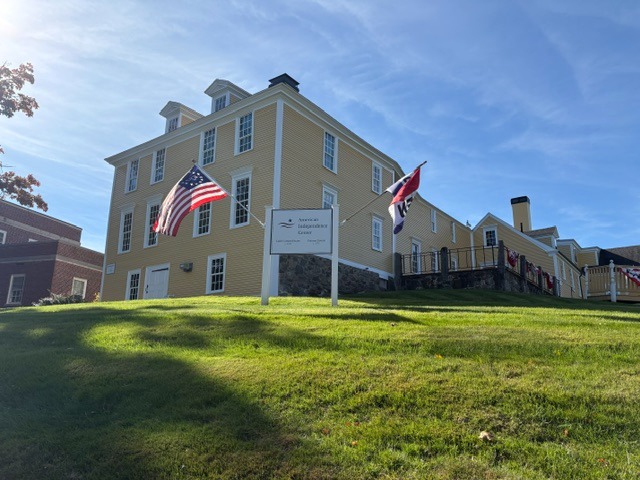
American Independence Museum
In 1985, a rare document rediscovered in the attic of Exeter’s Ladd-Gilman House brought renewed attention to the town’s connection with American independence. It was a Dunlap broadside, one of the first printed copies of the Declaration of Independence. The discovery helped inspire the creation of the American Independence Museum, which opened to the public […]
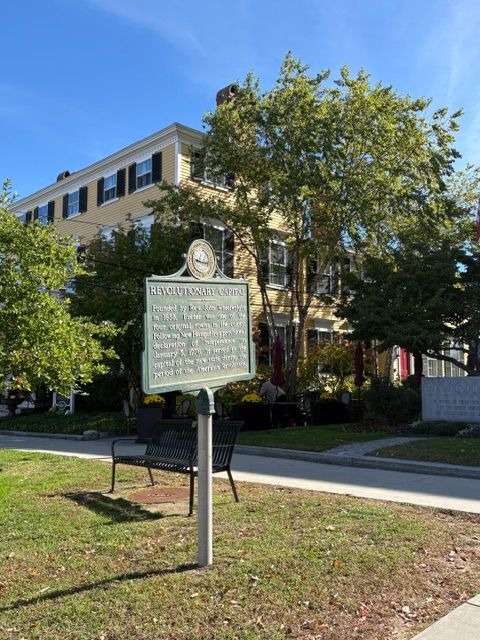
New Hampshire’s Revolutionary Capital
The “Revolutionary Capital” marker in downtown Exeter recalls a time when the town became the center of New Hampshire’s emerging government. As royal authority weakened, representatives gathered here to organize resistance, direct military support and establish a government that could function without a British governor. Exeter’s political importance grew in July 1774, when delegates met […]
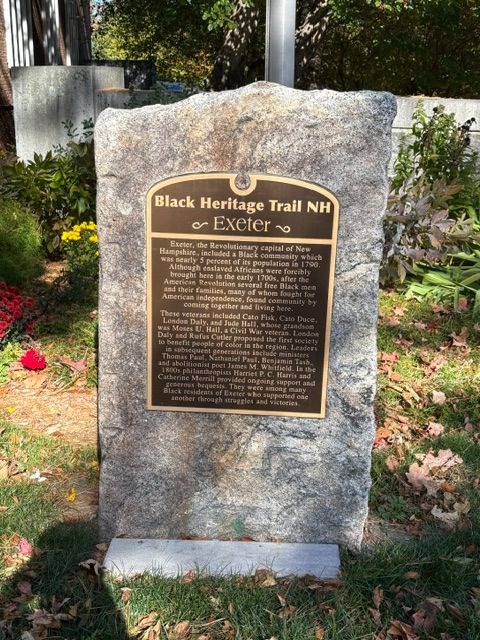
Exeter’s Black Heritage
Near the entrance to Swasey Parkway, a bronze marker honors Exeter’s early Black community and the Revolutionary War veterans who helped shape it. In the first federal census of 1790, Black residents constituted nearly five percent of Exeter’s population—the highest proportion recorded in any New Hampshire town. Their history connects military service, family life, commerce, […]

