The Merrill Block: An Exeter Apothecary
The Merrill Block on Water Street preserves a chapter of Exeter’s history shaped by local enterprise, medicine and everyday commerce. Dating to the early 1870s, the substantial brick building is recognized in the town’s Waterfront Commercial Historic District nomination as one of its outstanding commercial buildings. Its name remains prominently displayed above the street.
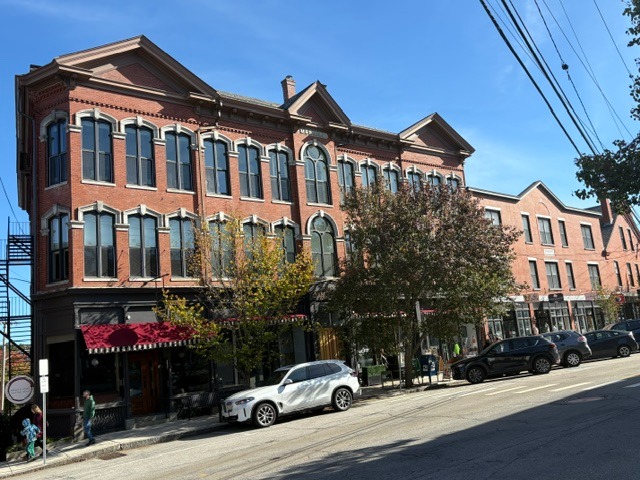
The building’s story is closely associated with Dr. Charles Merrill. In 1848, Merrill and his brother purchased a general store and began specializing in medicines. Their successful business eventually supported the construction of the Merrill Block. In November 1874, the Exeter News-Letter described preparations for an elaborate new drugstore in the building’s western storefront, praising its appearance and convenience. Merrill opened the establishment in 1875.
Ownership changed as the business continued serving Exeter. Edward Cram purchased the drugstore in 1886 and employed William Seward as manager. In 1893, Seward joined Albert Weeks to establish Weeks & Seward’s Drugstore. The business combined pharmacy services with a soda fountain, and electricity arrived in 1919. After Seward retired in 1944, longtime employee Horace Grant purchased the store and renamed it Grant Drugs.
Other businesses occupied the upper floors. In 1903, Junius A. Jackson, a Black businessman who had moved to Exeter in 1889, operated his hairdressing salon on the second floor. His presence adds another dimension to the building’s history, connecting its commercial rooms with the experiences of Exeter’s African American community.
Today, The Exeter Apothecary recalls the building’s pharmaceutical past through its name and surviving wooden apothecary cabinetry. Adapted for cocktails and dining, the space preserves tangible elements of a business that helped make the Merrill Block a familiar destination in downtown Exeter.
Read More From Nancy
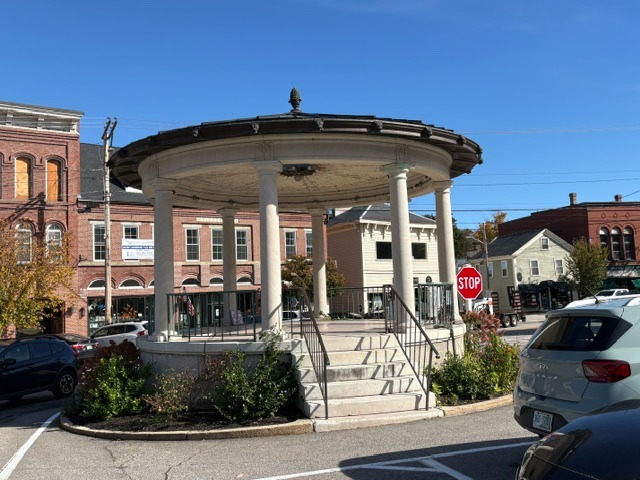
Swasey Pavilion: Exeter’s Bandstand
At the meeting of Front and Water Streets, Swasey Pavilion gives Exeter’s downtown a distinctive gathering place. Commonly called the bandstand, the circular structure was built in the summer of 1916 as a gift from industrialist Ambrose Swasey. Its architect was Henry Bacon, best known for designing the Lincoln Memorial in Washington, D.C. Bacon brought […]
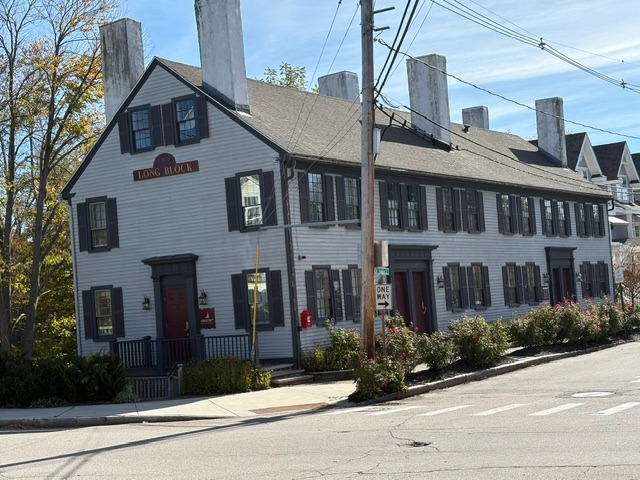
The Long Block: Housing Exeter’s Mill Workers
At the corner of Franklin and Water streets, the Long Block preserves a residential side of Exeter’s industrial history. Its extended wooden façade, repeated entrances and substantial chimneys distinguish it from a single-family house. Built around 1826 as a four-unit tenement, it provided homes for workers employed in nearby mills. The building occupies the site […]
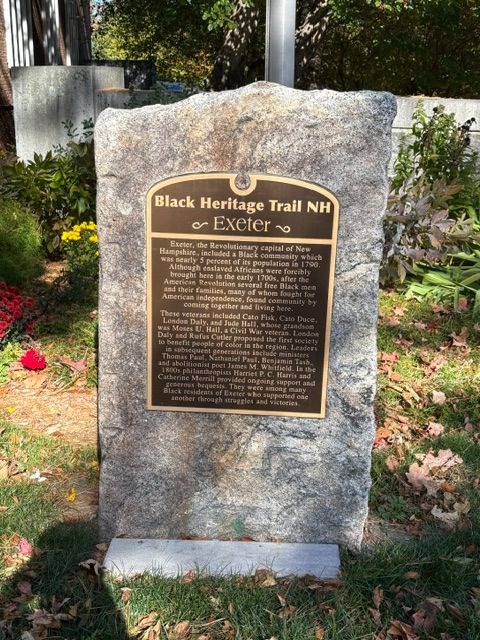
Exeter’s Black Heritage
Near the entrance to Swasey Parkway, a bronze marker honors Exeter’s early Black community and the Revolutionary War veterans who helped shape it. In the first federal census of 1790, Black residents constituted nearly five percent of Exeter’s population—the highest proportion recorded in any New Hampshire town. Their history connects military service, family life, commerce, […]

