Samuel Adams
Standing beside the grave of Samuel Adams at Boston’s Granary Burying Ground offers an opportunity to remember a man whose influence extended far beyond the familiar name associated with a modern beer company. Samuel Adams was one of the most determined political organizers of the American Revolution and an early advocate for independence from Great Britain.
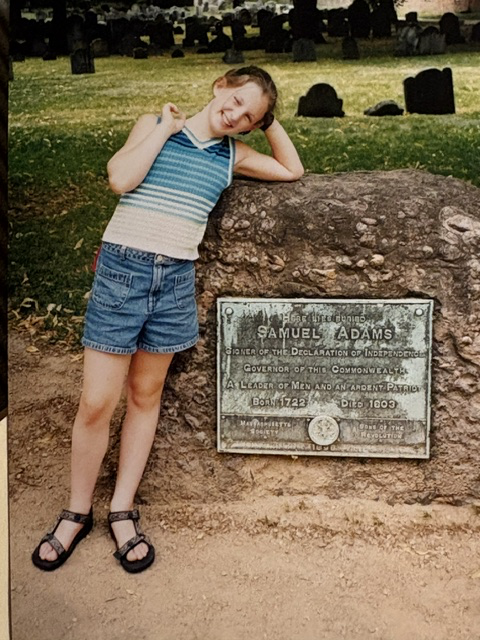
Born in Boston in 1722, Adams attended Harvard College and initially pursued several unsuccessful business ventures. He eventually found his calling in public life. As tensions grew between Great Britain and the American colonies, Adams became an outspoken opponent of British taxation and increased parliamentary control.
Adams understood the power of organized resistance. He helped transform local grievances into a coordinated political movement by writing newspaper articles, preparing public resolutions and encouraging communication among the colonies. He was associated with the Sons of Liberty and played an important role in Boston’s opposition to the Stamp Act, the Townshend Acts and other British policies. He also helped establish Massachusetts’s system of committees of correspondence, which allowed communities to exchange information and coordinate their responses.
Although his exact role in planning the Boston Tea Party remains debated, Adams strongly defended the principles behind the protest. His political activities made him one of the colonial leaders whom British authorities considered particularly dangerous. When fighting began at Lexington and Concord in April 1775, Adams and fellow patriot John Hancock were in Lexington and were believed to be among the men British troops hoped to capture.
Adams represented Massachusetts in the Continental Congress and signed the Declaration of Independence in 1776. After the Revolution, he remained active in Massachusetts government, serving as lieutenant governor and later as governor from 1794 to 1797. He died in Boston in 1803.
Samuel Adams was not known as a military commander or a polished national statesman. His strength was his ability to recognize a cause, communicate its importance and persuade ordinary citizens to act together. His grave in the Granary Burying Ground marks the resting place of a man whose persistence and political organization helped move thirteen colonies toward independence.
Read More From Nancy
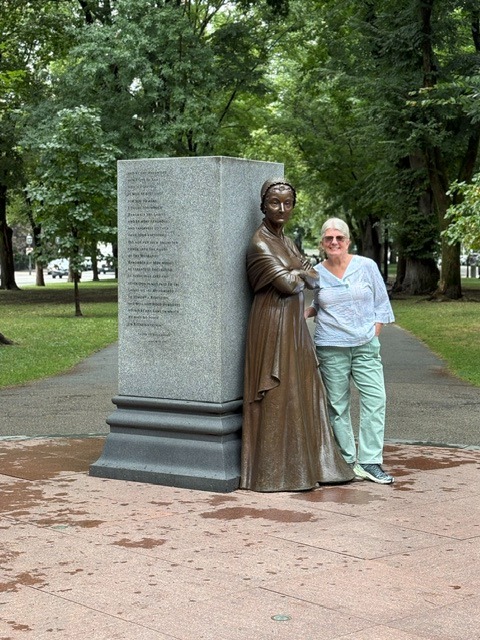
Abigail Adams: Wife of a President, Mother of Another
On Boston’s Commonwealth Avenue Mall, Abigail Adams stands beside a granite pedestal, her arms folded and her expression resolute. Part of the Boston Women’s Memorial, her figure honors a woman whose life connected the American Revolution with two generations of presidential leadership. She was the wife of John Adams, the second president of the United […]
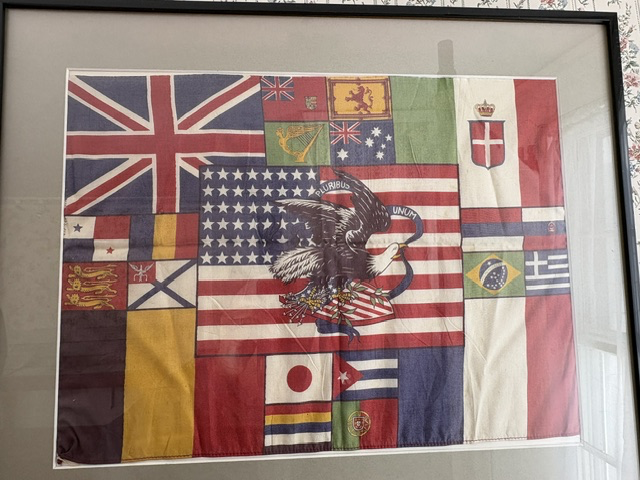
The 1917 Allies Flag
This unusual silk flag, preserved by the Needham History Center & Museum, tells a story not only about World War I, but about how Americans were encouraged to understand the nation’s entry into the conflict. By 1917, Europe had already been at war for nearly three years. The United States had remained officially neutral, but […]
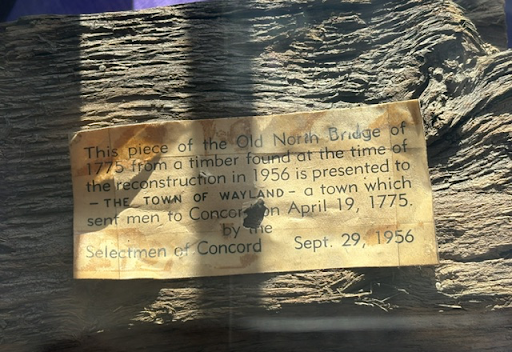
A Piece of the Old North Bridge
While visiting the Wayland Historical Society, I was surprised to find a small fragment of wood displayed in a simple case. At first glance, it appeared to be little more than an old, weathered timber. Yet this was no ordinary piece of wood. It was a remnant of the original Old North Bridge, the bridge […]

