Shaw Memorial
Every time I visit Boston Common, I find myself stopping to admire this remarkable relief by Augustus Saint-Gaudens. Not only is it one of the finest works of public art in America, but it captures its subject with extraordinary power and dignity. Rather than glorifying war, the sculpture honors the courage, sacrifice, and determination of the men who marched together in pursuit of freedom.
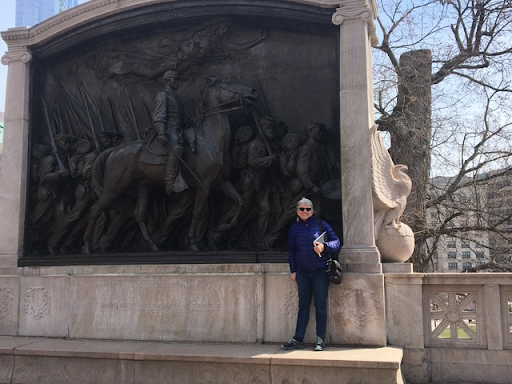
The memorial commemorates Colonel Robert Gould Shaw and the soldiers of the 54th Massachusetts Volunteer Infantry, one of the first officially organized Black regiments to fight for the Union during the Civil War. Following the Emancipation Proclamation, the 54th became a symbol of the willingness of African Americans to fight for their own freedom and for the preservation of the Union. Their courageous assault on Fort Wagner in South Carolina on July 18, 1863, although unsuccessful militarily, demonstrated their bravery and inspired thousands of other Black men to enlist in the Union Army.
What makes this memorial so extraordinary is Saint-Gaudens’ artistic vision. Rather than depicting the soldiers as anonymous figures, he gave each man individual features and expressions. Colonel Shaw rides on horseback, but he does not dominate the composition. Instead, he marches beside his men, emphasizing their shared purpose and sacrifice. Floating above them is a winged figure representing Victory, carrying poppies, symbols of remembrance, and an olive branch, representing peace.
The memorial was commissioned by the family and friends of Colonel Shaw shortly after the Civil War, but Saint-Gaudens spent nearly fourteen years refining every detail before it was unveiled in 1897. He considered it the finest work of his career, and many art historians agree that it remains one of America’s greatest sculptural masterpieces.
Each time I stop here, I notice something I had missed before: a face, an expression, the determination in the soldiers’ stride, or the quiet symbolism woven throughout the relief. It reminds me that history is often best understood not simply by reading about it, but by standing before works of art that preserve both the events and the humanity of those who lived them.
Read More

Read More From Nancy
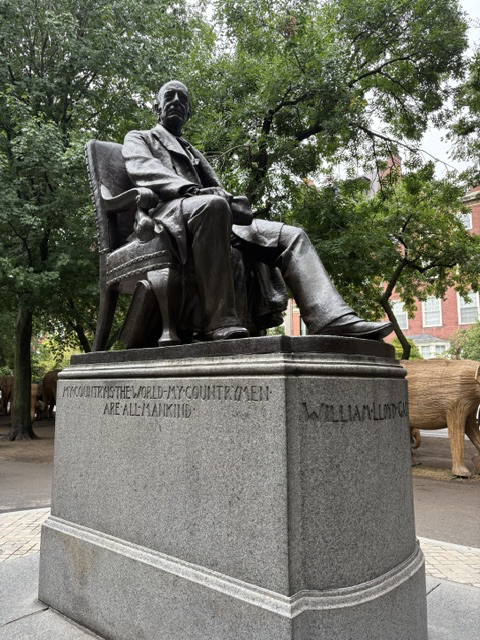
William Lloyd Garrison Memorial
I love walking along Commonwealth Avenue in Boston and stopping at the different sculptures and memorials placed along its tree-lined central mall. Each one introduces another person or event connected with the city’s history. Among them is the seated bronze figure of William Lloyd Garrison, one of the nation’s most influential voices against slavery. Born […]
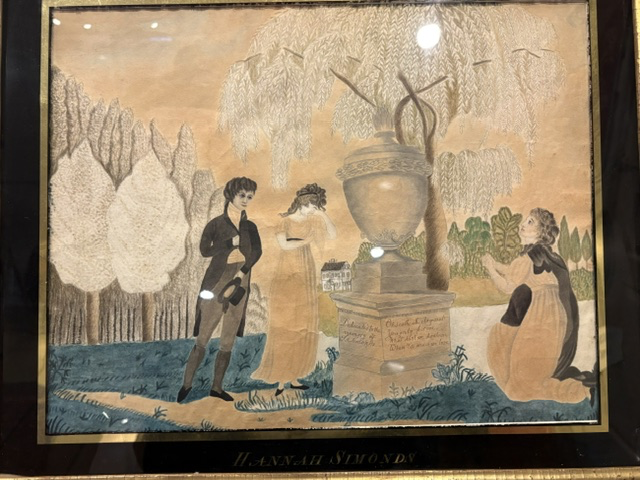
Hannah Simonds’ Mourning Portrait
One of the most moving pieces we discovered at the Buckman Tavern in Lexington was this delicate watercolor painted by Hannah Simonds in 1805. At first glance, it appears to be a simple family memorial, but it tells a much larger story about remembrance, family, and the quiet ways ordinary Americans preserved the legacy of […]
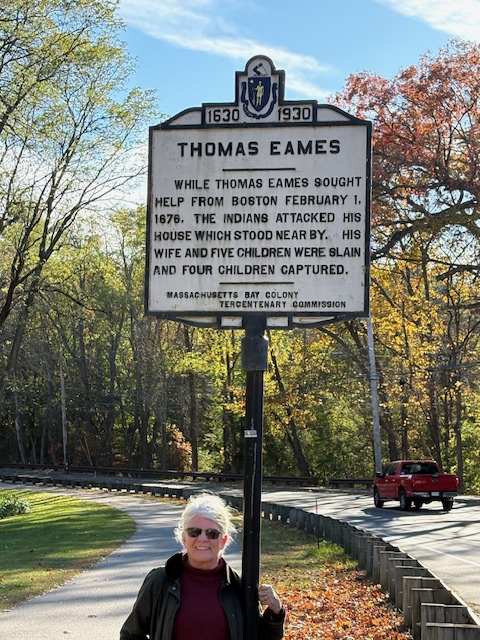
Thomas Eames Sign
Driving along a road in Framingham is this roadside sign that marks the location where the home of Thomas Eames once stood. There is no remaining structure, only the sign indicating that this was the site of a 17th century homestead. On February 1, 1676, during the King Philip’s War, the Eames house was attacked. At […]

