The Seine from the Eiffel Tower
From the Eiffel Tower, our family looked out across the Seine as it curved through Paris. From this height, the city appeared less like a collection of individual monuments and more like an interconnected landscape shaped by the river, its streets, and the neighborhoods extending toward the horizon.
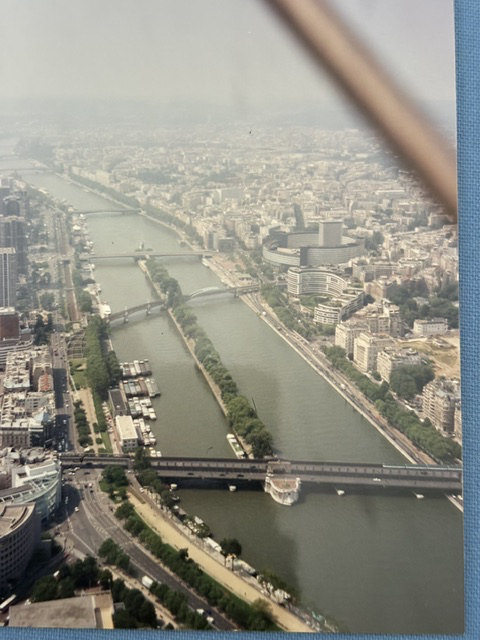
The Seine has influenced the growth of Paris from its earliest beginnings. It provided water, transportation, trade, and a natural route through the city. Over time, warehouses, markets, homes, public buildings, and tree-lined embankments developed along its banks. The many bridges crossing the water became essential links between communities that grew on either side.
Stretching through the center of this view is the Île aux Cygnes, or Island of the Swans. The narrow artificial island was created in 1827 and later transformed into a tree-lined walkway. At its far end stands a smaller Statue of Liberty, presented to Paris by the American community in 1889 as a symbol of the longstanding connection between France and the United States.
Looking down upon the Seine gave us a different understanding of Paris. The river was not simply passing through the city; it was organizing and connecting it. Sharing this view as a family allowed us to see beyond the famous landmarks and appreciate the shape, scale, and remarkable continuity of Paris itself.
Read More From Nancy
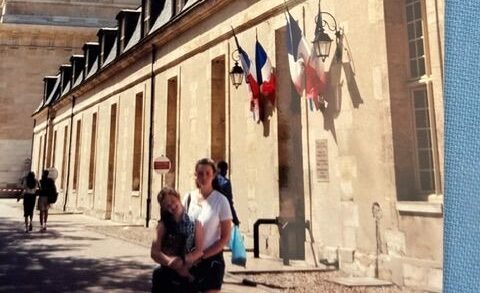
Les Invalides
The gilded dome of Les Invalides rises above a complex founded to care for soldiers. In 1670, Louis XIV established the Hôtel Royal des Invalides as a home for veterans whose injuries, illness, or age had left them in need of support. Its monumental architecture gave a prominent place in the capital to men who […]
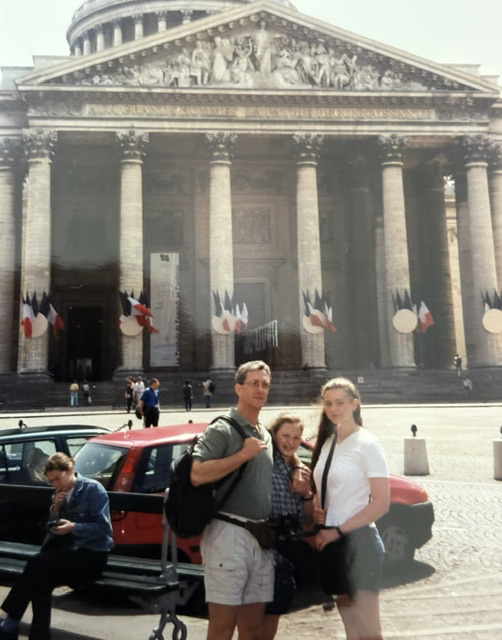
The Panthéon
During our family vacation to France, we visited the Panthéon in the Latin Quarter of Paris. Its massive columns, triangular pediment, and soaring dome give it the appearance of an ancient temple standing in the middle of the modern city. The building was commissioned by King Louis XV as a church dedicated to Saint Geneviève, […]
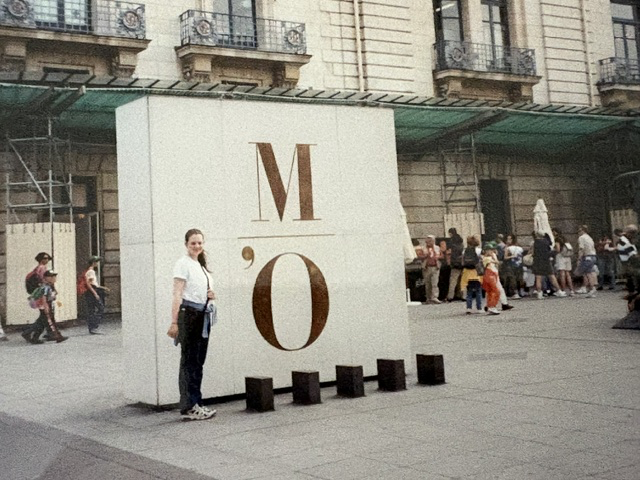
Musée d’Orsay
When we traveled to France as a family around 1997, Paris offered an almost overwhelming number of historic buildings, monuments, churches, and museums to explore. Among all the places we visited, the Musée d’Orsay became one of our favorites. It combined an extraordinary collection of art with a building whose own history was as memorable […]

