Musée d’Orsay
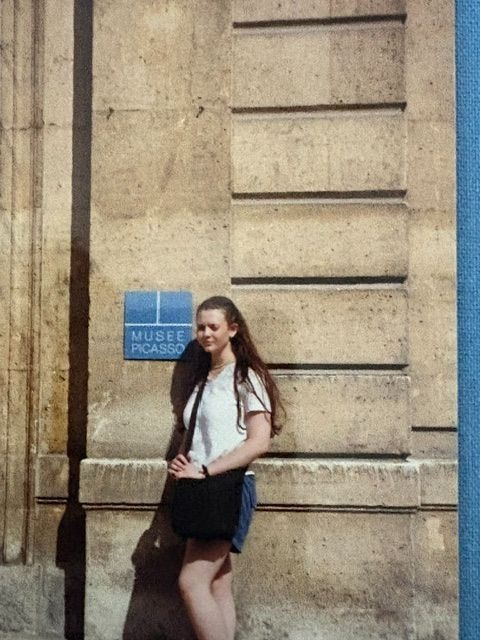
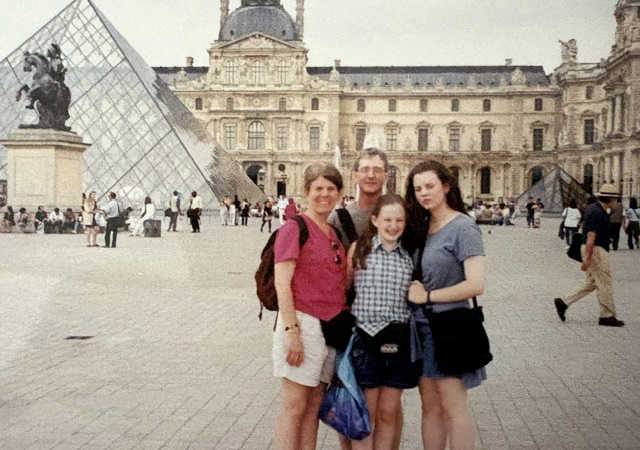
When we traveled to France as a family around 1997, Paris offered an almost overwhelming number of historic buildings, monuments, churches, and museums to explore. Among all the places we visited, the Musée d’Orsay became one of our favorites. It combined an extraordinary collection of art with a building whose own history was as memorable as many of the works displayed inside.
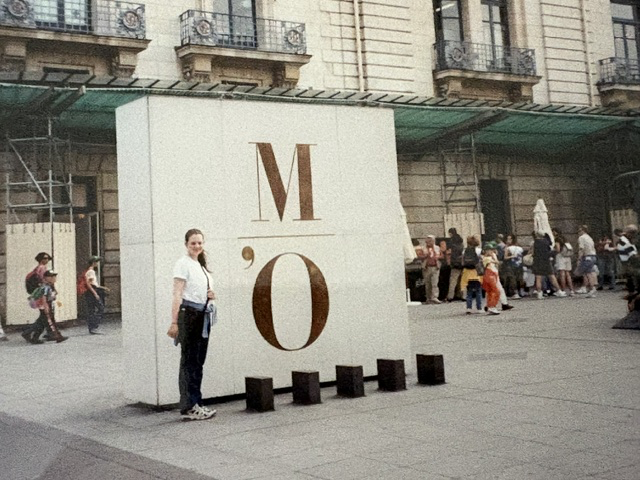
The museum began not as a gallery but as the Gare d’Orsay, a grand railway station constructed for the Paris Exposition of 1900. Designed by architect Victor Laloux, it was built on the bank of the Seine opposite the Tuileries Garden and within sight of the Louvre. Because such an industrial building occupied one of the most prominent locations in Paris, Laloux concealed its modern iron-and-glass structure behind an elegant stone exterior that harmonized with the surrounding historic architecture. Inside, electric trains arrived beneath an enormous, vaulted roof, while clocks, elevators, and other modern conveniences welcomed travelers arriving in the center of the city.
The station’s usefulness was relatively short-lived. By 1939, its platforms had become too short for the longer trains then entering service. The building subsequently served several purposes, including use as a mailing center during the Second World War, a reception center for returning prisoners of war, and a setting for films and theatrical productions. By the 1970s, demolition was being considered. Instead, the station was preserved and converted into a museum, allowing one of the great architectural survivors of the 1900 exposition to begin a new life. The Musée d’Orsay opened in December 1986.
The museum is best known for its remarkable concentration of Impressionist and Post-Impressionist art. Works by Édouard Manet, Edgar Degas, Pierre-Auguste Renoir, Paul Cézanne, Vincent van Gogh, Paul Gauguin, and many others allow visitors to follow the movement away from the formal traditions of academic painting. These artists took their canvases outdoors, painted contemporary life, experimented with unusual viewpoints, and attempted to capture fleeting changes in light, color, weather, and movement.
What I remember most clearly is the extraordinary work of Claude Monet. The Musée d’Orsay holds one of the world’s most extensive collections of his paintings, representing many stages of his career. His scenes of gardens, fields, coastlines, rivers, city streets, and railway stations reveal how he returned to subjects again and again, observing how they changed with the hour, season, atmosphere, and quality of light. Paintings such as Poppies, The Gare Saint-Lazare, and Blue Water Lilies transform familiar places into studies of perception and color. Seeing so many of these works together made it possible to understand Impressionism not simply as a style, but as a new way of looking at the world.
The building added another dimension to the experience. Its great central hall, once filled with passengers and trains, became a dramatic gallery lined with sculpture. The immense station clock remained above it as a reminder of the building’s earlier purpose. Rather than erasing the past, the conversion allowed the architecture of one period to provide a setting for the art of another.
Our visit to the Musée d’Orsay was part of a family journey filled with important sites, but this museum remained especially memorable. It introduced our daughters to some of the world’s greatest art while showing all of us how an endangered building could be preserved and given an entirely new purpose. The experience was not only about seeing paintings by Monet and the other Impressionists. It was about entering a place where architecture, art, history, and family discovery came together under the roof of a former Paris railway station.