Burial Hill
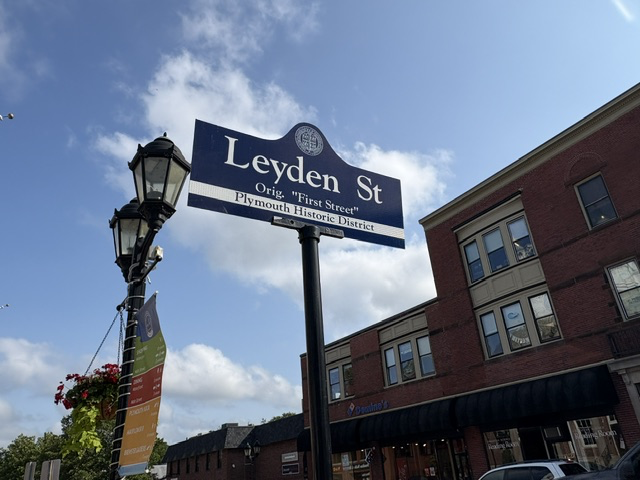
Rising above Town Square at the upper end of Leyden Street, Burial Hill is one of Plymouth’s most significant historic places. Its elevation provides a commanding view of the harbor, the waterfront, and the route of the town’s first street. That view explains why the settlers initially used the hill for defense rather than burial.
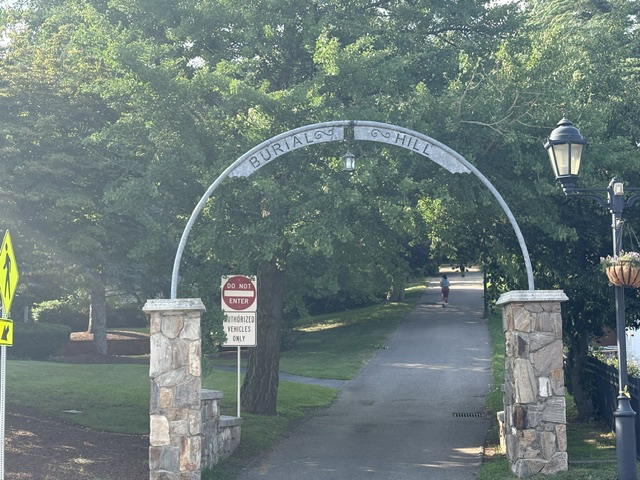
A fort was constructed on the hill in 1621–1622, with cannon placed on its roof to protect the settlement below. The lower level also served as a meetinghouse where residents gathered for worship and public business. For several decades, Burial Hill was therefore at the center of Plymouth’s military, religious, and civic life.
After the fortifications were no longer needed, the hill became Plymouth’s principal burial ground. The earliest graves were probably marked with wood or simple stones that have not survived. The oldest remaining carved gravestone belongs to Edward Gray, who died in 1681. Other early stones preserve the names and stories of generations who lived in Plymouth after the colony’s founding.
Among those buried on Burial Hill are Governor William Bradford, Governor Thomas Prence, and William and Mary Brewster. Some of the monuments honoring Plymouth’s earliest settlers were erected long after their deaths, reflecting later efforts to identify and preserve the town’s history. The cemetery continued to receive burials until 1957 and today contains more than 2,000 surviving grave markers.
Burial Hill is more than an old cemetery. From its paths, visitors can still see the relationship between the harbor, Leyden Street, Town Square, and the hill that shaped the original settlement. The fort and meetinghouse have disappeared, but the ground continues to preserve centuries of Plymouth history and the lives of those who helped build the community.
Read More
Read More From Nancy
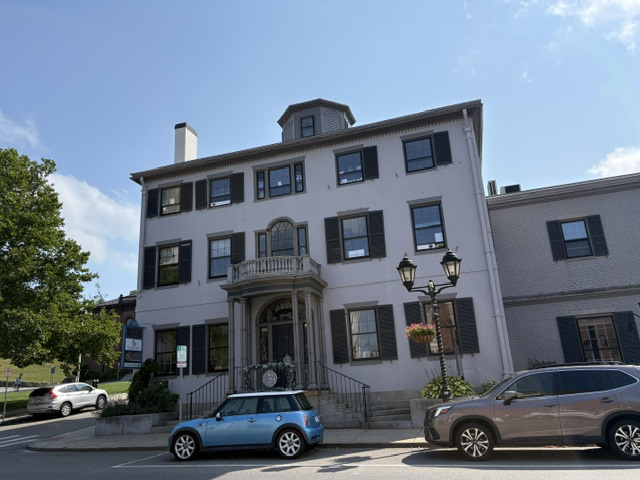
The Bartlett–Russell–Hedge House
Standing prominently on Court Street, the Bartlett–Russell–Hedge House is one of Plymouth’s finest examples of Federal-style architecture. Its symmetrical façade, Palladian window, entrance balcony, and rooftop cupola distinguish it from the surrounding commercial buildings. The house was constructed in 1803 for Joseph Bartlett, a Plymouth Sea captain. Its design has been attributed to Charles Bulfinch, […]
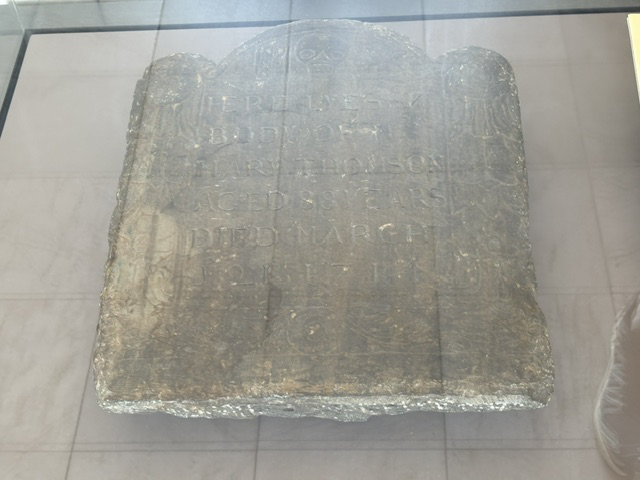
Mary Cooke Thompson Gravestone
Among the artifacts at Pilgrim Hall Museum is this early New England gravestone for Mary Cooke Thompson, a woman with a direct connection to one of the Mayflower families. Mary was the daughter of Mayflower passenger Francis Cooke and his wife, Hester Mahieu. Mary was born in Leiden in the Netherlands, where the English Separatist […]
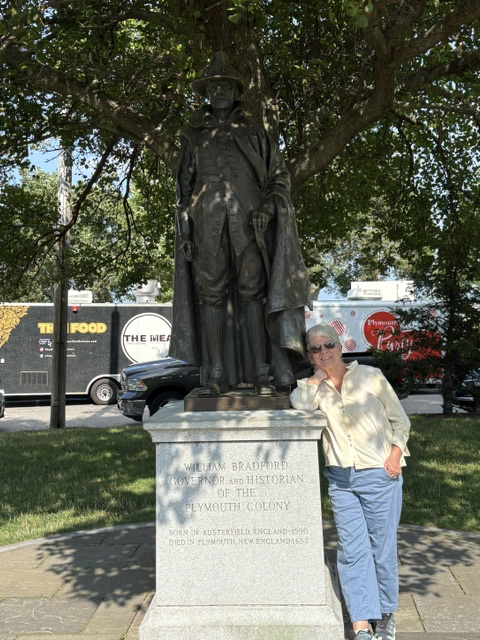
William Bradford Statue
Standing near Plymouth Harbor is this imposing statue of William Bradford, one of the most important figures in the story of Plymouth Colony. Bradford crossed the Atlantic aboard the Mayflower in 1620 and, after the death of Governor John Carver the following spring, was elected governor of Plymouth Colony. He would serve in that position […]

