Horseshoe Bend National Military Park
Visiting Horseshoe Bend brought us to the site of one of the most consequential and devastating battles in the history of the Creek Nation. On March 27, 1814, Major General Andrew Jackson led approximately 3,300 soldiers and allied Cherokee and Lower Creek warriors against Chief Menawa and about 1,000 Red Stick Creek warriors. Menawa’s people had fortified themselves within a horseshoe-shaped bend of the Tallapoosa River.
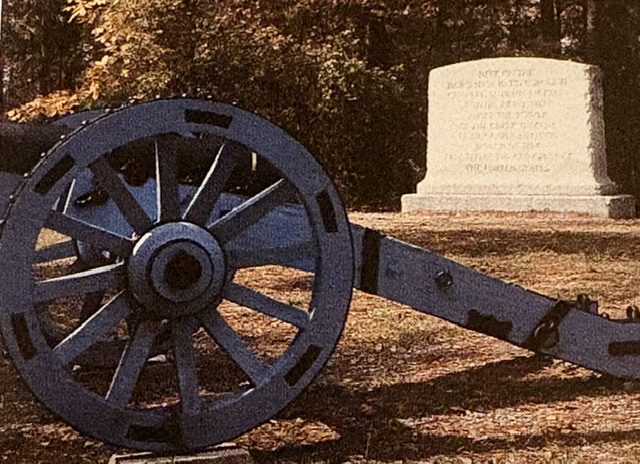
Jackson’s forces surrounded the bend and broke through the Creeks’ log barricade. By the end of the day, more than 800 Red Stick warriors had been killed. Menawa, although severely wounded, escaped. The defeat effectively ended organized Red Stick resistance in the Creek War and helped establish Jackson as a national military hero, contributing to his later rise to the presidency.
The consequences extended far beyond the battlefield. Under the Treaty of Fort Jackson, signed in August 1814, the Creek Nation was forced to surrender approximately 23 million acres in what is now Alabama and Georgia. The seizure included land belonging to Creeks who had fought alongside Jackson, opening much of the region to white settlement and laying the groundwork for Alabama’s admission to the Union in 1819.
Congress authorized Horseshoe Bend National Military Park in1956 and signed by President Dwight D. Eisenhower. After the required land was transferred to the federal government, Eisenhower formally dedicated the park by presidential proclamation in 1959. The cannon and monument stand within a landscape preserved not simply as the scene of an American military victory, but as a place to remember the Creek people who fought, died, and lost much of their homeland as a result.
Read More From Nancy
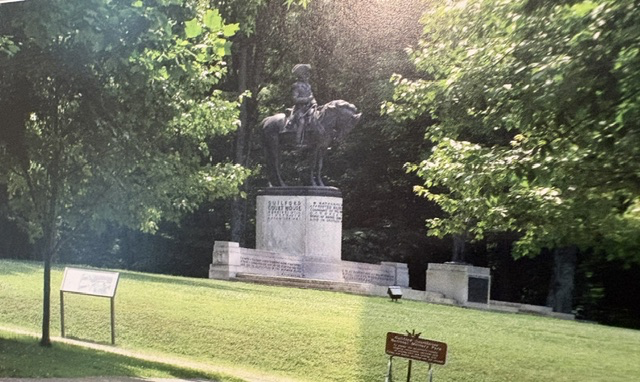
Guilford Courthouse National Military Park
One of the great privileges of traveling across the United States has been visiting our National Parks. While many people immediately think of spectacular mountains, canyons, or seashores, the National Park Service also preserves places where the course of American history was changed. Guilford Courthouse National Military Park in Greensboro, North Carolina, is one of […]
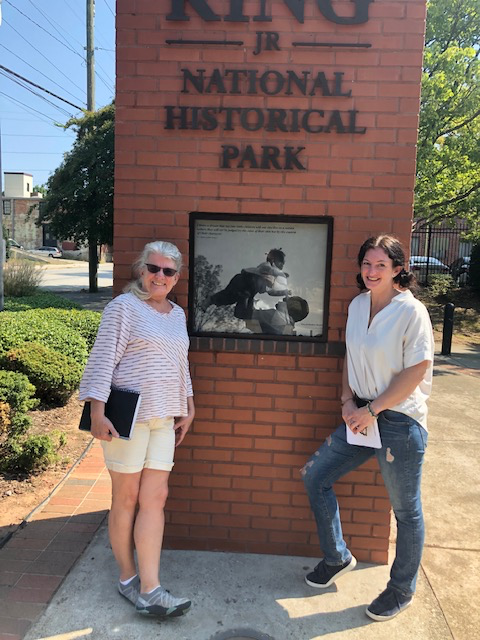
Martin Luther King, Jr. National Historical Park – Ebenezer Baptist Church
There are places where history was witnessed, and there are places where history was spoken. Ebenezer Baptist Church in Atlanta is one of those places. Walking into this sanctuary, I was struck by its simplicity. The pews, the pulpit, and the stained-glass windows are much as they were when generations of worshippers gathered here. Yet […]
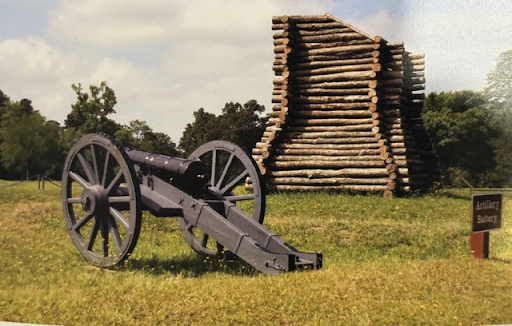
Ninety Six National Historic Site
Ninety Six National Historic Site in Ninety Six, South Carolina, preserves one of the most significant yet least-known battlefields of the American Revolution. Established as a National Historic Site in 1976, it tells the story of a frontier settlement where Native Americans, settlers, Loyalists, and Patriots all struggled for control of the South Carolina backcountry. […]

