The Flip Dog
When we visited the Golden Ball Tavern in Weston, one of the objects that caught our attention was this long iron implement. At first glance, it doesn’t reveal very much about its purpose. But once we learned how it was used, it provided a wonderful glimpse into everyday tavern life more than two centuries ago.
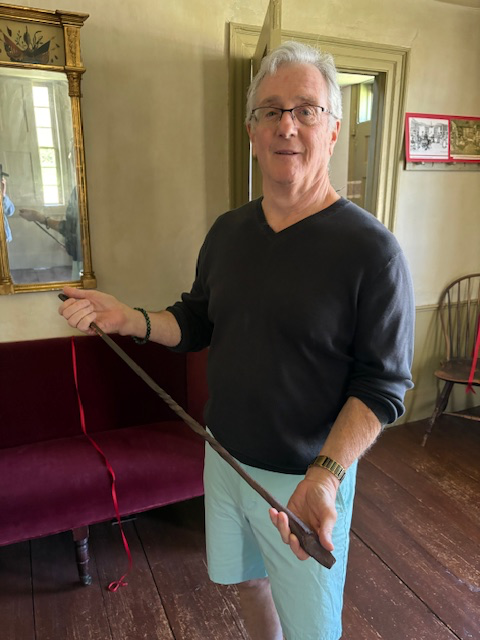
Known as a flip dog, toddy rod or loggerhead, this type of iron tool was heated directly in the fireplace. Once the end became extremely hot, it could be plunged into a mug of ale, cider or another drink. The heated iron quickly warmed the liquid, often causing it to hiss, bubble and froth.
One of the drinks particularly associated with this method was flip, a popular colonial mixture that could contain ale, rum, sugar, spices and sometimes egg. Instead of preparing it on a modern stove, the tavern keeper could plunge the red-hot iron directly into the mug. The sudden heat warmed the drink and helped create the characteristic frothy mixture.
It is easy to forget how important the fireplace was to almost every aspect of life in an 18th-century tavern. It provided warmth and light, but it was also the kitchen and, in a sense, the bar. Drinks that we would simply heat today required tools specifically designed to work with an open hearth.
That is what makes an object like this so interesting to me. The Golden Ball Tavern itself tells an important story about Weston and the years surrounding the American Revolution, but a simple iron rod tells a different kind of history. It takes us away from famous events and introduces us to the ordinary routines of the people who gathered here. Sometimes it is the simplest object in a historic house that gives us the clearest glimpse of how people lived.
Read More From Nancy
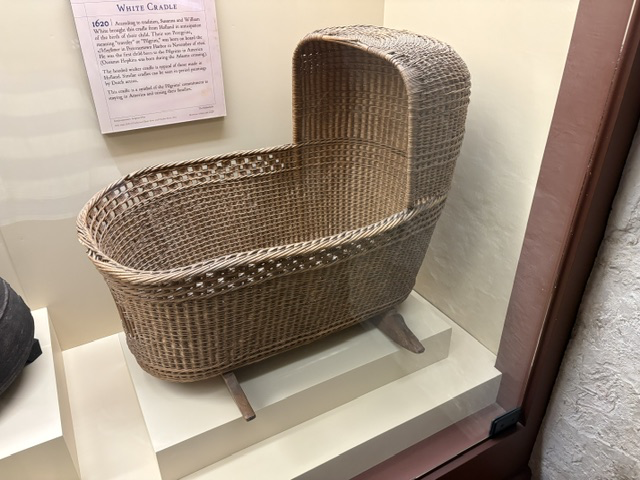
The White Cradle
Among the objects we encountered while exploring Plymouth was this simple wicker cradle. According to tradition, it belonged to Susanna and William White and was brought with them from Holland when they sailed aboard the Mayflower in 1620. Susanna White was pregnant during the Atlantic crossing. The Mayflower left Plymouth, England, in September with more […]
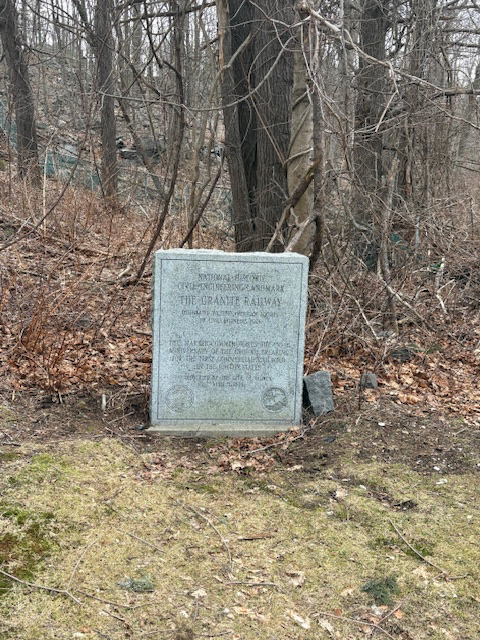
The Granite Railway
Hidden at the end of Mullin Avenue in West Quincy are the remains of the historic Granite Railway Incline, part of the pioneering Granite Railway system that began operating in 1826. The railway was created to transport enormous blocks of granite from the Quincy quarries to a wharf on the Neponset River in Milton. From […]
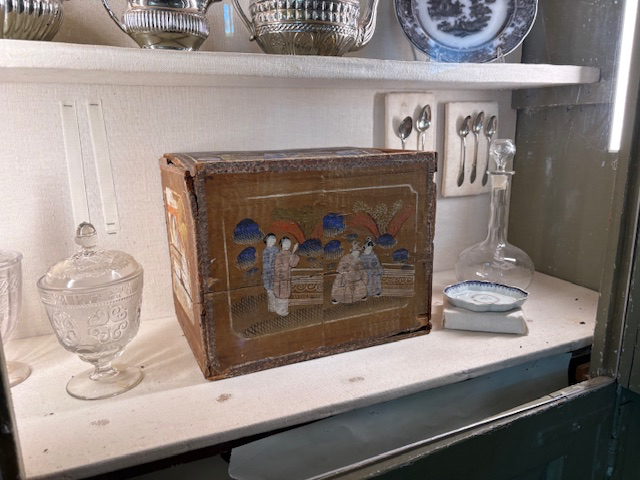
A Chinese Tea Box
Among the many furnishings displayed in the historic Golden Ball Tavern in Weston, Massachusetts, this small Chinese tea box caught my attention. It tells a remarkable story about international trade, the value of tea, and the surprising connections between colonial New England and Asia. The box was crafted in China during a time when Chinese […]

