The Granite Railway
Hidden at the end of Mullin Avenue in West Quincy are the remains of the historic Granite Railway Incline, part of the pioneering Granite Railway system that began operating in 1826. The railway was created to transport enormous blocks of granite from the Quincy quarries to a wharf on the Neponset River in Milton. From there, the stone was carried by boat to Charlestown, most famously for the construction of the Bunker Hill Monument.
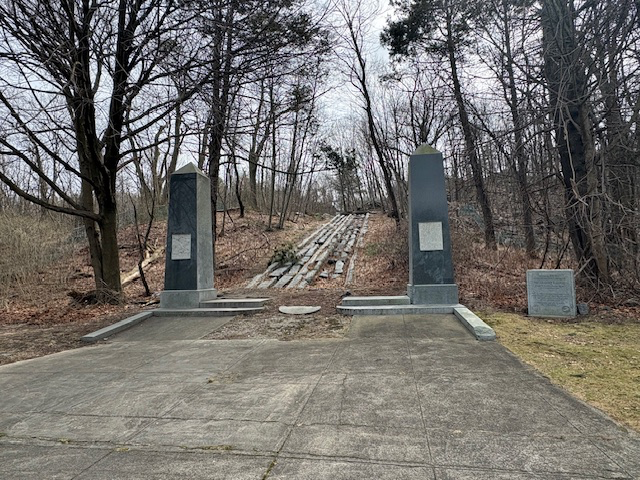
The Granite Railway is generally recognized as the first chartered commercial railroad in the United States to be successfully built and operated. Before steam locomotives and modern steel tracks transformed transportation, horse-drawn railcars moved the heavy granite along a specially engineered railway. Stone sleepers supported wooden rails covered with iron plates, creating a stronger and more efficient route than the rough wagon roads then available.
The Incline shown in these photographs was added to the railway in 1830. It was needed to move granite from the Pine Ledge Quarry, which stood approximately 84 feet above the main railway. Engineers constructed a 315-foot inclined plane along the hillside. Loaded cars carrying granite descended the slope while empty cars returned to the quarry through an endless chain system. The weight of the descending stone helped operate the system, but every movement had to be carefully controlled.
At the bottom of the Incline, engineer Gridley Bryant designed a turntable and a special platform to receive the loaded cars and transfer them onto the main railway. Moving stones that weighed many tons required an extraordinary degree of precision. Bryant’s railway also introduced or advanced several important innovations, including railway switches, turntables, and double-truck cars designed to distribute the weight of exceptionally large pieces of granite.
The Granite Railway did more than solve a local transportation problem. It demonstrated that rail systems could move heavy industrial loads more efficiently than conventional wagons. The success of the railway helped establish the practical value of rail transportation at a time when many Americans still doubted that such a system could work. Its innovations anticipated the railroad network that would soon transform transportation, industry, and commerce throughout the country.
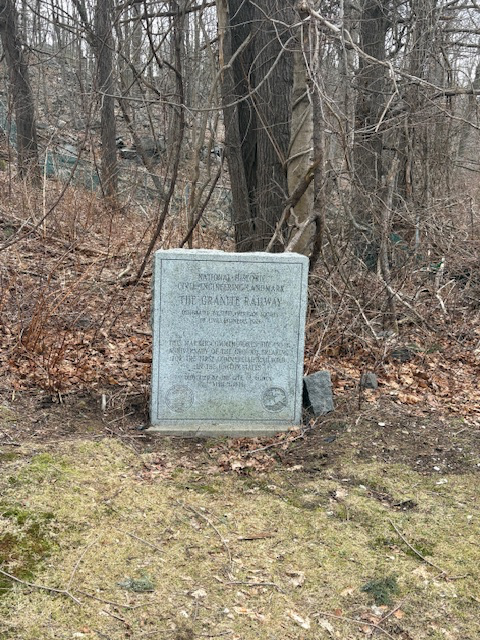
The Incline continued to change as quarrying technology developed, and it remained in operation into the 1940s. Today, the surviving stone trackway rises quietly into the woods between two granite obelisks placed at the foot of the Incline in 1921. The monuments commemorate the Granite Railway and the engineering achievement represented by this steep section of track. A separate marker at the site recognizes the Granite Railway as a National Historic Civil Engineering Landmark.
The granite transported through this system became part of the Bunker Hill Monument, linking the technological development of the young nation with its effort to preserve the memory of the American Revolution. Constructing the monument required far more than quarrying the stone. It demanded new solutions for lifting, carrying, and transporting massive granite blocks over several miles.
Nature has slowly reclaimed the hillside, but the surviving trackway remains a powerful reminder of American ingenuity. What now appears to be a quiet line of stone disappearing into the woods was once an innovative industrial system. Standing at the foot of the Granite Railway Incline, we were looking at the remains of an experiment that succeeded—and helped open the way for America’s railroad age.
Read More From Nancy
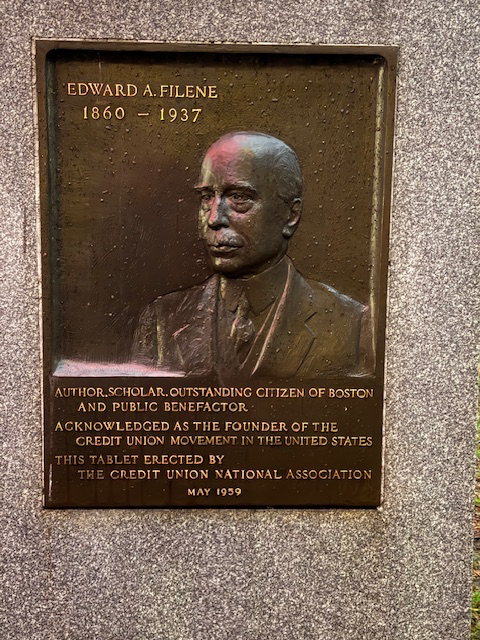
Edward A. Filene Plague
Walking along the fence surrounding the Boston Common, I came across this bronze plaque honoring Edward A. Filene. While many people recognize the Filene name from the famous Boston department store, few realize the tremendous influence he had beyond retail. Filene believed that ordinary working families deserved access to affordable credit and financial opportunity. His […]
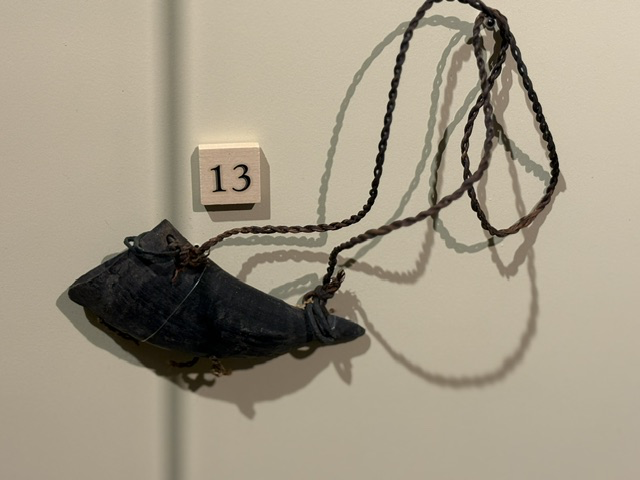
A Grease Horn
Among all the objects that survive from Plymouth’s earliest years, some of the most interesting are not the rare or elaborate possessions, but the simple tools people used in their daily lives. This small grease horn dates from approximately 1635–1665 and is identified as coming from Plymouth. A grease horn was a practical container, usually […]
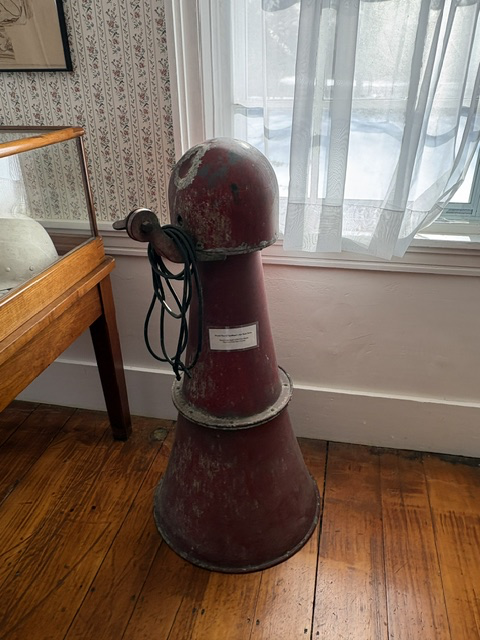
World War II Air Raid Siren
While visiting the Needham History Center and Museum, one artifact caught my attention. Standing quietly in the corner was a World War II air raid siren that once occupied the steeple of the First Baptist Church on Great Plain Avenue. It is not a large or ornate object, yet it represents a time when communities […]

