The Campbell Kids Shopping Game
One of the things I enjoy most about visiting local history museums is discovering artifacts that tell the story of everyday life. Community museums often preserve the objects that filled ordinary homes. This 1955 Campbell Kids Shopping Game is one of those treasures.
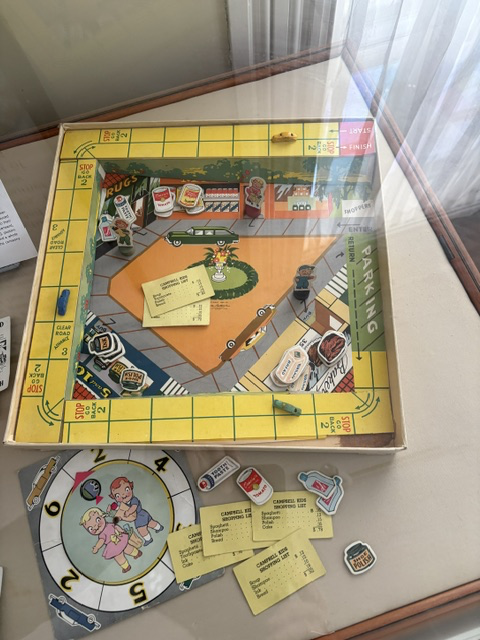
Produced by Parker Brothers in partnership with the Campbell Soup Company, the game introduced children to a familiar part of American life: the weekly trip to the supermarket. Players moved around the board purchasing groceries, collecting shopping lists, and filling their baskets with products commonly found in American kitchens. To children, it was simply a fun game. To us, it has become a window into the culture of the 1950s.
The game appeared during one of the most prosperous periods in American history. Following World War II, families moved into new suburban neighborhoods, supermarkets replaced many small corner grocery stores, and consumer goods became increasingly available. Shopping was no longer simply about buying necessities; it had become part of the American way of life. Brightly packaged national brands lined grocery store shelves, and companies competed for customer loyalty through advertising aimed at both parents and children.
Campbell Soup was one of the pioneers of this approach. The company’s Campbell Kids characters had already become familiar through magazine advertisements and product packaging. By creating games, toys, recipe books, and promotional giveaways, Campbell built one of the earliest examples of brand loyalty, introducing children to products they would continue purchasing as adults.
The object teaches children how to shop, compare products, and participate in the routines of family life. It reflects an era when prosperity, convenience, and abundance became defining characteristics of postwar America. The neighborhood supermarket had become a symbol of progress, and this game quietly reinforced that message.
That is one of the gifts of local history museums. They preserve the ordinary objects that rarely survive, allowing us to reconnect with the experiences of previous generations. Sometimes a simple board game can tell us as much about American life as any textbook.
Read More From Nancy
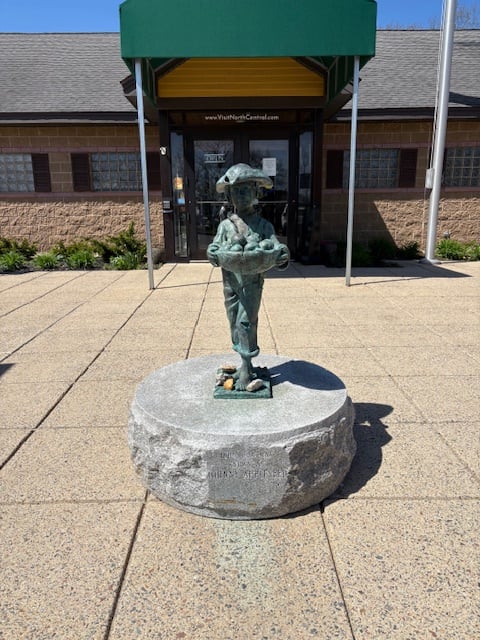
Young Johnny Appleseed
While traveling west on Route 2 through central Massachusetts, I made a stop at the Johnny Appleseed Visitors’ Center in Lancaster. Greeting visitors outside the entrance is this bronze sculpture of a young John Chapman, better known as Johnny Appleseed, one of America’s most enduring folk heroes. Although the visitor center is in Lancaster, it celebrates the […]
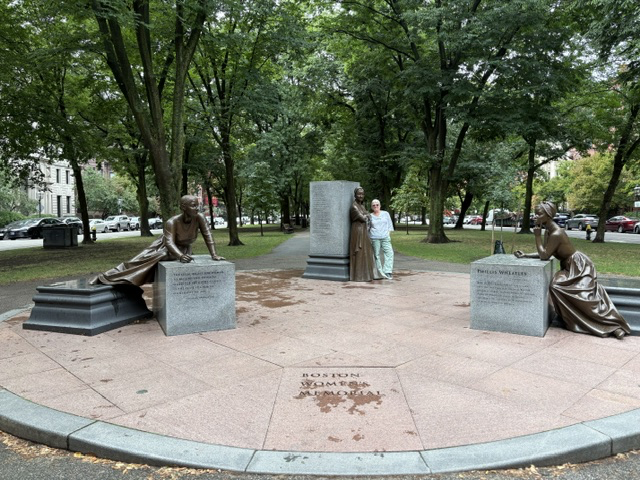
Boston Women’s Memorial
Located on the Commonwealth Avenue Mall, the Boston Women’s Memorial honors Abigail Adams, Lucy Stone and Phillis Wheatley, three women whose words challenged the political, social and intellectual boundaries of their times. Created by sculptor Meredith Bergmann, the bronze-and-granite memorial was dedicated by the City of Boston on October 25, 2003. The idea for the […]
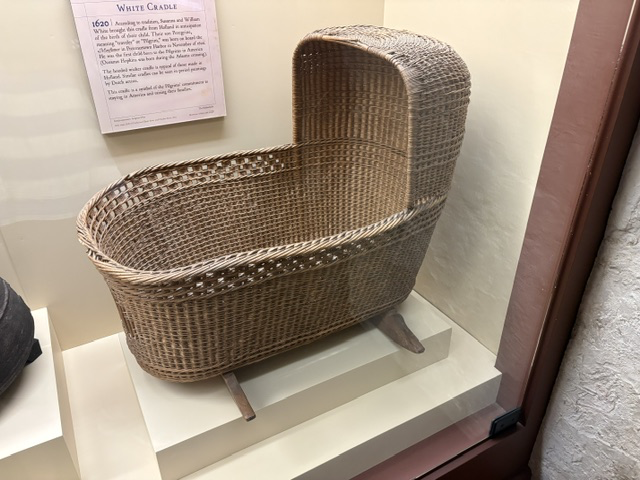
The White Cradle
Among the objects we encountered while exploring Plymouth was this simple wicker cradle. According to tradition, it belonged to Susanna and William White and was brought with them from Holland when they sailed aboard the Mayflower in 1620. Susanna White was pregnant during the Atlantic crossing. The Mayflower left Plymouth, England, in September with more […]

