Massachusetts Veterans War Memorial Tower
Last year we camped near Mount Greylock, and although we have spent so much of our lives exploring New England, this was the first time we made our way to the summit. It was another reminder to me that exploration never really ends. No matter how many places we have visited, there is always another story waiting somewhere.
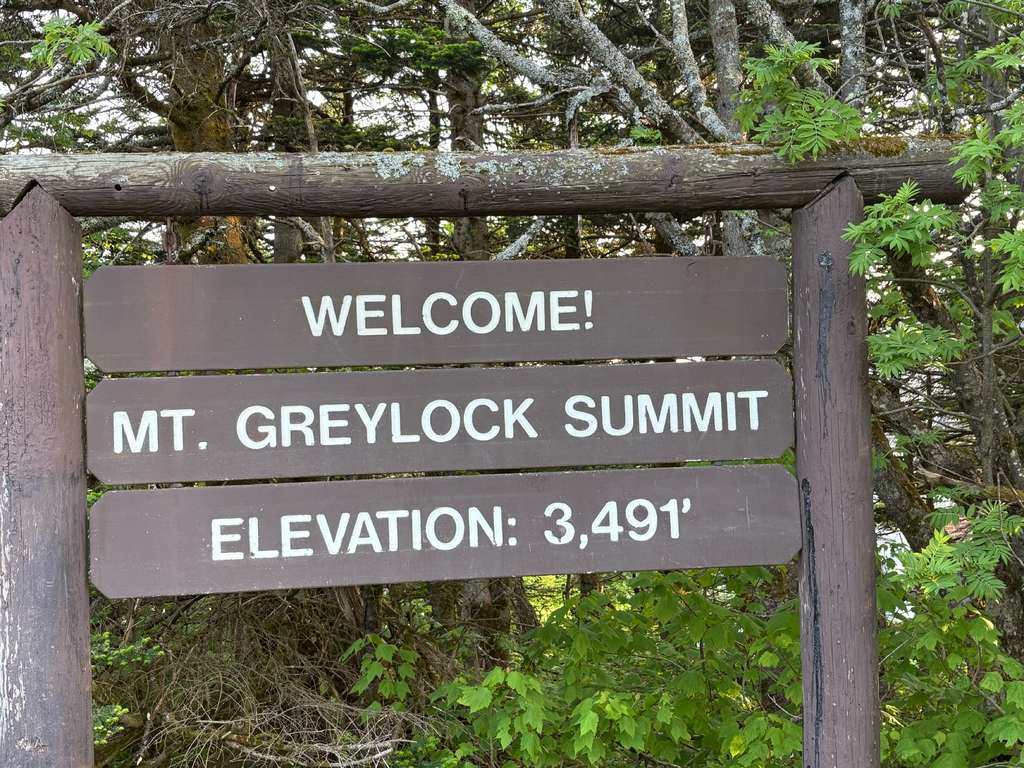
At 3,491 feet, Mount Greylock is the highest point in Massachusetts. The surrounding Mount Greylock State Reservation has another distinction: established in 1898, it became Massachusetts’ first state reservation and first public land set aside specifically to preserve a natural environment. From the summit, on a clear day, the view stretches across the Berkshires and into several neighboring states.
What caught our attention when we reached the top was the tall stone tower rising from the summit. This is the Massachusetts Veterans War Memorial Tower. The idea for a state war memorial emerged after World War I, and in 1930 the Massachusetts legislature authorized a memorial honoring the Commonwealth’s veterans. A state commission held an architectural competition, and the winning design came from the prominent Boston architectural firm Maginnis & Walsh.
That firm adds another interesting Massachusetts connection. Charles Donagh Maginnis was a nationally important architect especially known for ecclesiastical and collegiate buildings. Maginnis & Walsh designed a number of familiar Massachusetts landmarks, including buildings on the Boston College campus. The firm envisioned the Greylock memorial not simply as a tower but as a beacon rising from the highest point in the Commonwealth.
Construction began in 1931. The actual building of the tower was undertaken by J. G. Roy & Son of Springfield, Massachusetts. Using massive blocks of Quincy granite, they created the approximately 93-foot tower that still dominates the summit today. Construction was completed in 1932 at a cost of about $200,000.
The memorial was formally dedicated on June 30, 1933, by Massachusetts Governor Joseph B. Ely. About 1,500 people reportedly gathered on the summit for the ceremony, which was broadcast nationally by NBC radio.
The inscription carved into the stone speaks of the Commonwealth’s gratitude for the loyalty and sacrifice of its sons and daughters in war. The tower was initially conceived in the aftermath of World War I, but its meaning has expanded over the years to commemorate Massachusetts men and women lost in all wars.
Its design is particularly striking. At the top of the granite tower is a large translucent glass globe. It was designed to glow at night, turning the entire monument into a beacon visible for many miles. The symbolism was deliberate—a light shining from the highest point in Massachusetts in memory of those who had died in service.
There is another layer of history here that I find especially interesting. Much of the summit landscape visitors experience today was shaped during the 1930s by the Civilian Conservation Corps. During the Great Depression, young men working for the CCC built roads, trails and structures throughout America’s parks and public lands. On Mount Greylock, their work included Bascom Lodge, the rustic stone-and-timber lodge near the summit.
And the mountain’s history extends well beyond the monument. Long before automobiles carried visitors to the summit, Mount Greylock attracted hikers, naturalists and writers. Herman Melville could see Greylock from his home at Arrowhead in Pittsfield, and the mountain became part of the landscape surrounding him while he was writing Moby-Dick. Henry David Thoreau climbed Greylock in 1844 and later wrote about the experience.
So, what initially seemed like a drive to the highest point in Massachusetts became something much larger: a veteran’s memorial, a Depression-era landscape, a place connected with American literature, and an extraordinary piece of the natural history of our own state. Exploration of special sites really is endless. There is history all around us, and there always seems to be something special everywhere.
Read More From Nancy
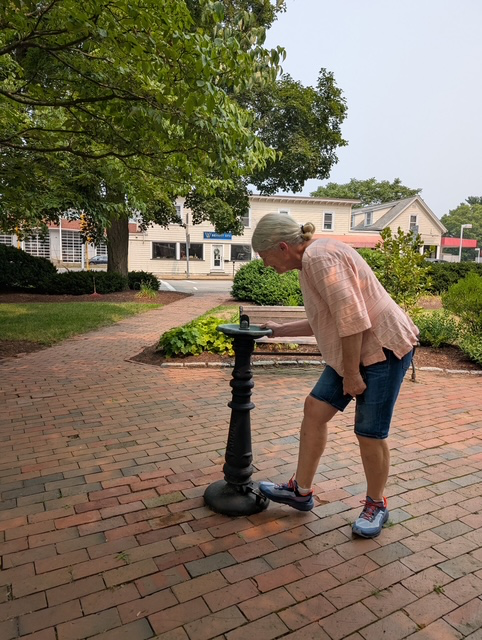
Water Fountain in Wellesley
Though I have walked the parks and paths of Wellesley, Massachusetts for years, I had not paused at this water fountain before. Growing up, I often drank from fountains because they were everywhere. The label on the base read: Murdock Manufacturing, Cincinnati, OH, a company founded in 1853. I learned that Murdock became one of […]
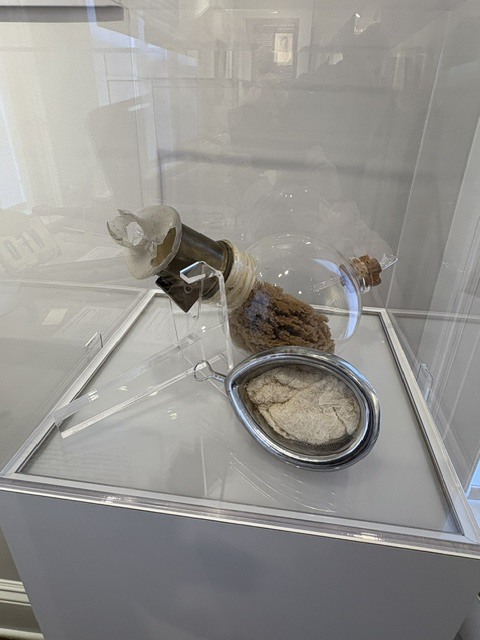
William T. G. Morton and the Ether Mask
This exhibit at the Wellesley Historical Society tells a surprisingly important story in the history of medicine and connects that story directly to Wellesley. Dr. William T. G. Morton was a dentist who became one of the central figures in the introduction of ether anesthesia. Born in 1819, Morton studied dentistry and eventually established a […]
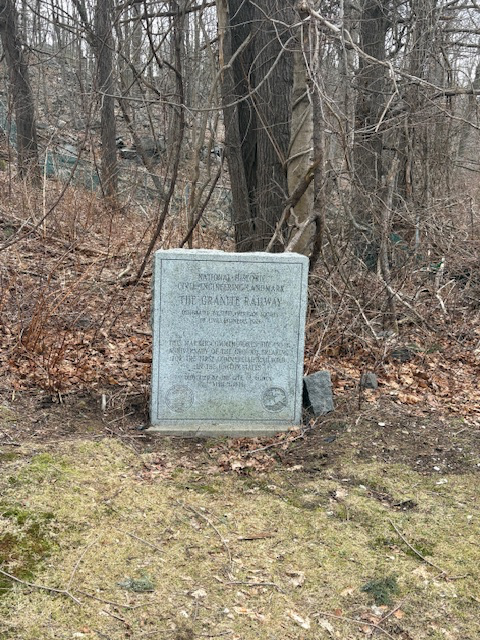
The Granite Railway
Hidden at the end of Mullin Avenue in West Quincy are the remains of the historic Granite Railway Incline, part of the pioneering Granite Railway system that began operating in 1826. The railway was created to transport enormous blocks of granite from the Quincy quarries to a wharf on the Neponset River in Milton. From […]

