Pine Tree Flag
While enjoying dinner in Sturbridge, my attention was drawn to a large Pine Tree Flag displayed on the wall. It was an unexpected reminder that history has a way of appearing in ordinary places.
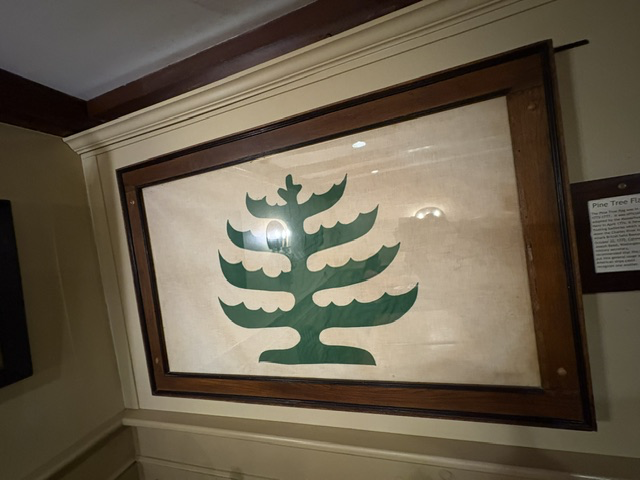
One of the most recognizable symbols of New England’s role in the American Revolution is the Pine Tree Flag. Although it is less familiar today than the Stars and Stripes, this simple design of a green pine tree on a white field carried a powerful message during the opening years of the Revolution.
The pine tree had long been a symbol of New England. Towering white pines were prized by the British Royal Navy for their tall, straight trunks, which were ideal for ship masts. Many of the finest trees were marked with the King’s Broad Arrow, reserving them exclusively for the Crown. Colonists often resented these restrictions, and the pine tree gradually became a symbol of resistance to British authority.
This version of the Pine Tree Flag was used from 1775 to 1777. In April 1776, it was officially adopted by the Massachusetts Navy and flew aboard vessels that defended the colony. According to the museum, it was also flown over floating batteries that sailed down the Charles River to attack British-held Boston. On October 20, 1775, Colonel Joseph Reed, General George Washington’s military secretary, recommended that the flag be placed into general use so American ships could recognize one another.
Before there was a national flag recognized around the world, there were regional symbols like this one that united people around a common cause. To the colonists, the pine tree represented strength, independence, and their deep connection to the land they called home.
It is easy to think of the American flag as having always existed, but our national identity evolved over time. The Pine Tree Flag reminds us that the path to independence was built one step at a time, with symbols that inspired courage long before the nation itself was fully formed. It is a reminder that even a single tree can become an enduring emblem of liberty when it represents the shared hopes of a people.

Read More From Nancy
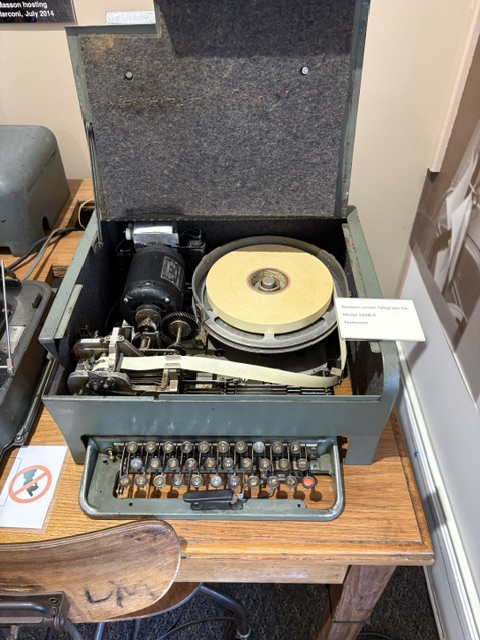
From Telegraph to Teletype
The development of telegraphy transformed long-distance communication. Instead of waiting days or weeks for a written message to travel by ship, train or horseback, information could be transmitted across wires almost instantly. In 1844, Samuel Morse publicly demonstrated an electric telegraph connection between Washington, D.C., and Baltimore. Messages were translated into patterns of dots and […]
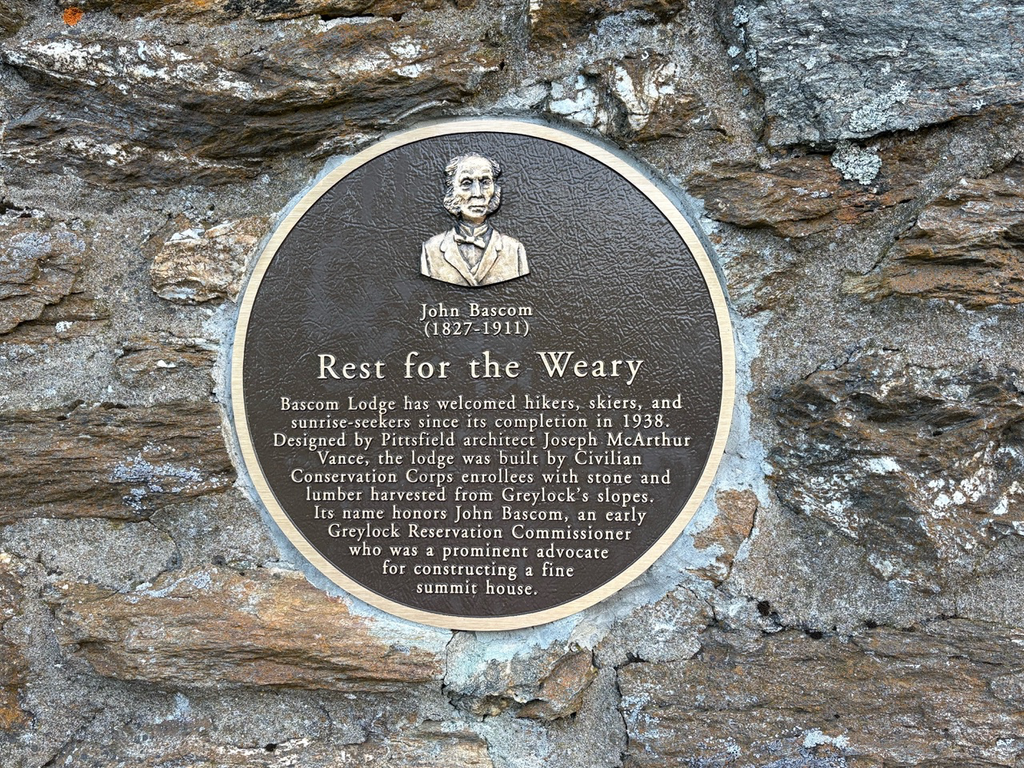
John Bascom Plaque
While exploring Mount Greylock, we stopped at Bascom Lodge, the rustic stone lodge near the summit that has welcomed hikers and travelers since 1938. Sitting directly along the Appalachian Trail, it remains an important stopping place for hikers making their way across Massachusetts, as well as for those of us simply exploring the mountain. While […]

Washington Tower
One of the places Marty and I especially wanted to see at Mount Auburn Cemetery was Washington Tower. We climbed the spiral staircase to the top, and when we stepped outside, we were rewarded with this remarkable view across Cambridge toward the Boston skyline. Surrounded by the brilliant colors of autumn, it was easy to […]

