The Old Burying Ground
The Old Burying Ground is a quiet piece of land with a remarkable connection to the earliest years of Plymouth Colony. Established around 1632, it served as the first burial ground for the settlers who moved away from Plymouth and established the community that became Duxbury.
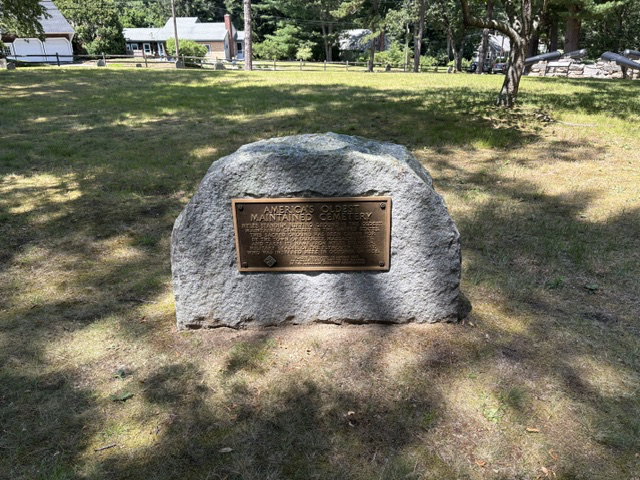
The cemetery dates from the period when families were beginning to spread outward from the original Plymouth settlement. By the 1630s, men such as Myles Standish, John Alden and William Brewster had established farms in this area. What had begun as scattered farms gradually developed into a community, and in 1637 Duxbury was incorporated as a separate town.
This land was at the center of that early community. Duxbury’s first meetinghouse stood here, serving both religious and civic purposes. In a seventeenth-century New England settlement, the meetinghouse was one of the most important buildings in town. Residents gathered there for worship, town meetings and decisions affecting the entire community. The burial ground developed beside it.
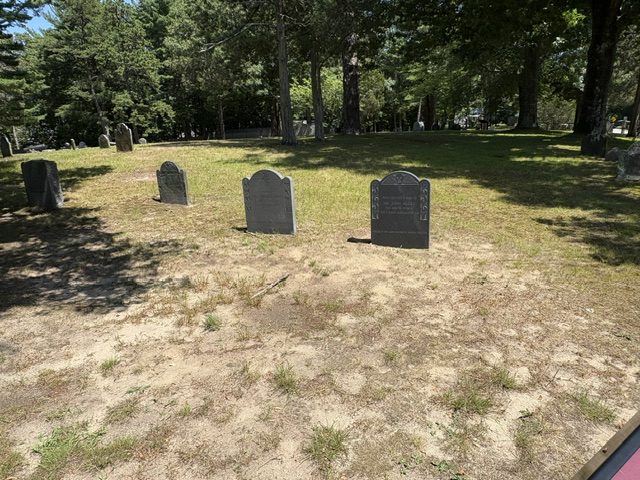
The oldest burials date to about 1632. Many of the earliest graves would originally have been marked with wooden markers or simple fieldstones, which explains why the identities of some of those buried here have been lost. The surviving gravestones therefore represent only part of the story contained beneath this ground.
Among those associated with the cemetery are some of the earliest residents of Duxbury. Myles Standish was buried here in 1656, and John and Priscilla Alden are also traditionally believed to have been buried within the grounds, although the precise locations of their graves are uncertain.
The cemetery continued to be used for generations. The interpretive sign dates its principal period from approximately 1632 to 1787, meaning that people were being buried here from the first generation of Plymouth Colony through the Revolutionary era. The graves therefore document not simply the Pilgrim generation but the families and descendants who transformed Duxbury from a small seventeenth-century settlement into an established Massachusetts town.
One of the markers at the site identifies the Old Burying Ground as “America’s Oldest Maintained Cemetery”. That distinction is important. There are older known burial places in North America, but the claim here concerns its long history as a recognized and maintained community cemetery dating back to the earliest settlement of Duxbury.
What today appears to be a peaceful patch of grass and scattered stones was once at the heart of one of the earliest communities to grow out of Plymouth Colony.
Read More From Nancy
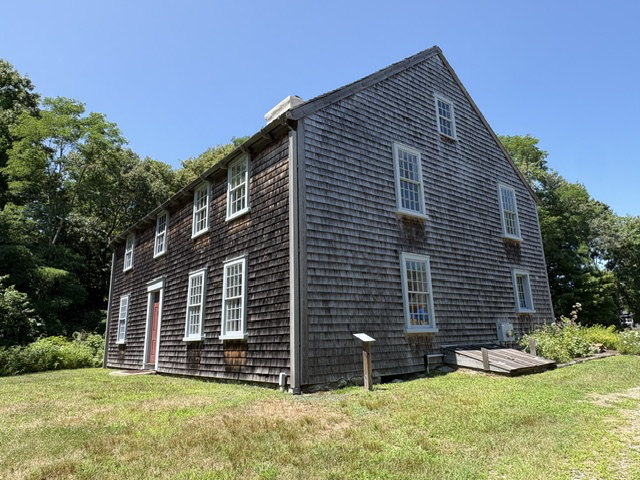
The Alden House
The story of Duxbury is closely connected to the Mayflower families who moved beyond the original settlement at Plymouth, and few are better known than John Alden and Priscilla Mullins. Both arrived aboard the Mayflower in 1620, survived the difficult beginnings of Plymouth Colony, married, and eventually established their family on this land in Duxbury. […]
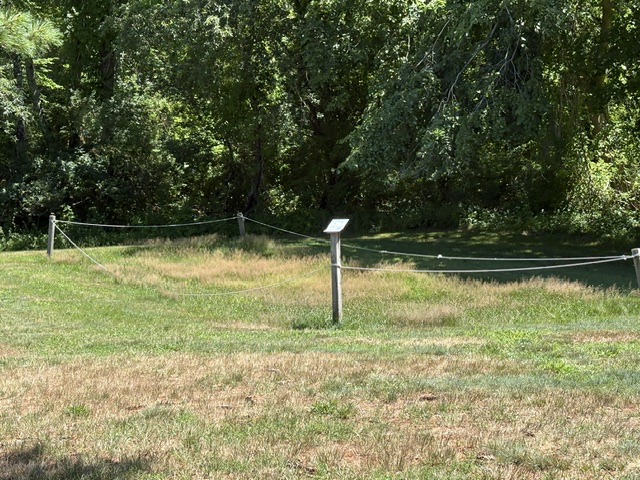
Finding John and Priscilla Alden’s Original Home
Not far from the surviving Alden House is a much less obvious but perhaps even more intriguing piece of the family’s history. An open grassy area marks the archaeological remains of the earlier house where John and Priscilla Alden lived. A stone marker identifies it simply: “Site of John Alden House — Built 1627”. The […]
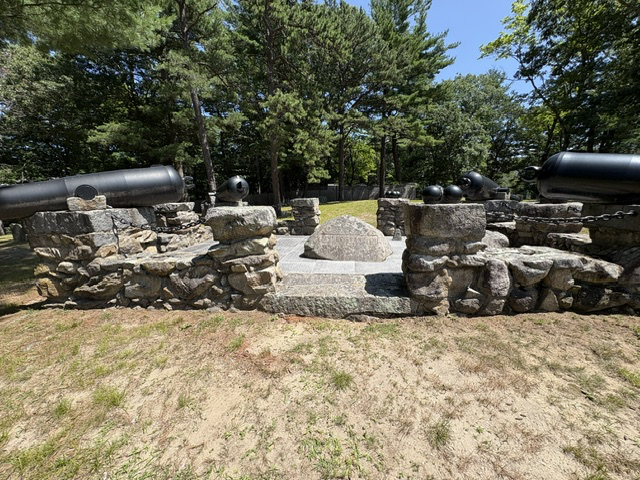
The Gravesite of Myles Standish
After visiting the site of Myles Standish’s homestead, we continued following his story in Duxbury to the place where he was laid to rest. Standish died here on October 3, 1656, more than three decades after arriving aboard the Mayflower and after spending much of his later life helping establish the community of Duxbury. There […]

