The Alden House
The story of Duxbury is closely connected to the Mayflower families who moved beyond the original settlement at Plymouth, and few are better known than John Alden and Priscilla Mullins. Both arrived aboard the Mayflower in 1620, survived the difficult beginnings of Plymouth Colony, married, and eventually established their family on this land in Duxbury.
John Alden had not originally intended to settle in America. A young cooper skilled in making and repairing wooden barrels, he was hired at Southampton, England, to work aboard the Mayflower. When the voyage ended, he chose to remain with the colonists. Over the following decades, he became an important figure in Plymouth Colony, serving in numerous public positions and helping guide the colony through much of its early history.
Priscilla Mullins came aboard the Mayflower with her parents, William and Alice Mullins, and her brother Joseph. The first winter in Plymouth was devastating for the family. Her parents and brother all died, leaving Priscilla as the only member of her immediate family to survive. She and John married, probably around 1622 or 1623, and eventually raised a large family.
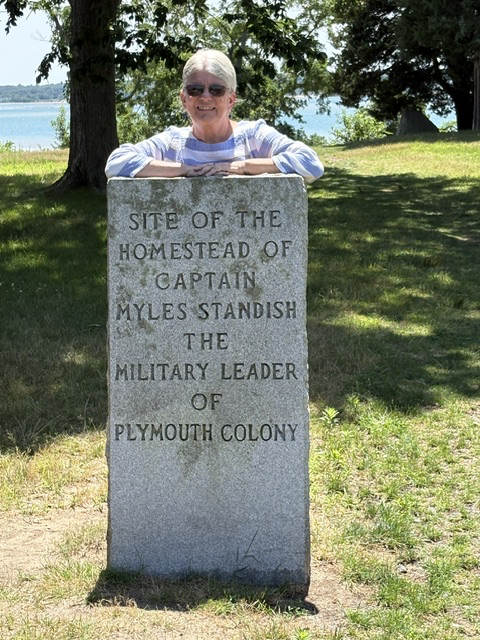
As Plymouth became more established, settlers began moving outward in search of additional farmland. John and Priscilla were among those who established homes north of Plymouth in the area that became Duxbury. Other prominent members of the Plymouth community, including Myles Standish and William Brewster, also settled nearby. Duxbury was incorporated as a separate town in 1637.
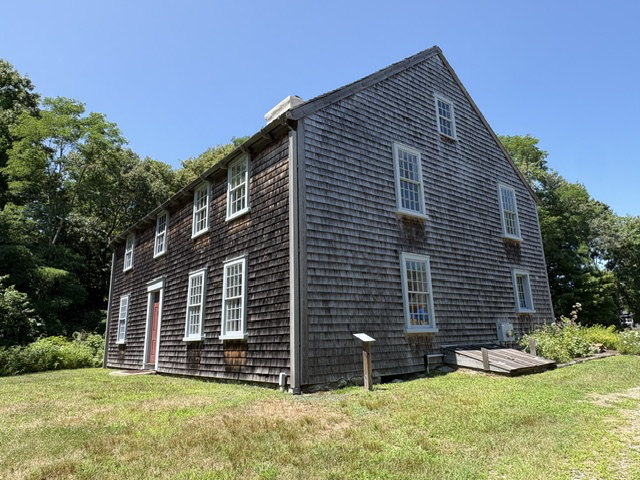
The house standing here today has traditionally been associated with John and Priscilla, although research has changed our understanding of its age. The surviving Alden House was probably constructed during the late 17th century, most likely by their son Jonathan Alden. Archaeologists have discovered the foundation of an earlier house nearby that is believed to have been the home where John and Priscilla actually lived.
Rather than diminishing the importance of the site, this makes it even more interesting. The property preserves evidence of generations of the same family living on this land. John and Priscilla established their home here, their children continued the family story, and the property remained in Alden family ownership for centuries.
John Alden lived until 1687, making him one of the last surviving male passengers of the Mayflower. During his long life, he witnessed an extraordinary transformation. The small and uncertain settlement he had joined in 1620 grew into an established colony, while families such as the Aldens moved outward and helped create new communities throughout the region.
John and Priscilla had ten children who survived infancy, and their descendants spread throughout New England and eventually across the country. Their family became one of the largest lines of descent from the Mayflower generation.
Read More From Nancy
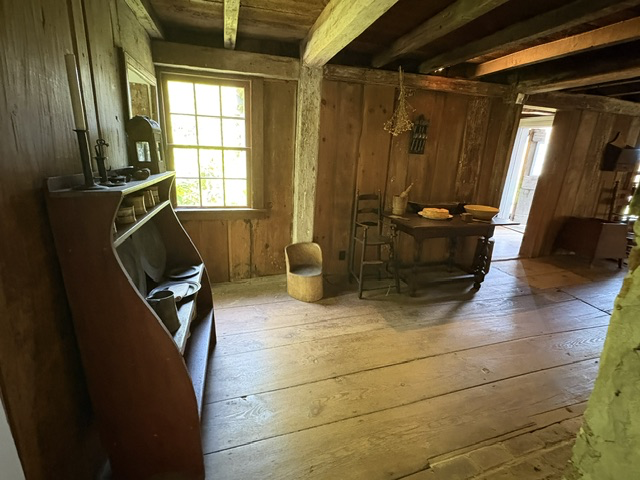
Inside the Alden House
Stepping inside the Alden House gives us a different perspective on the generations of the Alden family who lived on this property. The house was not frozen in a single moment in time. Its rooms, furnishings and possessions changed as one generation followed another, and these two photographs capture that progression particularly well. In the […]
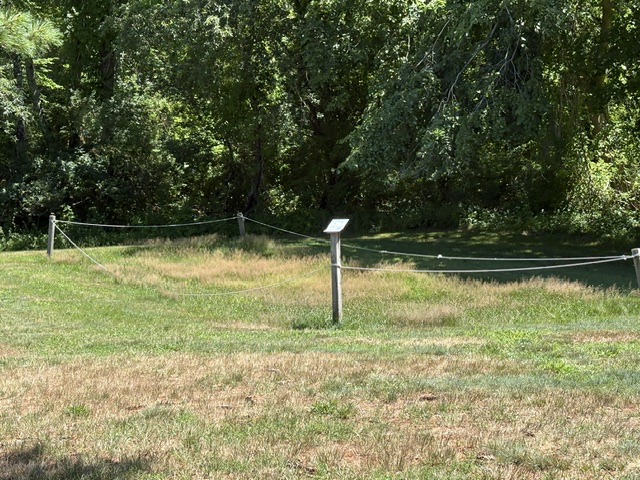
Finding John and Priscilla Alden’s Original Home
Not far from the surviving Alden House is a much less obvious but perhaps even more intriguing piece of the family’s history. An open grassy area marks the archaeological remains of the earlier house where John and Priscilla Alden lived. A stone marker identifies it simply: “Site of John Alden House — Built 1627”. The […]
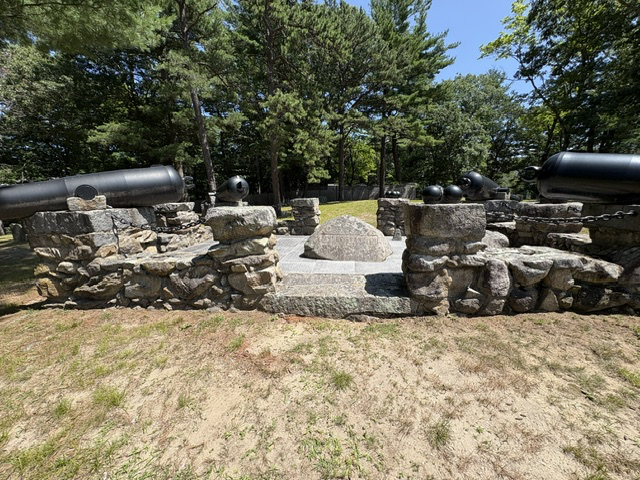
The Gravesite of Myles Standish
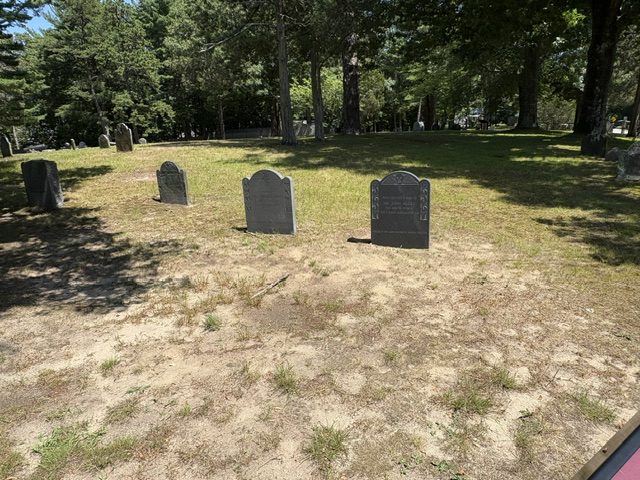
After visiting the site of Myles Standish’s homestead, we continued following his story in Duxbury to the place where he was laid to rest. Standish died here on October 3, 1656, more than three decades after arriving aboard the Mayflower and after spending much of his later life helping establish the community of Duxbury. There […]

