Pilgrim Spring
This monument in Plymouth marks Pilgrim Spring, identified on the stone as being “on the same land set off to Elder William Brewster in the original allotment, December 1620”.
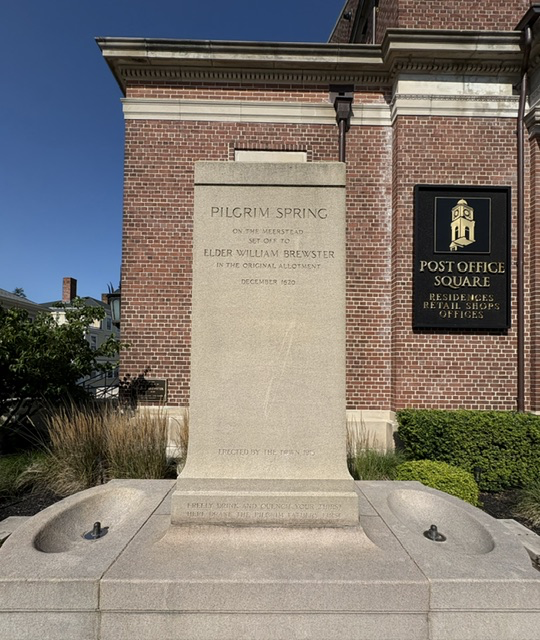
For the newly arrived Mayflower passengers, finding a dependable source of fresh water was essential. After weeks aboard ship and their explorations of Cape Cod, the settlers chose Plymouth partly because the area offered several clear freshwater springs along with land suitable for settlement. Pilgrim Spring was one of those early water sources.
The connection with William Brewster is particularly important. Brewster was one of the senior leaders of the Separatist congregation that had first fled England for the Netherlands and then sailed aboard the Mayflower. Although he was not an ordained minister, as the congregation’s ruling elder he became one of the most important religious figures in the early Plymouth community. His family received land in this area during the original division of house lots in December 1620.
The spring would have been part of the practical geography of the earliest settlement. Before wells, municipal water systems or indoor plumbing, a reliable spring meant drinking water, cooking water and water for the countless tasks of daily life. It is easy to concentrate on Plymouth Rock, the Mayflower and the famous names associated with the colony, but survival also depended upon resources as basic as this.
The monument itself was erected by the Town of Plymouth in 1920, during the 300th anniversary of the Mayflower’s arrival. Its two basins recall the spring that once flowed here and transform an otherwise easily overlooked part of the landscape into a memorial.
Read More From Nancy
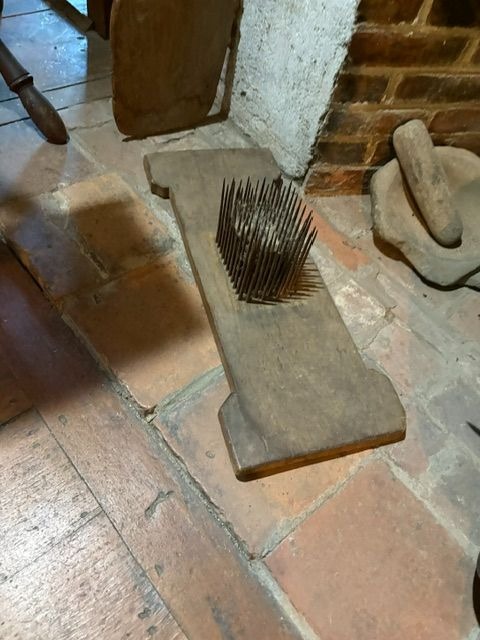
The Flax Hackle
A wooden board fitted with sharp iron teeth preserves one step in the long process of making linen. Known as a hackle, or hetchel, this tool combed flax fibers before they were spun into thread. Its simple construction conceals the skill and repeated effort required to turn a harvested plant into useful cloth. Linen comes […]
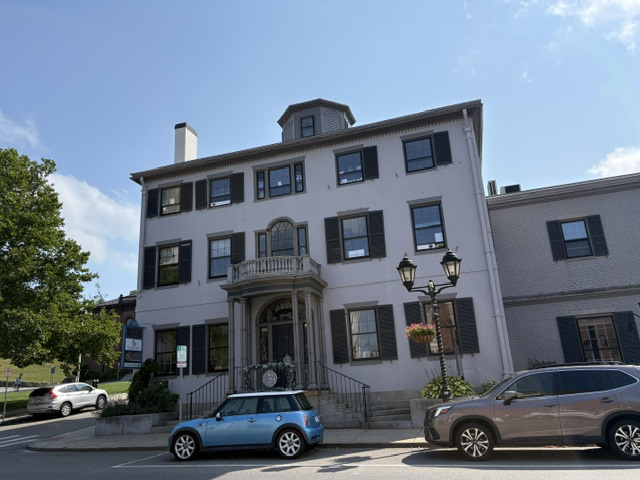
The Bartlett–Russell–Hedge House
Standing prominently on Court Street, the Bartlett–Russell–Hedge House is one of Plymouth’s finest examples of Federal-style architecture. Its symmetrical façade, Palladian window, entrance balcony, and rooftop cupola distinguish it from the surrounding commercial buildings. The house was constructed in 1803 for Joseph Bartlett, a Plymouth Sea captain. Its design has been attributed to Charles Bulfinch, […]
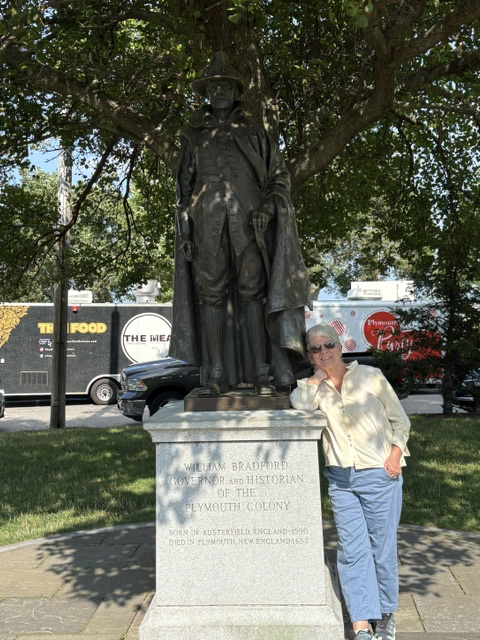
William Bradford Statue
Standing near Plymouth Harbor is this imposing statue of William Bradford, one of the most important figures in the story of Plymouth Colony. Bradford crossed the Atlantic aboard the Mayflower in 1620 and, after the death of Governor John Carver the following spring, was elected governor of Plymouth Colony. He would serve in that position […]

