The Armory Fence
At first glance, these iron bars might not seem as significant as a weapon, a building or one of the personal objects associated with John Brown. But they are another surviving physical connection to the night of October 16, 1859.This is a section of the original wrought-iron fence that surrounded the United States Armory at Harpers Ferry. According to the exhibit, the fence was manufactured around 1848 and enclosed the federal armory grounds along the Potomac River.
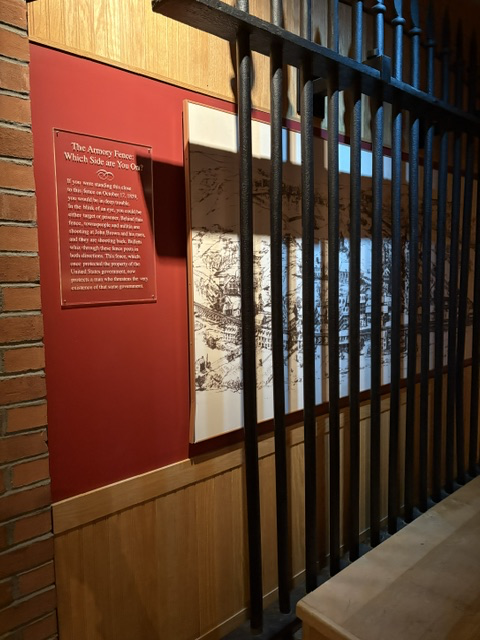
When John Brown and his small band of followers entered Harpers Ferry, gaining control of the armory was central to their plan. The complex contained federal weapons that Brown hoped to use to arm enslaved people who would join his uprising. Brown’s men seized the armory, arsenal and other strategic locations, initially encountering relatively little resistance.
These iron bars therefore stood here as the raid unfolded. Armory workers, townspeople, Brown’s raiders and eventually militia and federal troops moved through the area they enclosed. The fence also helps us visualize something that is difficult to appreciate in Harpers Ferry today. The federal armory was once an enormous industrial complex stretching along the Potomac, containing workshops, warehouses and other buildings surrounded by fences and gates. Much of that landscape disappeared during and after the Civil War.
That makes these simple iron bars particularly interesting to me. They are not a reproduction intended to help us imagine 1859. They were already standing here.
Read More From Nancy
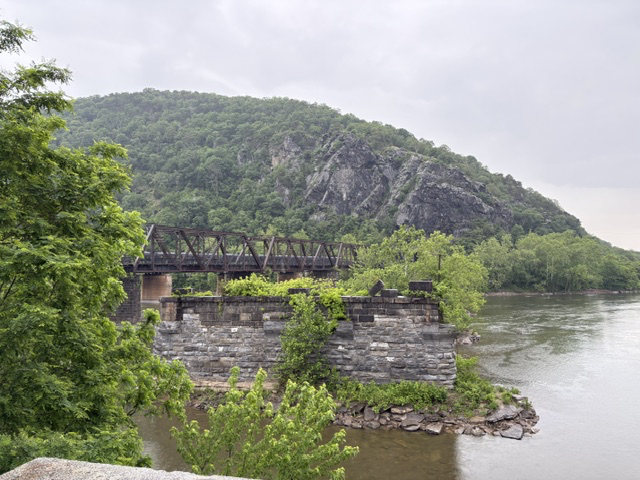
The Remains of the Railroad Bridge
These stone piers standing in the Potomac are remnants of the long transportation history that made Harpers Ferry such an important crossroads. The narrow opening through the Blue Ridge created by the Potomac provided a natural route through the mountains, and in the nineteenth century the Baltimore & Ohio Railroad used that route as it […]
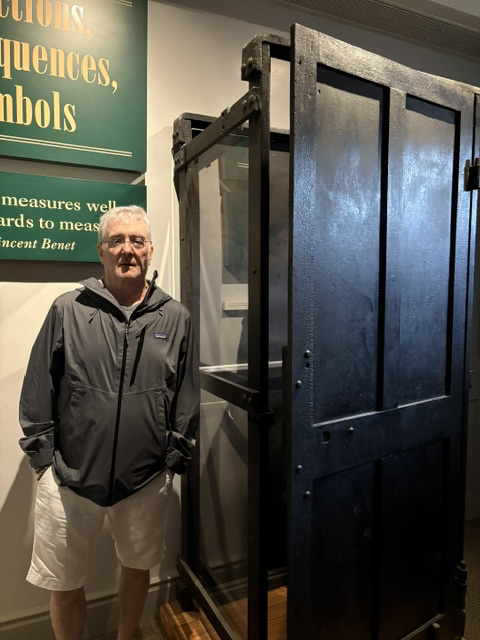
John Brown’s Jail Door
After John Brown was captured at Harpers Ferry on October 18, 1859, he was turned over to Virginia authorities and taken about seven miles away to Charles Town, the county seat of Jefferson County. It was there, rather than in Harpers Ferry, that Brown would be imprisoned, tried and sentenced to death. These photographs show […]
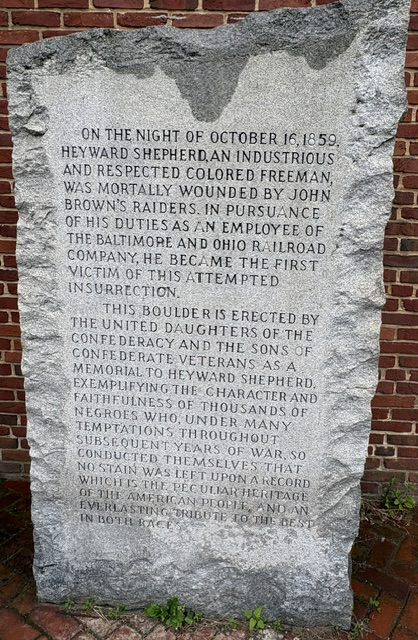
Remembering Heyward Shepherd
This monument in Harpers Ferry tells the story of Heyward Shepherd, a free Black man who became the first person killed during John Brown’s raid on October 16, 1859. Shepherd worked as a baggage master for the Baltimore & Ohio Railroad and was also described as a respected member of the local community. On the night […]

