The Confluence of Two Rivers
One of the defining features of Harpers Ferry is its geography. Standing here at The Point, you can see the confluence of two great rivers: the Potomac and the Shenandoah. The Shenandoah approaches from the south and joins the Potomac, which continues east through the Blue Ridge on its journey toward the Chesapeake Bay.
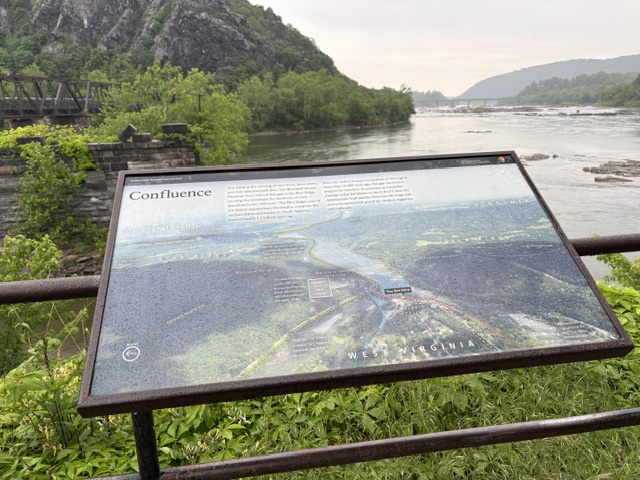
This meeting of the rivers also brings together three states. Harpers Ferry itself is in West Virginia. Across the Potomac is Maryland, while Virginia lies across the Shenandoah. Few places allow you to stand in one state while looking across two rivers toward two others.
The dramatic opening through the mountains is known as the Potomac Water Gap. Over immense stretches of geological time, the river cut its way through the Blue Ridge, creating the steep cliffs that surround Harpers Ferry. Thomas Jefferson visited this landscape in 1783 and was so impressed by the view that he later described the passage of the Potomac through the Blue Ridge in his Notes on the State of Virginia, declaring the scene “worth a voyage across the Atlantic”.
The rivers did more than create a beautiful landscape. They helped determine the history of Harpers Ferry. Waterpower contributed to the establishment of the federal armory here; the Potomac became a transportation corridor; the Chesapeake & Ohio Canal followed the Maryland side of the river; and railroads eventually passed directly through this narrow gap. Geography made Harpers Ferry a center of industry and transportation, but during the Civil War it also made the town strategically important and difficult to defend.
Today, standing at the confluence helps explain why so much history happened in this place. The mountains, rivers, transportation routes and borders all come together here.
Read More From Nancy
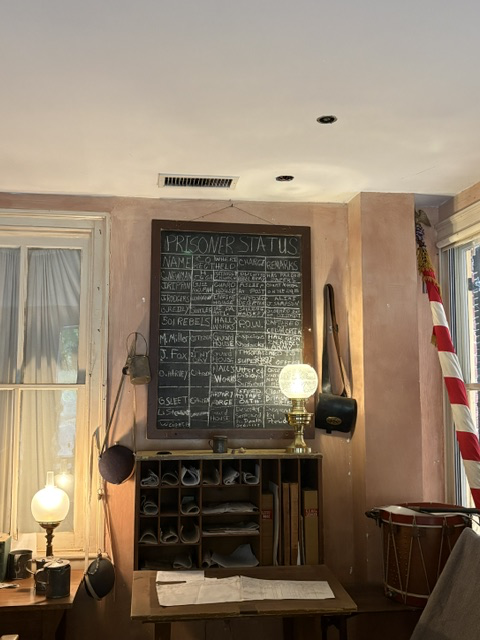
Prisoner Status
The large chalkboard labeled “Prisoner Status” immediately caught my attention in this recreated Civil War provost office. It provides a glimpse into the practical problem faced by the military authorities in Harpers Ferry: how do you keep track of a constantly changing population of prisoners during wartime? The board is arranged almost like a nineteenth-century […]
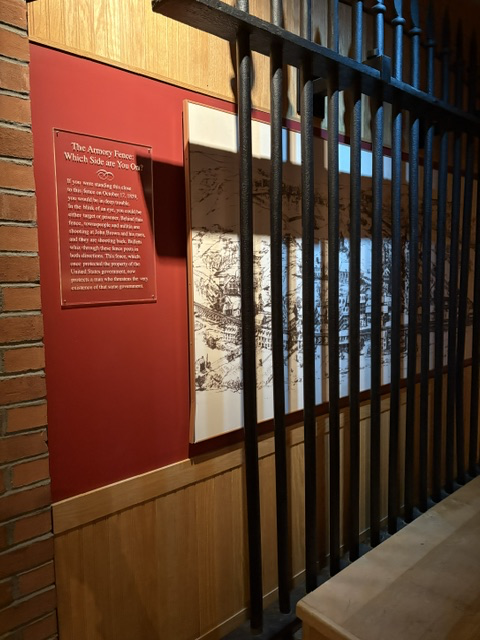
The Armory Fence
At first glance, these iron bars might not seem as significant as a weapon, a building or one of the personal objects associated with John Brown. But they are another surviving physical connection to the night of October 16, 1859.This is a section of the original wrought-iron fence that surrounded the United States Armory at […]
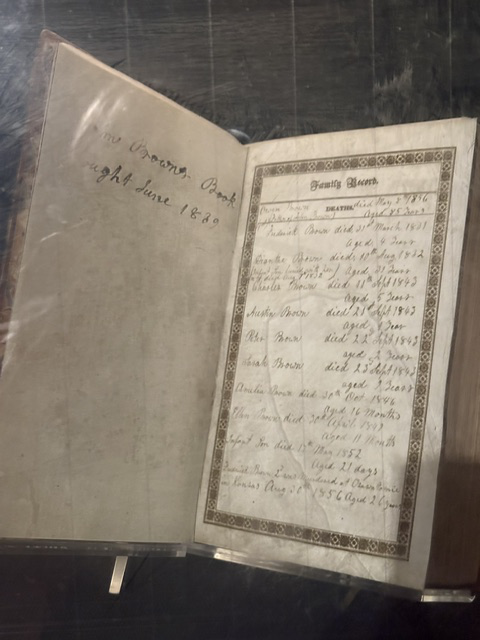
John Brown’s Family Bible
Among the objects preserved at Harpers Ferry, John Brown’s family Bible provides a particularly personal connection to the man whose actions here became part of the national struggle over slavery. Unlike a weapon, military artifact or political document, this was an object connected to Brown’s family life and to the religious beliefs that profoundly influenced […]

