The Remains of the Railroad Bridge
These stone piers standing in the Potomac are remnants of the long transportation history that made Harpers Ferry such an important crossroads. The narrow opening through the Blue Ridge created by the Potomac provided a natural route through the mountains, and in the nineteenth century the Baltimore & Ohio Railroad used that route as it pushed westward.
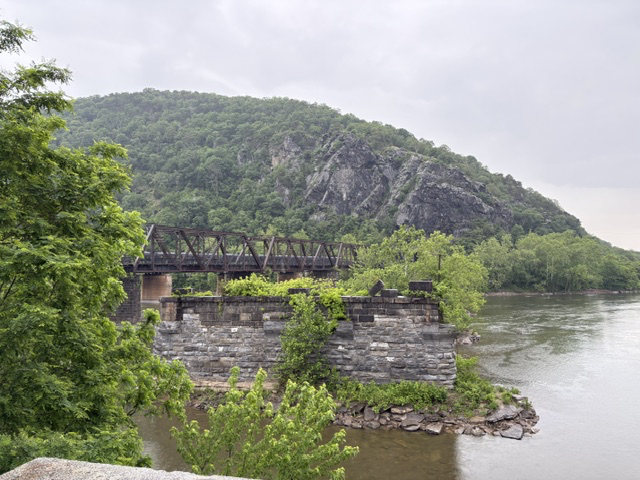
The B&O reached Harpers Ferry in the 1830s, but getting the railroad across the Potomac was a considerable engineering challenge. Over the decades, a succession of bridges crossed the river here. Floods, changing railroad technology and especially the destruction of the Civil War meant that bridges were repeatedly damaged, destroyed, rebuilt and replaced.
The surviving masonry piers in these photographs are reminders of those earlier crossings. Looking at them today, with the river flowing quietly around them, it is difficult to picture how busy this corridor once was. Trains crossed the Potomac carrying passengers, manufactured goods, raw materials and military supplies, while the nearby C&O Canal carried boats along the Maryland side of the river.
During the Civil War, control of these transportation routes was enormously important. Harpers Ferry changed hands repeatedly, and its bridges became both strategic assets and targets. Railroad bridges were destroyed and reconstructed several times as armies attempted either to maintain their own transportation connections or deny them to the enemy.
The modern railroad still passes through the same narrow river corridor, visible beside the older masonry in the second photograph. That juxtaposition is what makes these remains especially interesting. The abandoned piers are not isolated ruins. They stand beside an active railroad, allowing us to see different generations of transportation infrastructure in the same landscape.
These photographs also reinforce something that becomes clearer the longer we explore Harpers Ferry. Geography determined much of the town’s history. The rivers, mountains and narrow passages brought the ferry, canal and railroad here, and those transportation connections helped bring industry, commerce and military importance with them.
The old stone piers remaining in the Potomac are quiet evidence of that story. Even after the bridges they once supported disappeared, their foundations remain—marking the routes people have used to cross this river for nearly two centuries.
Read More From Nancy
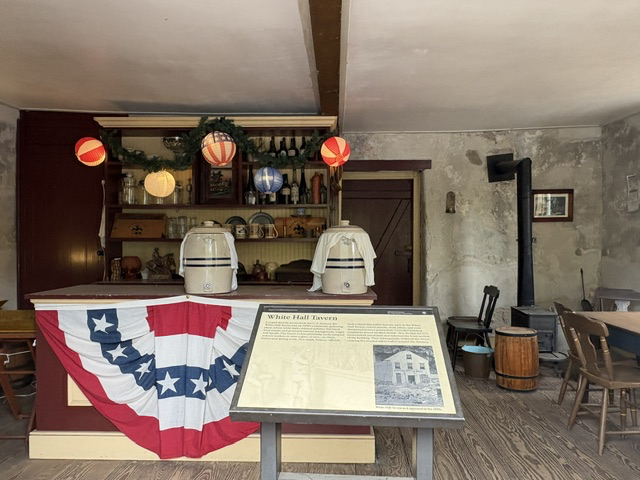
White Hall Tavern
The White Hall Tavern gives us another look at everyday life in nineteenth-century Harpers Ferry. While the armory, railroad and political events brought national importance to the town, places like this were where residents gathered, exchanged news, ate and drank, and discussed what was happening around them. White Hall Tavern was operated by Frederick Roeder, […]
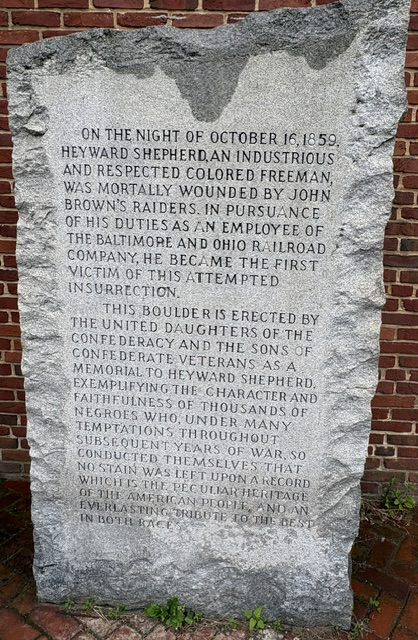
Remembering Heyward Shepherd
This monument in Harpers Ferry tells the story of Heyward Shepherd, a free Black man who became the first person killed during John Brown’s raid on October 16, 1859. Shepherd worked as a baggage master for the Baltimore & Ohio Railroad and was also described as a respected member of the local community. On the night […]
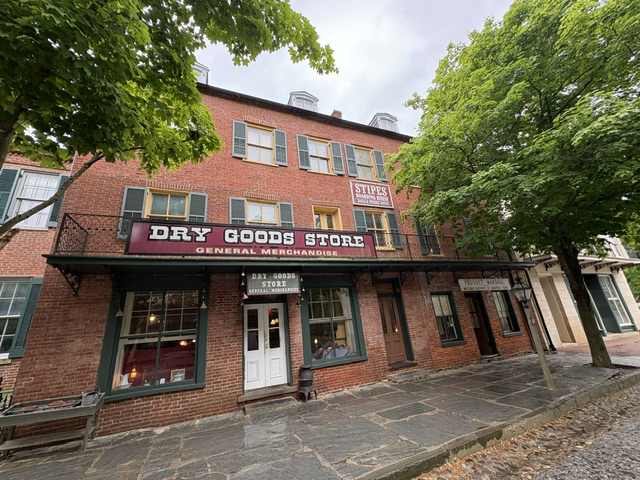
The Dry Goods Store
Walking along the streets of Lower Town Harpers Ferry, the restored Dry Goods Store offers a glimpse into something much more ordinary than the major events usually associated with the town. It gives us the experience of everyday shopping in a nineteenth-century community. A dry goods store was an important part of town life. The […]

