Clerk and Attorney’s Table
Directly in front of the justices’ bench in Plymouth’s 1749 Court House sits the clerk and attorneys’ table. Its position at the center of the courtroom reflects the important work that took place here as each case moved through the colonial court.
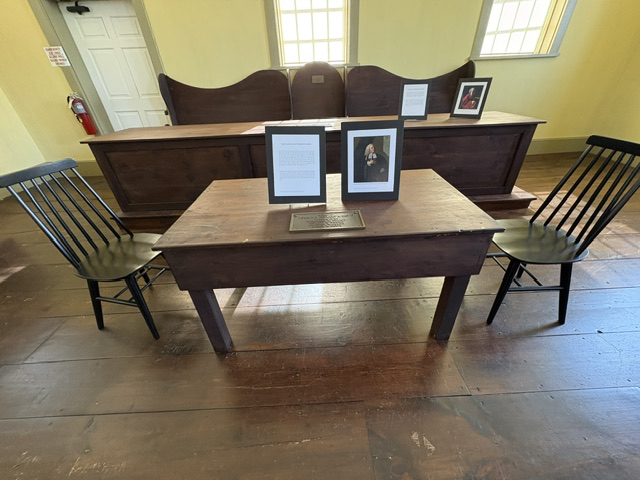
The court clerk was responsible for creating the official written record of the proceedings. He recorded cases, pleas, judgments, fines, and other actions taken by the court and maintained the documents that allowed decisions made in this room to become part of the permanent legal record. In an era when every entry was written by hand, careful recordkeeping was essential.
The attorneys also worked from this area, presenting their arguments and questioning those who appeared before the court. Colonial courtrooms were less formalized than the courtrooms we know today, and not every person appearing before the justices would have been represented by a lawyer. Over time, however, attorneys became an increasingly familiar part of courtroom proceedings.
What I find interesting about this simple table is its location. Sitting here, an attorney would face the justices only a few feet away. The prisoner’s dock, sheriff’s box, court crier, and spectators were all nearby. There was little physical distance between the people deciding a case and those whose lives were being affected by those decisions.
Looking at the courtroom from this position helps bring all of its individual pieces together. The large justice’s bench dominates the room, but much of the everyday work of the court happened at this much simpler table: arguments presented, decisions recorded, papers prepared, and another day of justice in colonial Plymouth preserved in writing.
Read More From Nancy
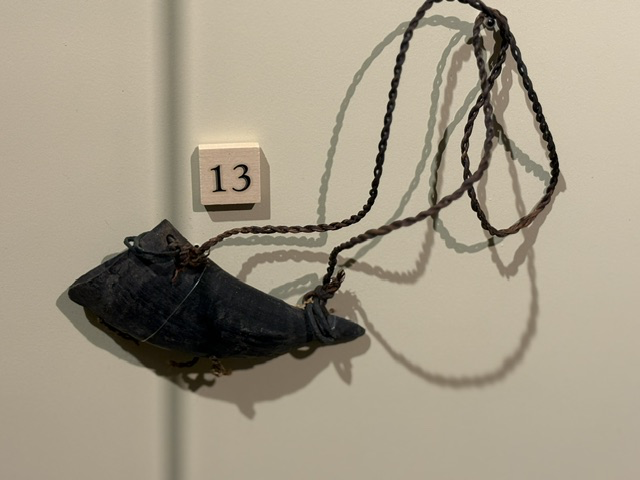
A Grease Horn
Among all the objects that survive from Plymouth’s earliest years, some of the most interesting are not the rare or elaborate possessions, but the simple tools people used in their daily lives. This small grease horn dates from approximately 1635–1665 and is identified as coming from Plymouth. A grease horn was a practical container, usually […]
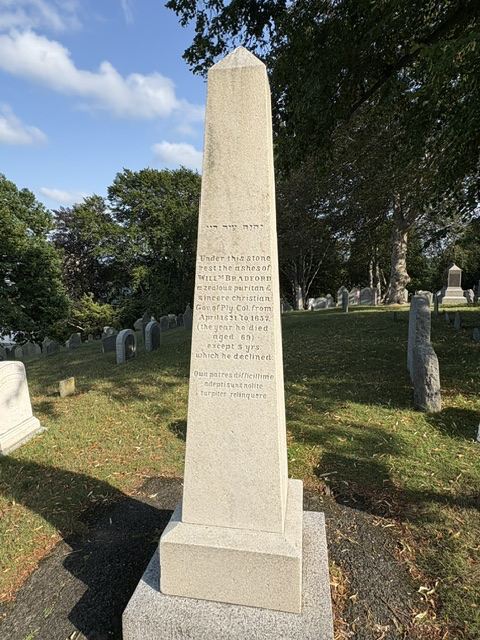
Governor William Bradford Memorial
This granite obelisk on Burial Hill honors William Bradford, one of the Mayflower passengers and a central figure in the establishment of Plymouth Colony. After Governor John Carver died in 1621, Bradford was chosen to lead the struggling colony. He continued to serve as governor for most of the years until his death in 1657, […]
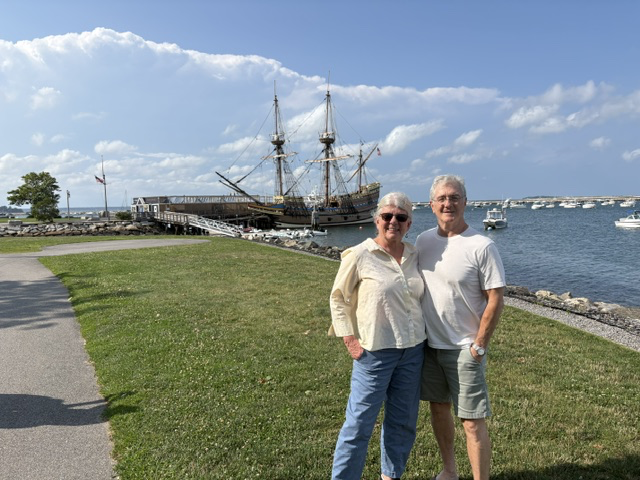
The Mayflower
Standing along the Plymouth waterfront, Mayflower II immediately connects the town to the story that has defined it for more than four centuries. The ship behind us is not the original Mayflower, but a full-scale reproduction built in England and sailed across the Atlantic in 1957 as a symbol of friendship between the United States […]

