Hedge House
Along Water Street, not far from Plymouth Harbor, stands the elegant Hedge House, a reminder that Plymouth’s story extends far beyond the arrival of the Mayflower. Built in 1809, nearly two centuries after the founding of the colony, the house represents a very different period in the town’s history when Plymouth had developed into a prosperous maritime community.
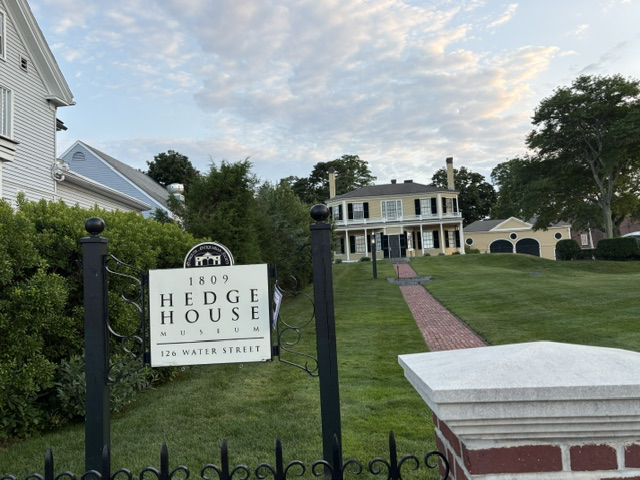
The house was built for William Hammatt, a successful merchant and shipowner. Its size and refined Federal-style architecture reflected the prosperity generated by Plymouth’s growing maritime economy. In the early 19th century, the harbor was busy with vessels engaged in fishing, coastal commerce, and international trade. Homes such as this one tell the story of the merchants, sea captains, craftsmen, and families whose lives were tied to that activity.
The house later became associated with Thomas Hedge, whose family owned it for many years and gave the building the name by which we know it today. Remarkably, this is not its original location. The house once stood closer to the center of Plymouth, but in 1919 it was moved to Water Street to save it from demolition. Today it is preserved by the Plymouth Antiquarian Society as a historic house museum.
I like finding places such as the Hedge House because they broaden our understanding of Plymouth. It is easy to think of this town almost entirely in terms of 1620, but Plymouth did not stop developing once the familiar Pilgrim story ended. The Hedge House takes us forward almost two hundred years and introduces another Plymouth, a thriving coastal town whose fortunes and families were still deeply connected to the harbor.
Read More From Nancy
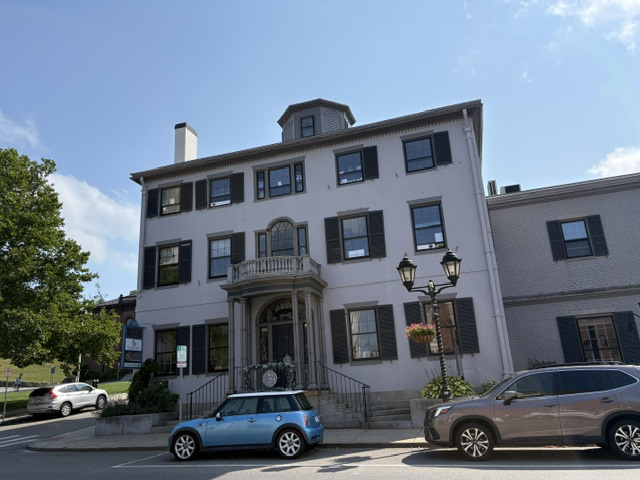
The Bartlett–Russell–Hedge House
Standing prominently on Court Street, the Bartlett–Russell–Hedge House is one of Plymouth’s finest examples of Federal-style architecture. Its symmetrical façade, Palladian window, entrance balcony, and rooftop cupola distinguish it from the surrounding commercial buildings. The house was constructed in 1803 for Joseph Bartlett, a Plymouth Sea captain. Its design has been attributed to Charles Bulfinch, […]
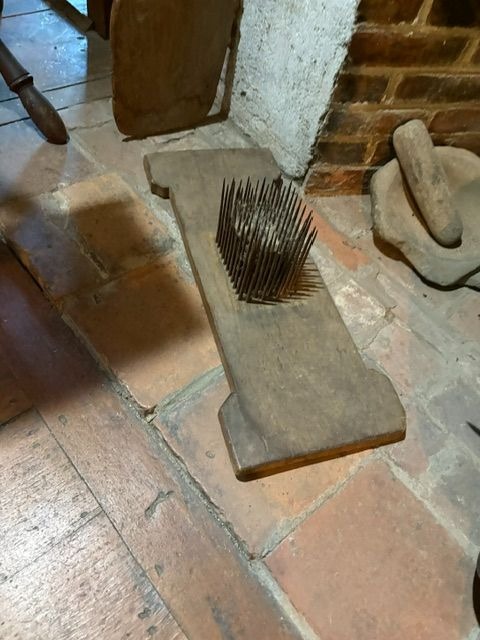
The Flax Hackle
A wooden board fitted with sharp iron teeth preserves one step in the long process of making linen. Known as a hackle, or hetchel, this tool combed flax fibers before they were spun into thread. Its simple construction conceals the skill and repeated effort required to turn a harvested plant into useful cloth. Linen comes […]
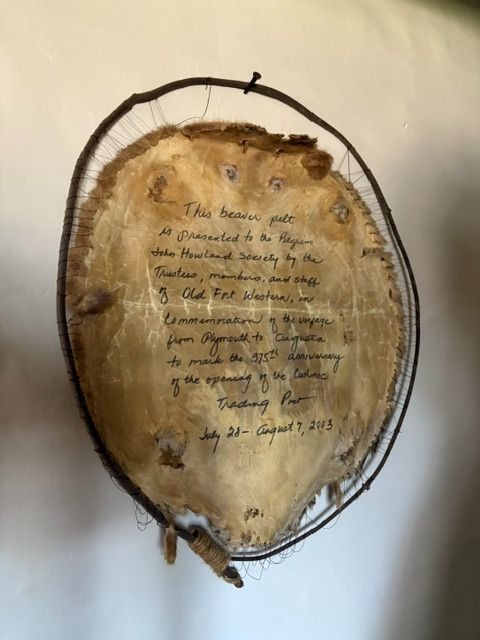
A Beaver Pelt
A beaver pelt stretched within a wooden frame commemorates a connection between Plymouth, Massachusetts, and Augusta, Maine. Its handwritten inscription records a voyage from Plymouth to Augusta in 2003, marking the 375th anniversary of the opening of the Cushnoc trading post. Presented to the Pilgrim John Howland Society by the trustees, members, and staff of […]

